Why Fewer Products Actually Teach You More
Every beginner faces the same moment of paralysis: a beauty counter - or an online cart - overflowing with products that all seem essential. Concealer, setting spray, primer, highlighter, contour, brow gel, lip liner. Each one promises to complete a look you haven't learned to create yet.
The counterintuitive truth is that more products at the start slows learning down. When something looks off, you can't identify the cause if five variables changed at once. A small, focused kit forces you to understand what each product actually does - and that understanding transfers to every product you add later.
Think of it the way you'd approach any new skill. Building a wardrobe from scratch follows the same logic: you start with versatile pieces that work together, then layer in complexity once you know what's missing. Makeup works exactly the same way.
Tinted moisturizer
A lightweight product that combines hydration with a small amount of color pigment, offering sheer coverage that evens out skin tone without looking heavy.
Undertone
The subtle hue beneath your skin's surface - warm (yellow/golden), cool (pink/blue), or neutral - that determines which makeup shades complement your complexion.
Cream formula
A product with a soft, blendable texture that can be applied with fingers or a brush and typically gives a more natural, skin-like finish than powder alternatives.
SPF (Sun Protection Factor)
A measure of how much a product protects skin from UVB rays. Many moisturizers and foundations include SPF as an added daily protection benefit.
Coverage
How much a foundation or tinted product conceals or evens out the skin. Sheer coverage lets more of your natural skin show; full coverage masks more imperfections.
The True Starter Kit: Five Products Worth Learning
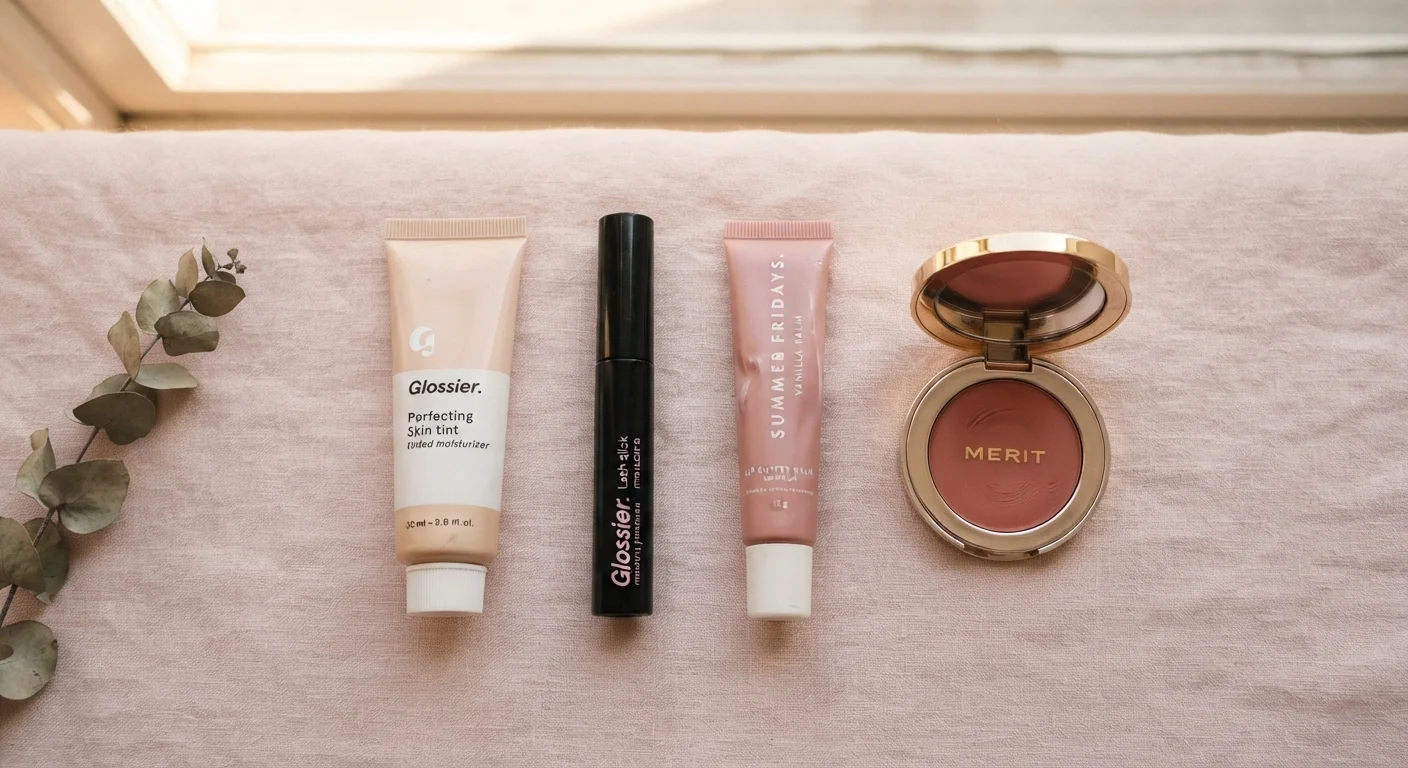
Rather than listing every possible product, here are five that cover the most common everyday goals - evening out skin tone, adding warmth, defining features, and finishing with intention - while remaining genuinely beginner-friendly to apply:
- Tinted moisturizer or sheer foundation: Provides light, buildable coverage without requiring precision blending. Forgives uneven application better than full-coverage formulas.
- Cream blush: Blends with fingers, adds natural warmth, and works on most skin types without a brush. Far more intuitive than powder blush for beginners.
- Mascara: The single highest-impact product for most faces. One coat opens up the eyes immediately. Keep it simple - one coat, wiggle at the base, pull upward.
- Brow pencil: Brows frame the face more than almost any other feature. A pencil in a shade close to your natural hair color fills gaps naturally with light, hair-like strokes.
- Tinted lip balm: Adds color with no precision required, keeps lips comfortable, and is easy to reapply throughout the day.
Understanding undertones will help you choose shades in each category that complement your skin rather than clash with it. Our guide on color theory and undertones walks through exactly how this logic works.
Skin Prep: The Step That Makes Everything Else Work
No product in your kit will perform well on unprepared skin. Dryness causes foundation to cling and flake. Excess oil causes makeup to slide. The two minutes you spend on skin prep determine how the next hour of wear looks.
At minimum, apply a moisturizer suited to your skin type and let it absorb before any makeup. If you'll be outdoors, a product with SPF (sun protection factor) layered beneath or in place of your moisturizer protects skin without adding extra steps. You don't need a separate primer to start - moisturizer alone makes a meaningful difference.
Pat, Don't Rub Your Moisturizer In
Pressing moisturizer gently into skin with your fingertips - rather than rubbing - helps it absorb more evenly and reduces pilling under makeup. Give it a full 60 seconds to settle before applying any product on top. This small habit makes a noticeable difference in how smoothly your makeup sits.
For a deeper look at what effective prep actually involves - including how to sequence moisturizer, SPF, and primer - see our guide on skin prep before makeup. It's one of those foundational steps that pays compounding returns as your routine grows.
Building Technique Before Building a Collection
The most common beginner mistake isn't choosing the wrong products - it's reaching for more products before mastering the ones already in hand. Technique is the real variable. A well-blended cream blush applied with two fingers looks better than an expertly chosen powder blush applied without blending at all.
Practice with the same products for at least two weeks before evaluating whether something isn't working. You'll notice that your foundation looks more even by day five than it did on day one - not because the product changed, but because your hands learned. The same applies to mascara application: why mascara smudges is often a technique issue, not a formula problem.
When you're ready to explore eye makeup beyond mascara, eyeshadow blending technique is a natural next step. And understanding the tools available to you - which brush does what - becomes relevant once you're ready to expand. Our overview of makeup brush basics covers this clearly.
When to Add More (and What to Add Next)
You're ready to expand your kit when you consistently achieve the result you want with your current products. That's the signal - not a set number of days, and not a new trend.
When you do add something new, introduce one product at a time. This lets you assess what it adds (or doesn't), learn its quirks, and decide whether it earns a permanent place in your routine. It also keeps costs manageable - which matters, especially at a stage when you're still discovering what suits you. If budget is something you're navigating thoughtfully, budgeting strategies can help you set intentional spending limits for beauty without feeling restricted.
The same minimalist principle that guides a great starter makeup kit applies to skincare. If you're building both routines simultaneously, our guide on skincare on a simpler budget shows how a focused approach to skincare creates the ideal canvas for makeup - without unnecessary complexity or cost.
Don't Overlook Product Expiration
As you build your kit, pay attention to how long each product has been open. Mascara in particular should be replaced every two to three months because repeated use can introduce bacteria close to the eyes. Holding onto products past their safe-use period isn't worth the risk - especially for anything used near mucous membranes.
For the full picture of how makeup fits into a broader daily beauty routine, a complete overview of daily beauty routine basics ties all these pieces together in one place.