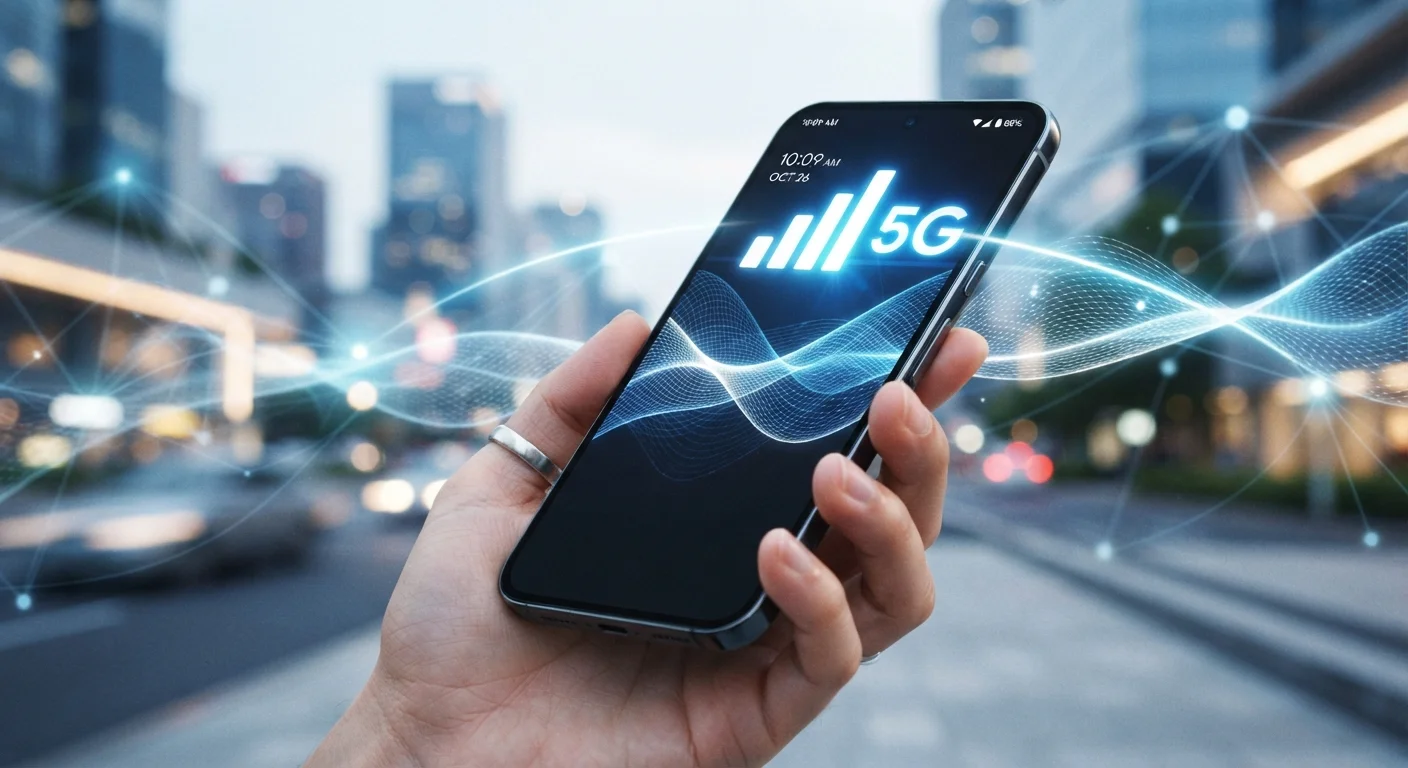
How 5G Differs from 4G LTE
The jump from 4G LTE to 5G is not simply a speed boost - it represents a redesign of how cellular networks handle data. Three core improvements define 5G over its predecessor.
Speed: Peak theoretical 5G speeds are dramatically higher than 4G LTE, which tops out around 100 Mbps under ideal conditions. Mid-band 5G routinely delivers several hundred Mbps in real-world use, and mmWave (millimeter-wave) 5G can theoretically exceed 1 Gbps, though that applies only in very limited, high-density deployments.
Latency: Latency is the round-trip delay between your device sending a request and receiving a response. 4G LTE typically delivers latencies of 30-50 milliseconds. 5G is engineered to reduce this to single-digit milliseconds under optimal conditions, which matters most for real-time applications like gaming, video calls, and emerging uses in industry and healthcare - less so for browsing or streaming.
Capacity: 5G networks can handle significantly more simultaneous connections per square kilometer. This means performance in dense environments - stadiums, transit stations, busy downtown areas - should degrade less than it does on 4G networks under heavy load.
For context on how these network improvements interact with the rest of your device, see our smartphone specs glossary for definitions of the technical terms you'll encounter when comparing 5G phones.
~300-900 Mbps
Typical mid-band 5G real-world download speeds
Reported by independent network testing organizations such as Ookla and OpenSignal in US markets with mid-band 5G deployment.
30-50 ms
Typical 4G LTE network latency
Standard latency range for 4G LTE networks under normal operating conditions, compared to 5G's target of single-digit milliseconds under optimal conditions.
3 spectrum bands
5G frequency tiers in US deployments
US carriers deploy 5G across low-band, mid-band, and high-band (mmWave) spectrum - each offering a different tradeoff between range, penetration, and speed.
The Three Bands of 5G: Why Location Matters
Not all 5G is equal. Carriers deploy 5G across three distinct frequency bands, and the band your phone connects to determines the experience you actually get.
- Low-band 5G (below 1 GHz): Travels long distances and penetrates buildings well - similar to existing 4G coverage. Speeds are only modestly faster than 4G LTE. This is the most widely deployed band and the one most users in suburban or rural areas will connect to.
- Mid-band 5G (1-6 GHz, also called Sub-6 GHz): The sweet spot for most consumers. It delivers substantially faster speeds - often 300-900 Mbps in real-world conditions - with coverage areas manageable enough to build out across cities. Most carriers consider mid-band the backbone of their 5G strategy.
- High-band / mmWave (above 24 GHz): Extremely fast but with very short range and poor building penetration. mmWave installations are typically found in specific high-traffic venues. Stepping indoors or around a corner can drop the signal entirely.
When a carrier advertises nationwide 5G coverage, that typically refers to low-band 5G. Understanding which band is available where you live gives you a realistic picture of what upgrading will actually feel like day to day.
Check Your Carrier's Coverage Map Before Upgrading
Before attributing slow data speeds to your current phone, verify whether your carrier has deployed mid-band or mmWave 5G in your specific area - not just the broader region. Coverage maps on carrier websites show approximate reach by band type. Supplementing this with third-party testing data from organizations like OpenSignal gives a more independent perspective on real-world performance.
Real-World Impact: What Changes and What Doesn't
For the majority of everyday phone tasks, the practical difference between a good 4G LTE connection and low-band 5G is minimal. Sending messages, checking social media, making calls, and streaming standard video all work well on 4G. Where 5G begins to show tangible gains for consumers:
- Large file downloads: A 5G connection on mid-band can download a 1 GB app or file several times faster than 4G LTE, which matters when you're not near Wi-Fi.
- Video streaming at higher resolutions: Buffering on 4K or high-bitrate content becomes less frequent on faster 5G connections.
- Crowded venues: Better network capacity means more reliable speeds at concerts, sporting events, and airports where 4G networks often become congested.
- Mobile hotspot use: If you use your phone as a hotspot for a laptop or tablet, mid-band 5G provides a noticeably better experience for multiple connected devices.
Battery life is a real consideration. The 5G modem draws more power than a 4G modem when active. Many phones include an option to limit connections to 4G LTE to preserve battery when 5G performance isn't needed - worth exploring in your phone's settings.
For a deeper look at how your phone manages calls and data across network types, our article on how phone calls travel over mobile data and Wi-Fi provides useful context.
What to Consider Before Assuming You Need 5G
5G is increasingly standard on new mid-range and flagship smartphones, so many buyers will get it as part of a normal upgrade cycle without specifically seeking it out. A few practical questions worth thinking through:
Does your carrier have strong 5G in your area? Carrier coverage maps are a starting point, but independent network testing data from organizations such as Ookla and OpenSignal provides a more independent view of real-world performance by region.
Does your current plan include 5G access? Some tiered plans limit 5G speeds or require a specific plan tier. Reviewing your plan details is worthwhile before assuming you'll automatically get 5G speeds on a 5G phone. Our overview of prepaid, postpaid, and family cellular plans explains how plan structures can affect what you actually access.
Is Wi-Fi available for your heaviest data use? Home and office Wi-Fi handles the largest share of most users' data consumption. If you're consistently connected to a reliable Wi-Fi network for streaming, downloads, and video calls, the incremental benefit of 5G over 4G LTE outdoors may be less meaningful to you personally. For comparison, see how Wi-Fi 6 compares to Wi-Fi 5 for home networks.
5G represents a genuine technological step forward. But like most network upgrades, the real-world experience evolves gradually as infrastructure matures - and its value depends entirely on where you are, what you use your phone for, and what coverage your carrier has actually built in your area.
“The promise of 5G is real, but it's being delivered in layers. Most consumers will experience it incrementally - starting with modest speed improvements on low-band, then more meaningful gains as mid-band infrastructure matures across more markets.”
— OpenSignal Mobile Network Experience Report, Independent mobile analytics and network testing organization