Start With Your Life, Not a Style Board
The first mistake most people make when building a wardrobe from scratch is opening Pinterest before taking stock of their actual life. A capsule wardrobe full of structured blazers is useless if you work from home in a casual environment. Start here instead: grab a piece of paper and jot down a typical week.
Ask yourself: Where do I actually go? Work, errands, school pickups, occasional dinners out? How much of my time is physically active versus sitting at a desk? What's the dress code reality of my daily environment-not what I wish it were?
Once you map your real life, you can figure out roughly what percentage of your wardrobe should serve each context. Someone who works a business-casual office job five days a week needs that to dominate their closet. Someone who works remotely needs versatile daywear and a smaller selection of going-out options. Your wardrobe should reflect the life you actually live.
Capsule wardrobe
A small, curated collection of versatile clothing pieces that can be mixed and matched to create a wide range of outfits without excess.
Neutral base color
A color like black, white, grey, or navy that pairs easily with almost any other color and forms the backbone of a coordinated wardrobe.
Layering piece
A garment worn over or under other items-such as a cardigan, jacket, or lightweight shirt-that adds versatility and adjusts an outfit for different settings or temperatures.
Wardrobe foundation
The essential, frequently worn pieces that anchor your outfit choices and from which the rest of your wardrobe is built outward.
Color palette
The limited set of colors you intentionally build your wardrobe around, chosen so that pieces naturally coordinate with one another.
The Core Pieces Every Wardrobe Needs
Regardless of your personal style, certain categories of clothing show up in almost every functional wardrobe. Think of these as your foundation layer-the pieces that carry the most combinations.
- Well-fitting bottoms: Two or three pairs of pants or jeans in neutral tones (navy, black, grey, tan) anchor most outfits.
- Layering tops: Plain crewneck or V-neck shirts in neutral colors give you the most pairing flexibility.
- At least one button-down shirt: Works dressed up or down and adds instant polish.
- A versatile outer layer: A simple jacket or cardigan bridges casual and slightly more formal looks.
- Two pairs of shoes: One casual, one that reads a little cleaner. You don't need ten pairs to start.
If you're building out a work context specifically, our guide on building a work wardrobe walks through professional pieces without the stuffiness.
The Outfit Test Before You Buy
Before adding any new piece, mentally pair it with at least three items you already own. If you can't picture three working combinations, it may not belong in your wardrobe yet-even if you love it on the hanger. This one habit prevents a lot of underused purchases.
Choosing Colors That Actually Work Together
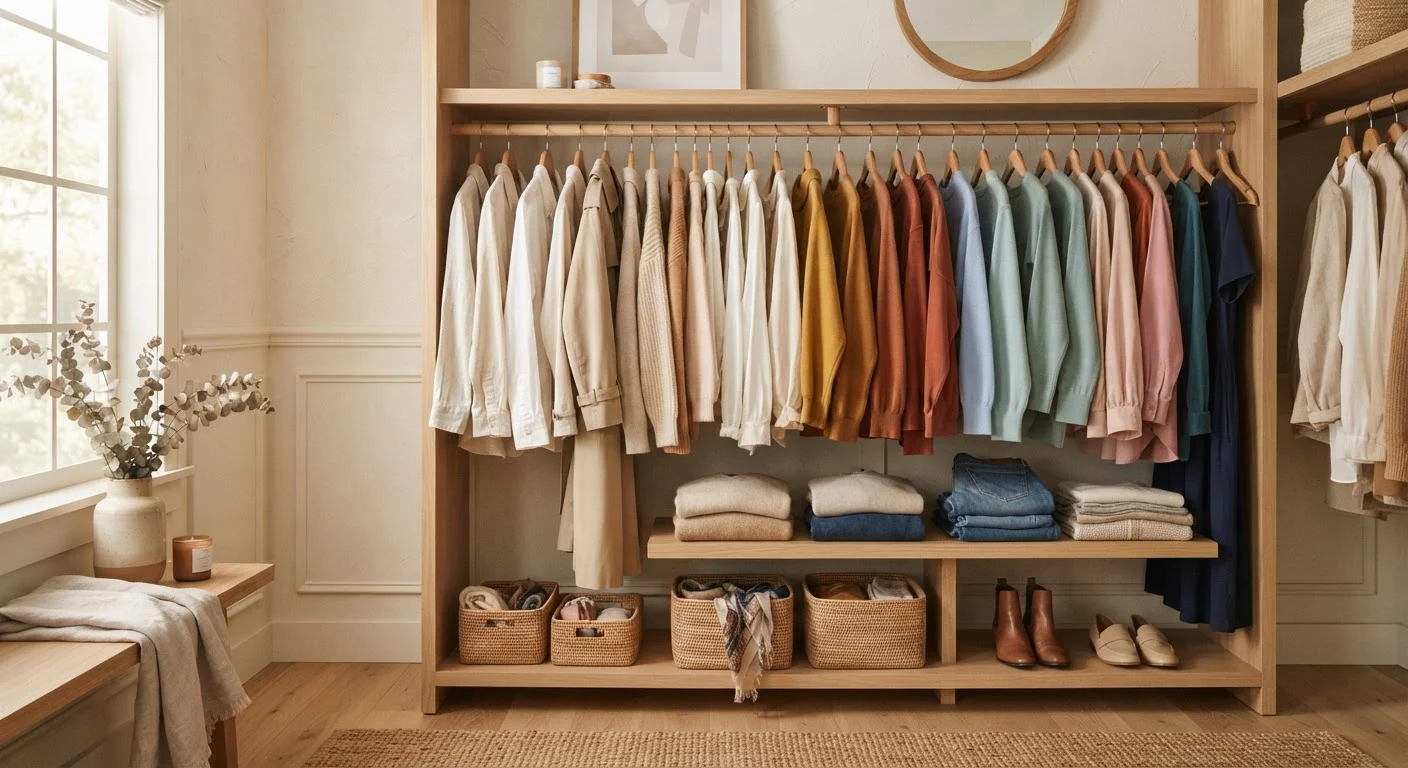
Color coordination doesn't require formal training-it just requires a small, intentional palette. When you're starting from scratch, aim to choose two or three neutral base colors and one or two accent colors you genuinely like and will feel good wearing.
Neutral bases might be: black, white, grey, navy, camel, or olive. Accent colors are anything you want to add personality-a rust orange, cobalt blue, or dusty rose. The rule of thumb: if a new piece doesn't work with at least three other things already in your closet, reconsider whether it belongs there yet.
This is also where building gradually pays off. When you add pieces one at a time and check for compatibility, your wardrobe becomes more cohesive without much effort. For help carrying this into seasonal changes, see our article on transitioning your wardrobe between seasons without buying everything new.
Building Smart on a Budget
Building a wardrobe from nothing doesn't require a major shopping haul-in fact, that approach often leads to impulse purchases that don't actually get worn. A phased, budget-aware approach tends to produce a more functional closet.
Start with the highest-frequency items first: bottoms, everyday tops, and one outer layer. These are worn the most, so they deserve the most consideration. Once those are in place, add secondary items as your budget allows. Thrift stores and clothing swaps can fill gaps without derailing your finances. For broader guidance on managing this kind of discretionary spending, resources like budgeting basics can help you think through how to allocate clothing purchases as part of a larger financial picture.
Fit is worth emphasizing again here: a well-fitting item from a modest price point will always outperform an expensive piece that doesn't fit your body. If something doesn't fit off the rack, minor tailoring-taking in a waist, hemming pants-can transform it.
Avoid the 'Fresh Start' Shopping Binge
Starting from scratch can feel like permission to buy everything at once, but filling a cart in a single session usually leads to pieces that don't work together and buyer's remorse. Build incrementally-your wardrobe will be more cohesive and your wallet will thank you.
Making It All Work: Next Steps
Once your foundational wardrobe is in place, the real work is maintenance-keeping it functional rather than letting it drift back into chaos. A few habits make a big difference: regularly checking what you actually reach for versus what collects dust, being honest about pieces that don't serve you, and resisting the urge to add without considering what already exists.
Getting dressed can genuinely become easier over time if you're intentional. Our piece on styling habits that make getting dressed easier covers the routines that streamline your morning the most. And if closet organization is part of your challenge, organizing a small closet offers practical approaches even when space is limited.
Building a wardrobe from scratch is genuinely one of the most freeing things you can do-because this time, everything in it will be there on purpose.
Personal Style Reflection Worksheet
A simple self-assessment template to help you map your lifestyle needs, color preferences, and wardrobe goals before making any purchases.
Budgeting Basics Hub
A practical framework for managing discretionary spending-helpful when you're planning a phased wardrobe build on a real-world budget.