Why Simple Often Wins
The skincare aisle can feel like a pop quiz you didn't study for - dozens of serums, essences, and treatments all promising transformation. But dermatologists and estheticians tend to agree on a quieter truth: most skin does best with fewer, well-chosen steps done consistently. More products mean more variables, more expense, and a higher chance of ingredient conflicts that irritate rather than improve.
If you've ever felt that your routine is costing more than it's delivering, that instinct is worth exploring. A balanced look at routine complexity unpacks exactly how added steps can sometimes work against you. Stripping back to the essentials isn't giving up - it's getting strategic.
Consistency Beats Complexity Every Time
A three-step routine done every single day will outperform a ten-step routine done sporadically. If a routine feels like a chore, it's usually a sign it has too many steps. Simplifying isn't a compromise - it's the strategy that actually sticks. See the full overview of daily beauty routine basics if you want to map out how a simple routine fits into broader daily habits.
The Non-Negotiable Core Three
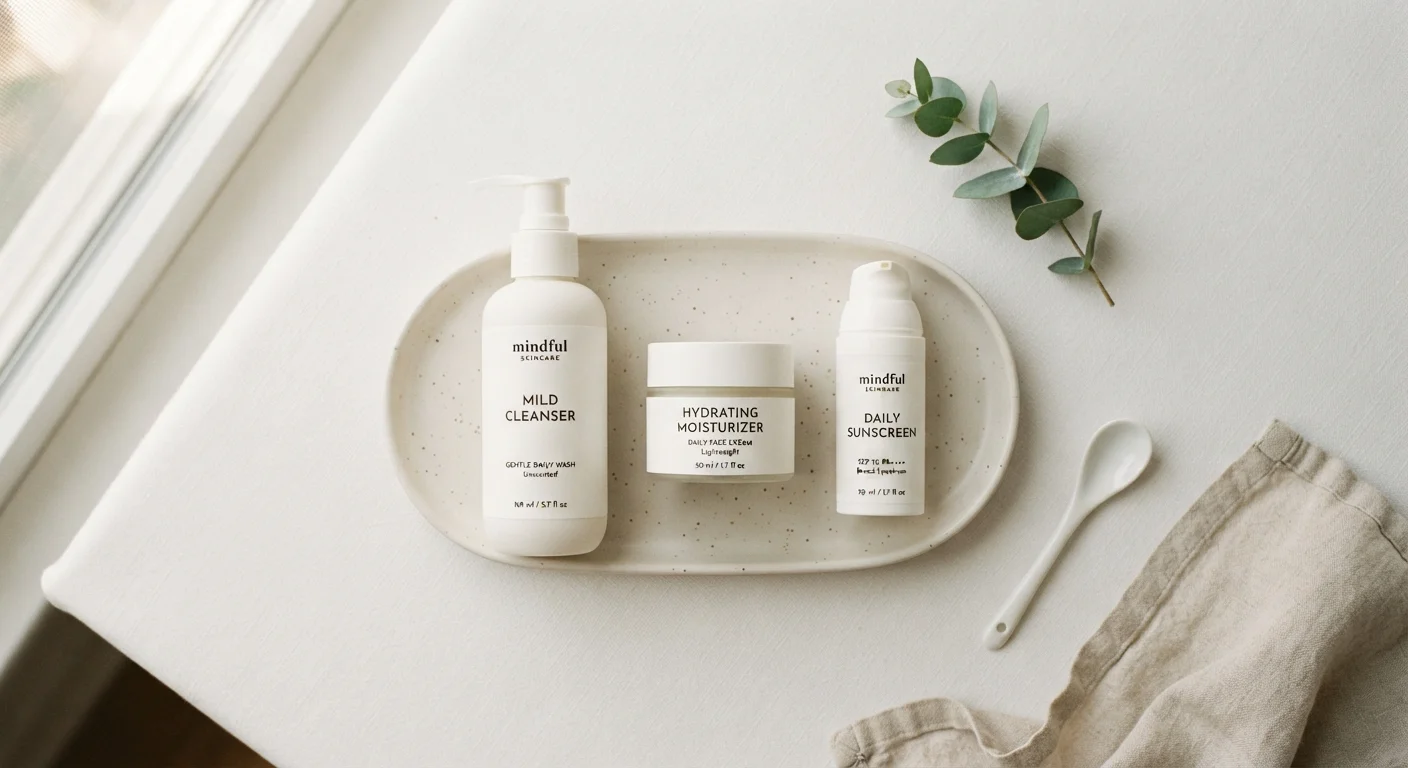
Nearly every skin expert points to the same foundational trio: a gentle cleanser, a moisturizer suited to your skin type, and a broad-spectrum SPF. These three steps address the daily cycle of cleansing away debris and excess oil, replenishing the moisture barrier, and defending against UV exposure - the single most well-documented source of premature skin aging.
Choose a cleanser that matches your skin's oil level, not one that strips it
Over-cleansing or using a formula that's too harsh disrupts the skin barrier, triggering excess oil production or dryness as a compensatory response. A balanced cleanser removes daily grime without leaving skin feeling tight. This single adjustment prevents a cascade of reactivity that sends many people reaching for more products.
Apply moisturizer to slightly damp skin immediately after cleansing
Moisturizer applied to damp skin helps seal in existing hydration rather than working solely from its own water content. This simple timing tweak makes a standard moisturizer more effective - no upgrade required. It also reduces the temptation to layer a separate hydrating serum on top.
Apply broad-spectrum SPF 30 or higher every morning as the final daytime step
UV exposure is broadly considered the leading environmental factor in visible skin aging, and daily SPF use is one of the most evidence-supported skincare habits available. SPF also doesn't need to be expensive to be effective - its protective value comes from the active ingredients and consistent application, not the price point.
Give each new product at least four weeks before evaluating its effect
Skin cell turnover takes roughly four to six weeks, meaning most ingredient benefits aren't visible before that cycle completes. Switching products prematurely wastes money and prevents you from ever building a baseline understanding of what works for your skin. Patience is genuinely the most underrated skincare habit.
Read ingredient lists rather than marketing claims on product packaging
Terms like 'brightening,' 'plumping,' or 'anti-aging' have no regulated definitions in the U.S. and communicate nothing reliable about a product's actual formula. Focusing on ingredient lists helps identify active ingredients, spot potential irritants like fragrance or alcohol, and compare products across very different price points.
Before adding anything beyond this core, it helps to understand how products layer together. Applying products in the right sequence ensures each step can do its job without interference.
Smart Choices That Stretch Your Budget Further
Budget-friendly skincare isn't about cutting corners - it's about knowing which corners don't matter. Packaging, fragrance, and brand prestige add cost without adding skin benefit. Choosing fragrance-free formulas, for instance, tends to reduce irritation risk across all skin types, which means fewer reactions and fewer replacement purchases.
~28 days
Average skin cell turnover cycle
Skin cell turnover is generally estimated at 28-40 days in adults, which is why most skincare products require consistent use over weeks before results are visible.
SPF 30
Minimum recommended daily sun protection factor
The American Academy of Dermatology recommends broad-spectrum SPF 30 or higher applied daily as a core preventive skincare step.
When you do introduce a new product, patience pays off. Most products need four to eight weeks of consistent use before results become visible. Rotating too frequently - a common habit when scrolling through product recommendations - makes it nearly impossible to know what's actually working. If you're evaluating your current lineup, a full routine audit can help identify what's earning its place and what isn't.
Budget consciousness extends beyond beauty, of course. If you're also working on broader financial habits, simple budgeting strategies can help you allocate spending across all your priorities - including personal care.
Knowing When to Add More
Once a core routine is working well - meaning skin feels comfortable, balanced, and not reactive - there may be room to address specific concerns like uneven tone, texture, or dryness. This is the right moment to consider targeted actives, not the starting point. Introducing one new product at a time and patch testing before full use protects against setbacks that can set a routine back weeks.
It's also worth remembering that skin needs shift. Humidity, seasons, and life changes all affect what your complexion requires. Understanding seasonal adjustments helps you adapt your simplified routine without overcomplicating it. The goal isn't a static formula - it's a flexible foundation that evolves with your skin rather than against it.
This article is for general informational purposes only and does not constitute medical or dermatological advice. If you have a skin condition or concerns about your skin health, consult a licensed dermatologist or qualified healthcare provider.