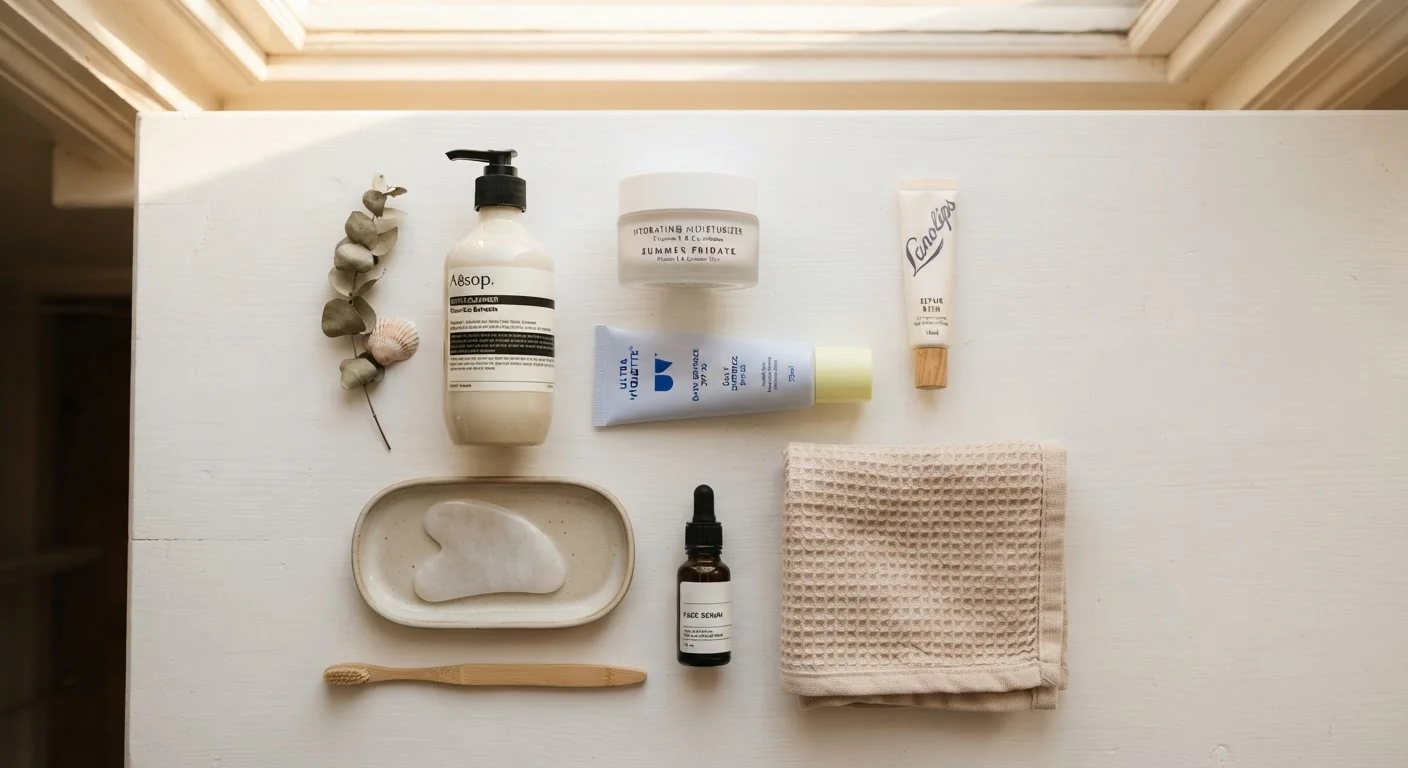
Why a Daily Routine Actually Matters
A beauty routine isn't about chasing perfection - it's about building small, repeatable habits that support how you look and feel every single day. Dermatologists consistently note that regular, gentle care outperforms sporadic intensive treatments. Your skin, hair, and body respond to predictability.
What counts as a "routine" varies widely. For some people it's three steps; for others it's ten. Neither is inherently better. What matters is that each step is purposeful. If you've ever wondered whether your current lineup is actually working for you, our skincare routine audit walks you through evaluating every product you use.
90%
Of visible skin aging attributed to UV exposure
According to the Skin Cancer Foundation, approximately 90% of visible skin aging is estimated to be caused by sun exposure - making daily SPF the single most impactful preventive step.
4-6 weeks
Time for new skincare products to show results
Dermatologists generally advise giving a new skincare product at least four to six weeks of consistent use before evaluating whether it's working.
This guide covers the foundational building blocks - morning skin prep, evening repair, hair and body basics, and the mindset that keeps a routine going long-term. No intimidating ingredient lists, no pressure to buy more. Just a clear, practical overview you can return to whenever you need a reset.
Morning Skincare: Building Your AM Foundation
Your morning routine sets your skin up to face the day. The core goals are simple: remove overnight buildup, hydrate, and protect. Most people need just three to four steps to accomplish this.
Cleanse
A gentle cleanser in the morning removes sweat, sebum, and residue from overnight products without stripping your skin's natural moisture barrier. If your skin skews dry or sensitive, a splash of water alone may be enough - the goal is a fresh, balanced canvas, not squeaky-clean tightness.
Tone or treat (optional)
A hydrating toner or essence can help prep skin to absorb what comes next. This step is optional and depends on your skin type and goals.
Moisturize
Moisturizer locks in hydration and supports the skin barrier. Choose a texture that suits your skin - lightweight gel for oily types, richer creams for drier skin.
Sunscreen
SPF is non-negotiable in the morning. Broad-spectrum sunscreen with SPF 30 or higher is recommended by most dermatologists regardless of weather or season. UV exposure is a leading contributor to premature skin aging and uneven tone.
Apply sunscreen as the very last step of your morning skincare routine, after moisturizer has fully absorbed - this ensures the SPF layer sits on top where it can do its job.
Layering sunscreen under other products reduces its efficacy; dermatologists consistently recommend it as the final daytime step.
When introducing a new active ingredient like a retinoid, start with one night per week and increase frequency only after your skin has adjusted without irritation.
Gradual introduction significantly reduces the risk of redness, peeling, and sensitivity - the most common reasons people abandon otherwise effective ingredients.
If your mornings are short on time, a moisturizer with built-in SPF can combine two steps into one without sacrificing protection.
Evening Skincare: Repair and Reset
Evening is when your skin does its most active repair work. Nighttime routines tend to be slightly more involved because this is the window to introduce stronger active ingredients that might cause sensitivity under sunlight.
Always Remove Makeup Before Bed
Sleeping in makeup - including foundation, mascara, and eye makeup - can contribute to clogged pores, eye irritation, and compromised skin barrier function over time. Make cleansing the first non-negotiable step of your evening routine, even on nights when you're exhausted. Micellar water or cleansing wipes can work as a quick alternative when a full cleanse isn't possible.
Cleanse thoroughly
Double cleansing - an oil-based cleanser followed by a water-based one - is popular for removing makeup, SPF, and environmental pollutants. If you don't wear heavy makeup or sunscreen, a single effective cleanser is usually sufficient.
Active ingredients
Retinoids (vitamin A derivatives), exfoliating acids like AHAs and BHAs, and peptides are common evening ingredients because they work best overnight and some increase photosensitivity. These are powerful tools, but introduce them gradually - every few nights at first - to avoid irritation.
Moisturize and seal
A slightly richer moisturizer or overnight mask helps skin retain hydration while it repairs. Those with very dry skin may benefit from applying a facial oil or occlusive balm on top.
Curious whether some of these steps are truly necessary for your skin? Our routine audit guide helps you identify what's earning its place - and what isn't.
Hair, Body, and Beyond: The Overlooked Basics
A complete beauty routine extends beyond your face. Hair and body care are just as foundational, and a few consistent habits make a meaningful difference over time.
Hair care
How often you wash your hair depends on your hair type and lifestyle - there's no universal rule. What does matter: using a conditioner to maintain moisture, protecting hair from excessive heat, and trimming regularly to prevent breakage from spreading. Scalp health deserves attention too; a healthy scalp supports healthy hair growth.
Body skincare
The skin on your body needs care just like your face does. A regular body moisturizer applied after showering (while skin is still slightly damp) locks in hydration more effectively. Exfoliating once or twice a week can help with texture and dry patches. And yes - SPF on exposed body skin matters too, especially forearms, neck, and décolletage.
Don't Skip Your Hands and Lips
Hands are washed dozens of times a day and exposed to the elements constantly - they age visibly if ignored. Apply a nourishing hand cream after each wash and keep a lip balm with SPF in your daily bag or pocket. These micro-habits cost almost no extra time and pay dividends in comfort and appearance.
Lips and hands
These are high-traffic areas that often get forgotten. A daily lip balm with SPF and a hand cream used consistently - especially after washing hands - keeps these areas comfortable and protected.
Beauty and wellness are closely linked. What you eat and drink affects your skin, hair, and nails over time. For a broader look at how nutrition supports everyday health, explore our Nutrition & Diet hub.
Building a Routine That Actually Sticks
The best routine is the one you'll actually follow. Elaborate ten-step regimens are impressive on paper but often unsustainable in real life. Start with a few core steps and build from there only when a habit is truly established.
A few principles that help routines stick:
- Anchor it to an existing habit - cleansing after brushing your teeth, applying moisturizer before getting dressed.
- Keep products visible and accessible - if it's buried in a drawer, it won't get used.
- Give products time to work - most skincare ingredients need consistent use over several weeks before results are apparent.
- Adjust seasonally - your skin's needs in January differ from July. Heavier moisturizers in winter, lighter formulas in summer, are common adjustments.
If you're thinking about paring things back, our guide to building a minimal skincare routine shows how a focused approach can cover all the essentials without unnecessary complexity.
And remember - beauty routines are a form of self-care, but genuine self-care is broader than any product lineup. Our article on what self-care actually means offers a grounding perspective worth reading alongside this guide.
This article is for general informational and educational purposes only. It is not a substitute for advice from a qualified dermatologist or healthcare professional. If you have specific skin concerns or conditions, please consult a licensed professional.