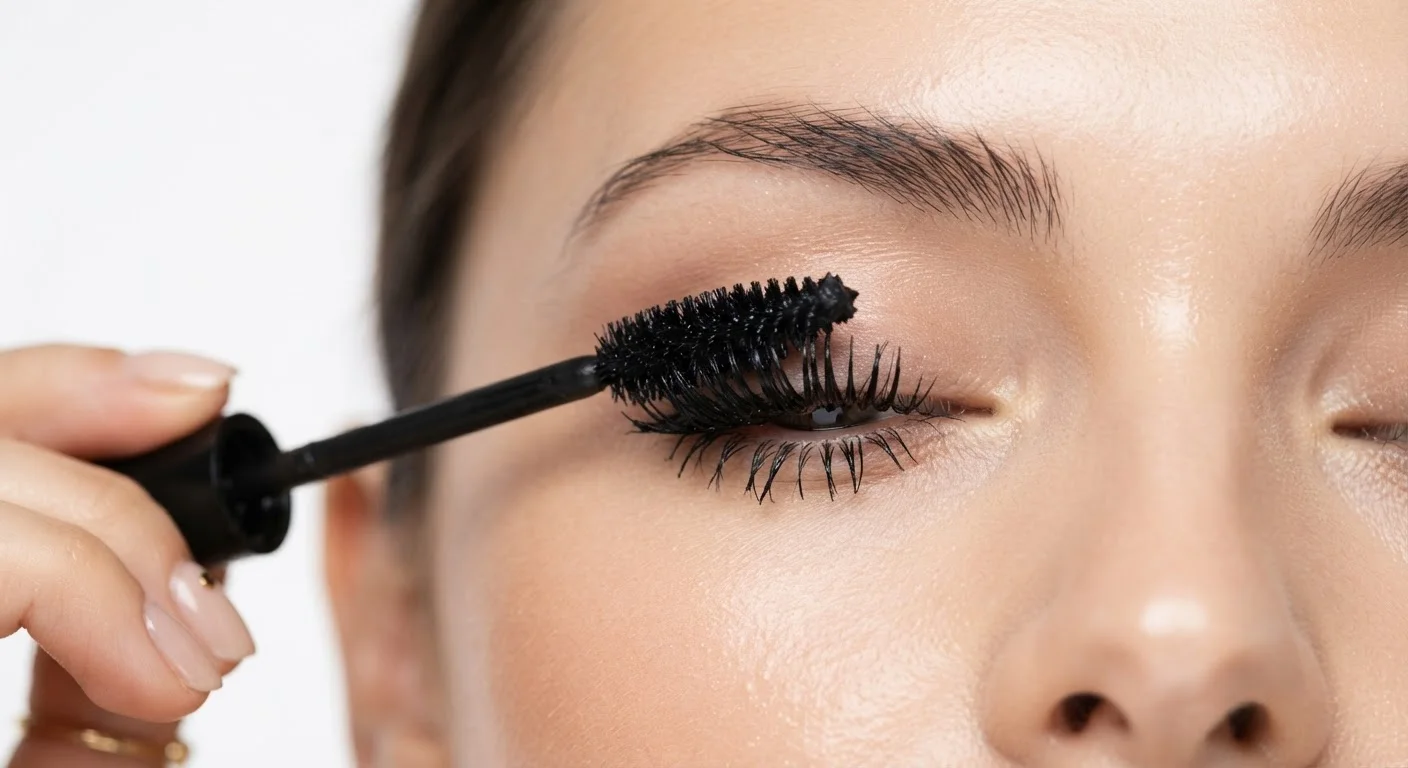
Why Mascara Smudges More Than It Should
If you've ever looked in the mirror mid-afternoon to find mascara pooled under your eyes, you're not alone - and it's almost never just a formula problem. The real culprits are usually a combination of skin chemistry, application habits, and prep steps that get skipped in the rush of a morning routine.
Understanding what actually causes smudging makes it much easier to fix. Once you can spot the pattern in your own routine, the solution is usually simpler than switching to a new tube. For a broader look at how prep affects wear, skin prep before makeup is worth revisiting - the same principles that keep foundation in place also keep eye makeup where it belongs.
Applying mascara to oily or unprepared lids without any barrier product.
Why it happens: Most people focus mascara prep entirely on the lashes themselves and forget that lid oil migrates downward throughout the day, breaking down the mascara film.
Pumping the mascara wand in and out of the tube before applying.
Why it happens: It feels like it loads more product onto the brush, but it actually pushes air into the tube, which dries out the formula and creates a clumpy, flaky texture that's far more likely to crumble and smudge.
Piling on multiple coats without letting each one dry.
Why it happens: The instinct is to build volume fast, so coats get layered in quick succession. The result is a thick, wet film that never fully sets and transfers at the first blink.
Applying too much product to the lower lashes.
Why it happens: The same brush used for upper lashes tends to deposit far too much formula on the delicate lower lashes, and that excess sits right against the under-eye skin - the first place transfer shows up.
Skipping the curl before mascara or curling after the formula has set.
Why it happens: Curling after mascara is applied seems like a logical final step, but it can crack the dried formula, causing flaking that falls onto the under-eye area throughout the day.
Practical Fixes That Actually Hold
Most mascara smudging comes down to a few fixable habits rather than an endless search for the perfect waterproof formula. Start by checking your lash base: a clean, dry lash line with a thin layer of translucent powder or eye primer creates a barrier between natural oils and the mascara film. This single step reduces transfer noticeably.
Avoid Tugging the Eye Area
When correcting smudged mascara, resist the urge to rub or tug the delicate under-eye skin. That area is thinner and more prone to irritation and fine lines than the rest of the face. Instead, use a cotton swab lightly dampened with micellar water to lift smudges cleanly. For a full look at what micellar water does - and when a cleanser is the better call - see cleanser vs. micellar water.
Application technique matters just as much as prep. Wiggle the wand from root to tip in a slow, deliberate motion rather than stacking thick coats all at once. Wait at least 30 seconds between coats so each layer sets before the next is added. For the lower lashes - a notorious smudge zone - a single light coat applied with the tip of the wand (rather than the full brush) gives definition without buildup.
If concealer under your eyes is also shifting by midday, concealer application that doesn't crease or cake covers the overlapping factors. And if you're newer to eye makeup overall, starting with makeup essentials offers a grounded place to begin building your routine confidently.