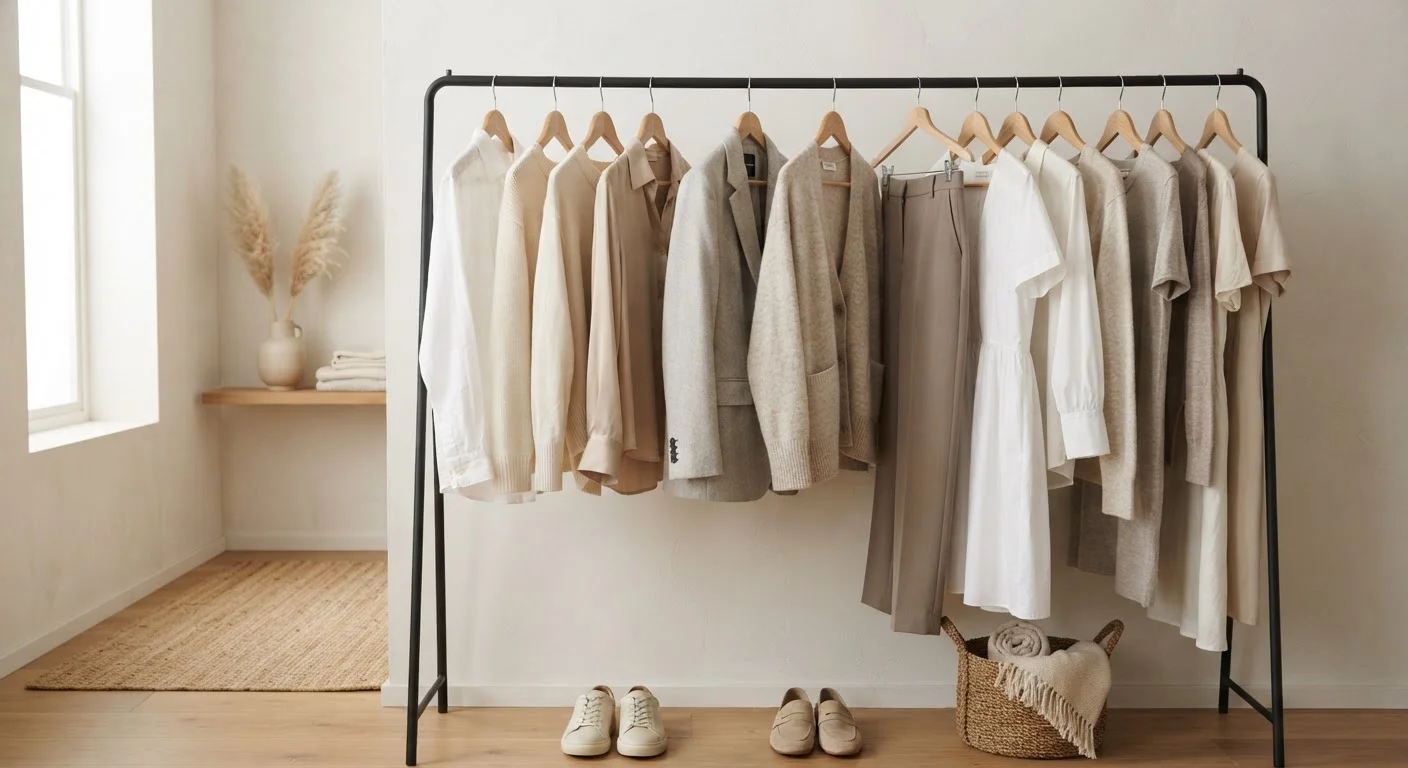
What a Mostly Monochrome Wardrobe Actually Means
A mostly monochrome wardrobe doesn't mean owning only black or only white. It means anchoring your closet to one narrow color family - think warm neutrals like camel, ivory, and taupe, or cool tones like charcoal, slate, and navy - with little variation outside that range. The word mostly matters: a single accent color or the occasional print doesn't disqualify the approach.
This strategy sits squarely at the intersection of minimalist dressing and intentional style. It's worth distinguishing it from a capsule wardrobe, which is about quantity of items. A monochrome wardrobe is about color range - you could have 80 pieces that all live in the same tonal family. Compare capsule and full wardrobes if you're weighing both dimensions at once.
Understanding how colors interact is also foundational here. If you haven't explored color theory for everyday dressing, it can clarify why certain monochrome palettes feel harmonious while others fall flat.
The Real Advantages
The most immediate benefit is cognitive ease. When every item in your closet plays nicely with every other item, the morning routine gets dramatically simpler. There's no agonizing over whether the top matches the trousers - it just does.
Dramatically reduces daily decision fatigue
When every item coordinates by design, getting dressed takes minutes rather than mental energy. This is one of the most consistently reported benefits among people who adopt a tight color strategy.
Every piece mixes and matches effortlessly
A monochrome palette means you can combine any top with any bottom without clashing. This multiplies the number of workable outfits without adding more clothes.
Encourages more deliberate, less impulsive shopping
A clear color rule acts as a natural filter at the store or online. If something doesn't fit the palette, it doesn't come home - which reduces regret purchases over time.
Creates a polished, cohesive visual impression
Tonal dressing often reads as intentional and sophisticated, even when the individual pieces are simple. The coordination does styling work that individual items alone can't.
Packing for travel becomes significantly simpler
When every item works with every other, a suitcase of six pieces can yield far more outfit combinations than a mixed-color bag of twelve.
Financially, a tight color palette can prevent impulse purchases. When a bright coral blouse doesn't fit your scheme, you're less tempted by it. Over time, that discipline adds up. This connects neatly to broader budgeting basics - intentional constraints in any spending category tend to reduce waste.
For deeper insight into which neutrals carry the most weight in a real wardrobe, neutral colors and how to use them is a practical companion read.
The Honest Drawbacks
A single-palette closet has real limitations that are worth naming plainly before you commit. The biggest one is self-expression: color is one of the most immediate ways people communicate personality, mood, and cultural identity through clothing. Removing it narrows that channel significantly.
Limits color as a tool for self-expression
Color communicates personality, mood, and cultural identity in immediate, nonverbal ways. A narrow palette restricts how much of that you can convey through clothing on any given day.
Outfits can become visually monotonous over time
Without color contrast, looks can blur together for both the wearer and observers. Sustaining visual interest requires significant effort around texture, layering, and silhouette.
Seasonal colors may fall outside the palette
Warmer months invite brighter, more saturated tones that a neutral-anchored wardrobe doesn't naturally accommodate. Leaning strictly monochrome can feel out of step with seasonal dressing.
Requires higher investment in quality basics
When texture and cut carry all the visual weight, cheap fabrication shows more readily. A monochrome wardrobe tends to demand better-quality pieces to avoid looking flat or dull.
Can feel restrictive at dress-up or celebratory occasions
Events that call for festivity or creative dressing may not be well served by a muted, uniform palette. You may find yourself wanting options that simply aren't in your closet.
There's also the risk of visual monotony - both to you and to others who see you regularly. Without color contrast, outfits can blur together. Texture and silhouette become load-bearing elements of your style, which means you need to be more deliberate about cut, fabric weight, and layering than the average dresser.
If you find yourself craving more visual interest, how prints, solids, and neutrals each function can help you introduce variation without abandoning your palette entirely.
Making It Work Without Losing Yourself
The most successful monochrome wardrobes aren't completely rigid. Practitioners typically allow one or two accent colors - a warm rust, a sage green - that still coordinate with the base palette. This prevents the feeling of wearing a uniform while preserving the core benefit of easy mixing.
Monochrome Isn't One-Size-Fits-All
Different skin tones respond differently to tonal palettes. A cool-grey monochrome that looks sleek on one person can wash out another. Before fully committing, experiment with a few anchor shades near your face to find the tonal family that flatters your complexion. This is especially worth considering if you're building around very light or very dark neutrals.
Building a signature color palette is a useful exercise before committing. Identifying the two or three hues that genuinely flatter your skin tone and reflect your personality gives your monochrome approach a personal logic - rather than defaulting to greige simply because it seems safe.
For those curious about how this compares to owning fewer pieces overall, the pros and cons of a very small wardrobe lays out a similar honest assessment. The two strategies can overlap, but they don't have to.
The bottom line: monochrome dressing is a tool, not a doctrine. Use it where it serves you, and leave room for color when the moment calls for it.