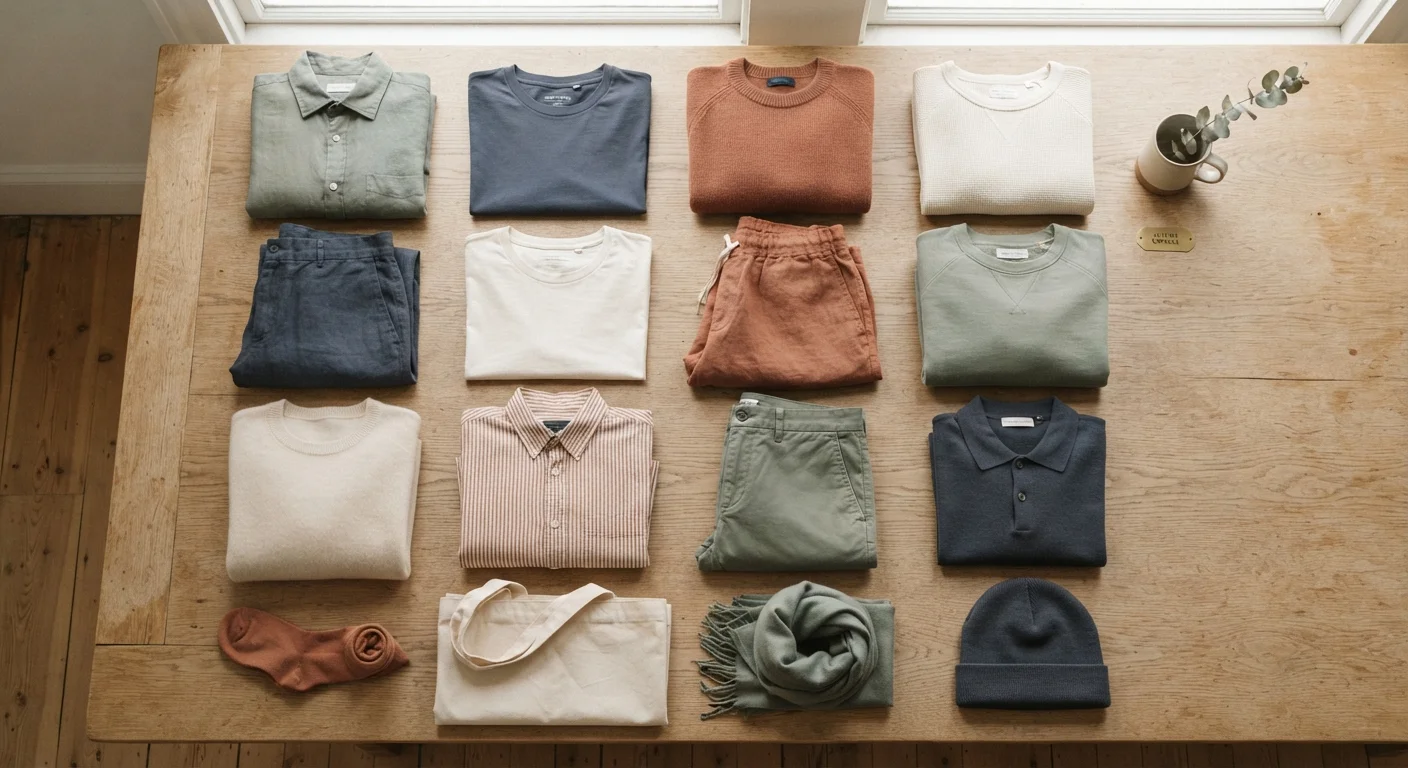
Why a Signature Palette Changes Everything
Most wardrobe frustration - the 'I have nothing to wear' feeling despite a full closet - comes from a lack of cohesion. When your clothes don't share a color logic, they don't mix easily, and getting dressed becomes an exhausting puzzle rather than a simple choice.
A signature color palette solves this by creating a shared language across your wardrobe. When every piece broadly belongs to the same family of hues, almost anything pairs with almost anything else. The result is a closet that feels intentional and outfits that look put-together with minimal effort.
This isn't about wearing the same colors every single day or stripping out all variety. It's about editing with intention - a principle explored further in dressing with intention for a coherent personal style.
Full-length mirror
Allows you to assess how colors look against your skin, hair, and overall silhouette.
Notebook or notes app
Record the colors, names, and tones you're drawn to during your wardrobe audit.
Color swatch cards or fabric swatches
Useful for comparing shades side by side and identifying undertone harmony.
Phone camera
Photograph your current wardrobe spread out to spot color patterns at a glance.
How to Build Your Palette Step by Step
Building a signature palette is a process of discovery, not prescription. The steps below guide you from auditing what you already own to confidently editing your closet around colors that genuinely work for your life.
What you will need
Audit Your Current Wardrobe
Pull everything out and group items by color. You're looking for patterns - the shades that appear again and again are likely your natural gravitational pull. Photograph the spread with your phone so you can see the whole picture at once.
Note which colors you reach for on days you want to feel confident, and which ones sit unworn. Both pieces of data matter.
Identify Your Skin Undertone
Your undertone - warm, cool, or neutral - influences which shades flatter you most against your skin. A quick self-check: look at the veins on your inner wrist. Greenish veins suggest warm undertones; bluish-purple veins suggest cool. A mix indicates neutral.
This isn't about limiting your choices - it's about understanding why certain colors make you glow while others wash you out. For a deeper dive into how this principle extends to beauty, see how undertones affect color choices in makeup.
Choose Your Neutral Foundation
Every signature palette needs a neutral backbone - shades that anchor your outfits and pair with almost everything. Common options include white, cream, beige, grey, navy, camel, and black. Pick two or three that feel natural to you and align with your undertone.
For a full breakdown of how neutrals pull a wardrobe together, learn how neutrals work hardest in a closet.
Select One or Two Dominant Colors
These are the shades that show up most in your wardrobe - in tops, trousers, dresses, or outerwear. They should feel genuinely 'you': colors you'd choose on a good day, that match your lifestyle energy, and that you don't tire of quickly.
Think about where you spend most of your time and what mood you want to project. Someone who works outdoors might gravitate toward earthy tones; someone in a creative office might lean into a bolder signature hue.
Add One or Two Accent Colors
Accent colors bring personality and visual interest. These appear in smaller doses - a scarf, a bag, a statement blouse - and give your palette life without overwhelming the whole. Understanding how colors interact will help you choose accents that feel intentional rather than random.
Explore color theory for everyday dressing to understand how complementary and analogous relationships make combinations feel harmonious.
Edit Your Wardrobe Around the Palette
Now that you have a working palette - typically two to three neutrals, one to two dominant colors, and one to two accents - go back through your closet. Set aside pieces that fall outside it. You don't have to discard them immediately; a 'holding box' approach lets you see whether you miss them over a month or two.
Going forward, apply the palette as a filter when shopping. It reduces impulse buys and keeps spending intentional - a habit that also supports smart personal budgeting.
Test Colors in Natural Light
Store lighting can dramatically shift how a color reads on your skin. Before committing to a new piece, step toward a window or outside to see the true shade. This simple habit prevents a lot of 'it looked different in the store' surprises.
Rules Are a Starting Point, Not a Law
Color guidance - including undertone matching and seasonal palettes - is meant to be a helpful framework, not a rigid prescription. Your comfort, confidence, and self-expression matter more than any formula. If a color makes you feel great, that's reason enough to wear it.
Once your palette is established, understanding how to combine those colors in outfits is the natural next step. Learn why certain color combinations always look good to get more from the palette you've built. And if you've ever wondered whether simplifying even further makes sense, explore the pros and cons of a mostly monochrome wardrobe for an honest look at that approach.