What Makes a Color 'Neutral'?
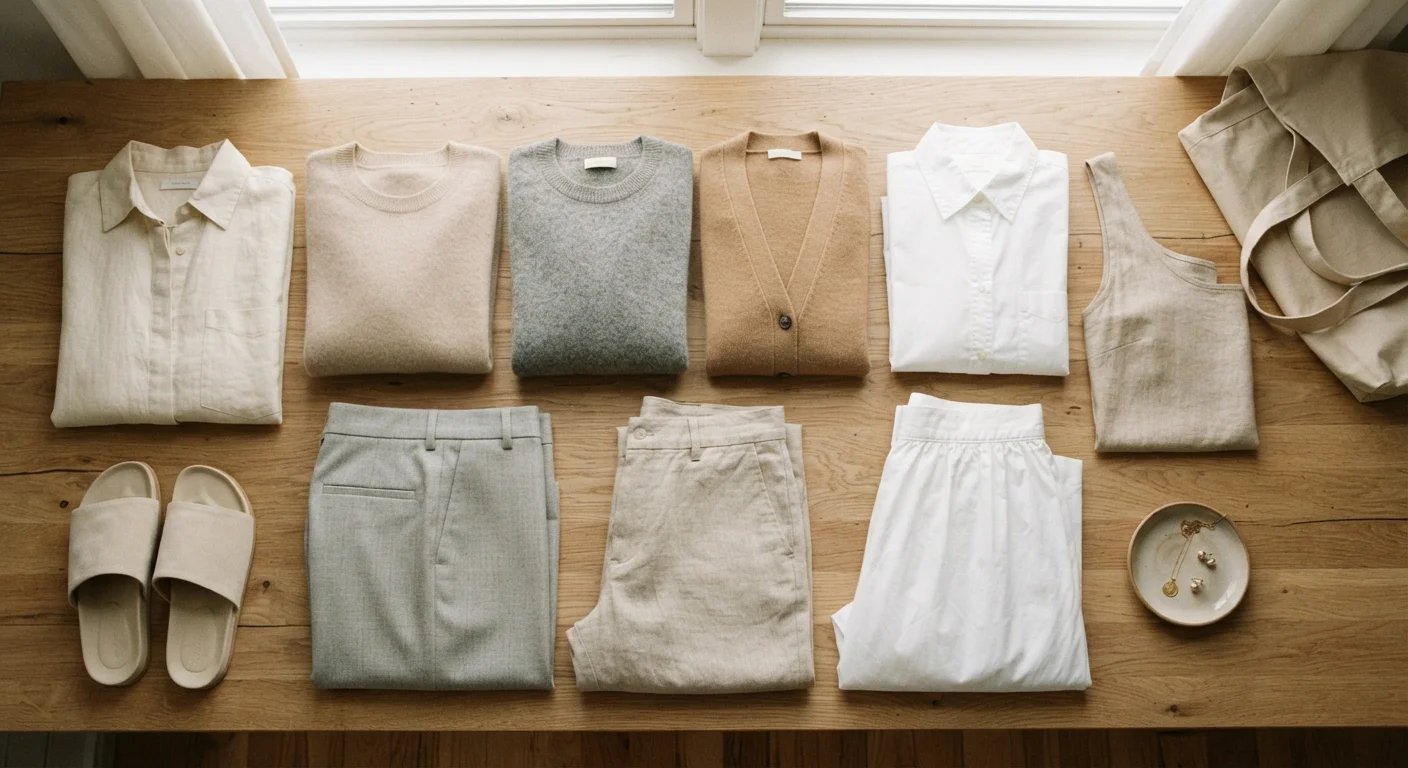
A neutral color is one that doesn't assert itself - it coexists comfortably with other shades rather than competing for attention. In everyday wardrobe terms, that means black, white, grey, beige, cream, camel, navy, and taupe. Soft versions of olive and burgundy also earn the label in practice because they behave the same way: they bridge, they balance, they don't fight.
The real power of a neutral is its visual flexibility. Because these shades carry low chromatic intensity, they can sit next to almost any color on the spectrum without creating a clash. That's why stylists so often describe them as 'foundation' pieces - they're the ground beneath whatever you're building.
For a deeper look at how color relationships work in your closet, our color theory guide for everyday dressing breaks it down accessibly.
Neutrals Aren't One-Size-Fits-All
The same beige that looks luminous on one person can wash out another - skin undertone plays a real role. If a neutral shade consistently looks 'off' on you, it's worth experimenting with warmer or cooler versions of that family rather than abandoning the shade entirely. Natural lighting is your most honest testing environment.
Why Neutrals Are the Hardest-Working Items in Your Closet
Think of neutrals as the connective tissue of your wardrobe. A single camel coat can top a floral dress, dark jeans, a tailored suit, or a weekend sweatshirt. A white shirt slots into almost any combination you own. That kind of cost-per-wear value is genuinely difficult to match with more expressive colors.
~23
Average outfit combinations one neutral top unlocks
Wardrobe strategists commonly illustrate that a single versatile neutral top can pair with most bottoms and layers a person owns, dramatically increasing outfit combinations without adding items.
60-70%
Portion of a capsule wardrobe typically in neutrals
Capsule wardrobe frameworks - popularized by stylists and wardrobe consultants - generally recommend that the majority of a streamlined closet consist of neutral anchor pieces.
Neutrals also make decision fatigue easier to manage. When the base pieces of your outfit are already coordinated with nearly everything, getting dressed becomes less about avoiding mistakes and more about choosing how you want to feel that day. This is one reason so many capsule wardrobe frameworks are built almost entirely around neutral anchors.
If you're building out a professional closet, see how neutrals specifically support a work wardrobe that isn't boring or uncomfortable.
The Core Neutrals Worth Knowing
Not all neutrals function the same way. Here's a quick breakdown of the most useful ones and what they each do well:
- White and off-white/cream: Brighten an outfit and pair with everything, though they read differently - true white feels crisper and cooler, cream feels softer and warmer.
- Black: The most powerful neutral. Slimming, authoritative, and endlessly versatile - but heavy if overdone in warm weather or casual settings.
- Grey: A cooler, more relaxed alternative to black. Light greys feel effortless; charcoal approaches black's formality.
- Beige and taupe: Earthy, warm, and approachable. They're having a major moment in relaxed, everyday dressing for good reason.
- Camel: Rich enough to feel intentional but still thoroughly neutral. One of the most flattering shades across skin tones.
- Navy: A neutral in function even if not in hue - pairs like a neutral, reads as polished, and suits almost every context from casual to formal.
How to Actually Use Neutrals Well
Wearing neutrals effectively isn't just about owning them - it's about using them with intention. A few strategies that work across styles and budgets:
Vary Your Textures
When an outfit shares a single color family, texture is what keeps it visually alive. A cream linen shirt feels very different from a cream cable-knit sweater - and layering them together is effortlessly interesting. Look for combinations of matte and sheen, structured and draped, smooth and ribbed.
Mind Your Undertones
Warm neutrals (camel, cream, tan) and cool neutrals (true white, grey, slate) don't always play nicely together. Neither combination is wrong, but unintentional mixing can make an outfit look slightly off without you being able to name why. When in doubt, anchor your look in one temperature and use the other as a deliberate contrast.
Let One Piece Make a Statement
Neutrals don't mean bland. Introduce interest through a bold silhouette, a striking accessory, or a pop of color in one deliberate piece. A burnt orange bag against a head-to-toe grey outfit is far more intentional-looking than a scattered mix of colors. See how prints, solids, and neutrals each do the heavy lifting depending on what you're going for.
Start With Shoes and Bags
If you're new to building a neutral wardrobe, accessories are the lowest-commitment entry point. A beige tote, a white sneaker, or a tan sandal will pair with far more of your existing wardrobe than a bolder statement shoe. Neutralizing your accessories first frees up your clothing choices considerably.
Building a Color Identity Around Neutrals
A neutral-heavy wardrobe doesn't mean a personality-free one. Your choices within neutrals - which ones you gravitate toward, what textures you prefer, how structured your silhouettes are - already say something specific about your style. That's worth noticing and leaning into.
If you're curious about whether an all-neutral closet is right for you, our honest look at the pros and cons of a mostly monochrome wardrobe covers the real trade-offs. And for readers who want to go further and define a broader color identity - including which accent colors feel most like them - building a signature color palette is a great next step.
Neutrals are a starting point, not a ceiling. Once you know how they work, you can build outward with confidence - adding color, pattern, or statement pieces to a foundation that makes every choice easier. Explore more ideas across the personal style tips hub to keep building from here.