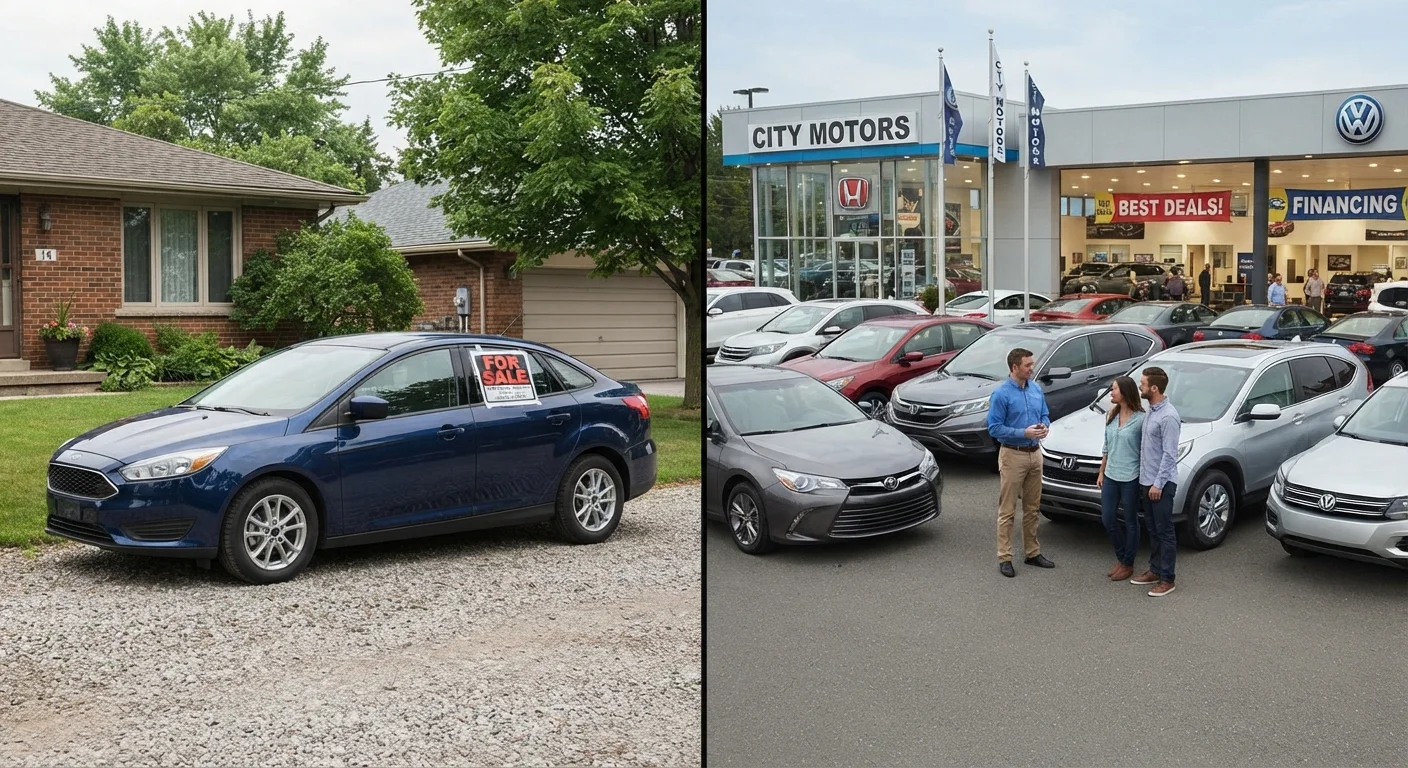
How the Two Channels Actually Differ
Buying a used car from a private seller and buying from a dealership aren't simply two versions of the same transaction - they operate under different rules, carry different risks, and suit different types of buyers. Understanding the structural differences before you start shopping puts you in a far stronger position.
A private seller is typically a current owner - an individual who has no licensing obligation, no required disclosures beyond what state law mandates, and no regulatory body holding them accountable the way a dealer is. A dealership, by contrast, is a licensed business regulated at the state level, subject to the Federal Trade Commission's Used Car Rule (which requires a Buyers Guide disclosing warranty status), and often required to perform safety inspections before resale. For a broader look at the full spectrum of purchase channels, see how auctions compare to dealers.
| Criterion | Private Seller | Dealership |
|---|---|---|
| Typical pricing | Often below dealer retail | Retail pricing with margin built in |
| Warranty availability | Rarely; almost always as-is | As-is or limited warranty options |
| Consumer protections | Limited; state law varies | FTC Used Car Rule, state statutes |
| Financing options | Buyer must arrange independently | On-site lender access |
| Title/paperwork handling | Buyer and seller manage jointly | Dealer prepares most documents |
| Vehicle inspection | Buyer arranges; seller may resist | Pre-sale inspection often performed |
| Negotiation dynamic | Direct; emotionally variable | Structured; policies may limit flex |
| Vehicle history transparency | Buyer must obtain report | Report often provided; verify anyway |
Pricing Dynamics: What You're Actually Comparing
Private sellers generally list vehicles closer to trade-in value - without the overhead costs a dealership carries, such as reconditioning, lot fees, and staffing. That can translate to a lower asking price, but it's not a universal rule. Some private sellers price aspirationally based on emotional attachment or inflated online valuations.
Dealers price for margin, but they also recondition vehicles, conduct inspections, and absorb the liability of disclosure requirements. A dealer's higher asking price sometimes reflects genuine added value - a verified service history, a multi-point inspection, or a limited warranty. Understanding negotiation principles helps you approach either setting with realistic expectations.
~40%
Used car sales from private parties
Industry estimates consistently suggest a substantial minority of used vehicle transactions in the U.S. occur between private parties rather than through licensed dealers.
$1,000-$3,000
Typical price gap: private vs. dealer
Consumer automotive market analysis generally finds private listings average meaningfully below dealer retail for comparable vehicles, though the spread varies by make, model, and condition.
Before comparing any two prices, confirm what's included. A private-sale vehicle sold strictly as-is - with no warranty and no recourse - is a different product from a dealer-sold vehicle carrying even a 30-day limited guarantee. Understanding what 'as-is' actually means is essential before signing anything in either context.
Protections, Paperwork, and Risk
Consumer protections are where the two channels diverge most sharply. When you buy from a licensed dealer, the FTC's Used Car Rule mandates a Buyers Guide disclosing whether the vehicle is sold as-is or with a warranty. State lemon laws and unfair-trade-practice statutes generally apply to dealer sales. None of these apply to a private transaction.
Paperwork is another practical difference. Dealers typically prepare the bill of sale, handle title transfer paperwork, and can often process temporary registration. In a private sale, both parties must execute the title correctly - errors in signing over a title can create legal and registration headaches that take months to resolve. If you're new to the process, a first-timer's roadmap to used car buying walks through what each step involves.
Always Verify Title Before Payment
In a private sale, confirming that the seller holds a clean, lien-free title in their name is one of the most important steps a buyer can take. A lien that wasn't disclosed - or a salvage brand the seller didn't mention - becomes the buyer's problem the moment the sale closes. Running a vehicle history report and, if possible, checking with your state's DMV before funds change hands can prevent costly legal complications.
Title risk is a particular concern in private transactions. Run a vehicle history report and, where possible, meet at your state's DMV to verify title status before exchanging funds. Dealers are legally required to deliver clean title; private sellers may not always know - or disclose - title problems, including salvage designations. Flood-damaged and salvage title vehicles present their own category of risk worth understanding separately.
Financing and the Cost of Convenience
Financing is one of the clearest practical advantages a dealership holds. Licensed dealers can submit your application to multiple lenders and present offers in a single visit. Private sellers cannot arrange auto financing - you'd need to secure a personal loan or a pre-approved auto loan from your bank or credit union before approaching a private sale. That pre-approval step is advisable regardless of where you buy, and comparing dealer financing to direct lending can help you understand the structural cost differences.
Convenience has a cost in both directions. Dealerships offer one-stop transaction management - financing, documentation, and sometimes trade-in processing - but that convenience is built into the business model. If you're also selling your current vehicle, comparing a private sale to trading in can help you decide whether keeping the transactions separate makes financial sense.
Neither channel is objectively superior. The right choice depends on your financial situation, your tolerance for risk, your familiarity with the process, and what a specific vehicle's history and condition actually justify. Approach both with the same standard of due diligence: pull a vehicle history report, arrange an independent pre-purchase inspection, and verify title status before any money changes hands.
This article provides general educational information about used vehicle purchase channels and is not legal or financial advice. Regulations and consumer protections vary by state. Consult a qualified professional for guidance specific to your situation.