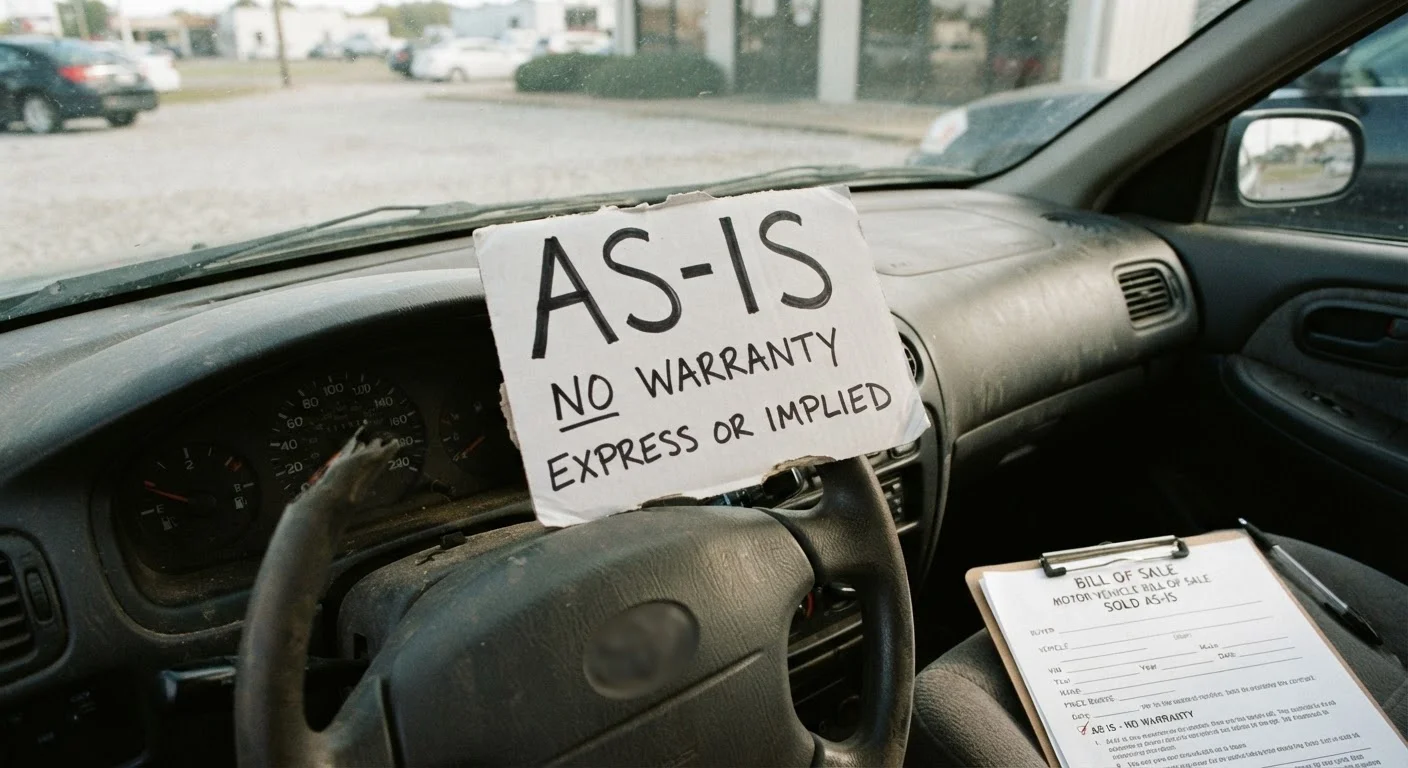
What 'As-Is' Actually Means in Plain Terms
The phrase 'as-is' appears on countless used car listings, but its legal weight is often underestimated. When you agree to buy a vehicle as-is, you are accepting it in its exact current condition - scratches, mechanical issues, hidden rust, and all - without any promise from the seller that the car is in good working order or fit for any particular purpose.
This is not simply informal language. It is a legal designation that limits your options if something goes wrong after the sale. The seller is released from most obligations the moment the contract is signed. There is no cooling-off period for used car purchases in most states, and there is no right to a refund because a problem emerged the next day.
For a broader look at how as-is terms apply across different types of purchases, see what 'as-is' really means when you're buying something.
As-Is Does Not Mean Fraud Is Permitted
An as-is sale limits warranty claims, but it does not give sellers a legal pass to misrepresent a vehicle's condition. Deliberate concealment of known defects - such as hiding flood damage or masking mechanical failures - can still expose a seller to fraud claims in civil or small claims court, regardless of what the contract says.
The Seller's Disclosure Obligations - and Their Limits
A common misconception is that an as-is sale gives the seller license to actively deceive. It does not. Most states draw a clear line between a seller having no duty to proactively volunteer every imperfection - which is generally true - and a seller deliberately lying or concealing a known material defect, which can constitute fraud.
If a seller knows the transmission is failing and tells you the car runs perfectly, that misrepresentation doesn't disappear behind an as-is label. Documenting conversations with a seller - especially any assurances made about the vehicle's condition - can matter significantly if a dispute arises later.
~40%
Used cars sold without any warranty coverage
Industry estimates suggest a substantial share of used vehicle transactions in the U.S. involve no dealer or manufacturer warranty, placing repair risk squarely on buyers.
$1,500+
Average unexpected repair cost for used car buyers
Consumer research from vehicle warranty and inspection services has found that hidden mechanical issues frequently lead to repair bills exceeding $1,500 within the first year of ownership.
How to Protect Yourself Before Signing
The most effective protection in an as-is transaction is knowledge gathered before you sign anything. An independent pre-purchase inspection - carried out by a mechanic you choose, not one recommended by the seller - is the single most valuable step you can take. A qualified technician can identify issues that are invisible to the untrained eye: transmission wear, frame damage, oil leaks, or signs of prior flood exposure.
Beyond the mechanical check, pull a vehicle history report using the VIN to review accident records, title status, odometer readings, and service history. Check for any open safety recalls through the National Highway Traffic Safety Administration (NHTSA) database, which is publicly accessible at no cost.
Always Get the Inspection in Writing
Ask your mechanic to provide a written report of their findings, not just a verbal summary. If a dispute arises later - or you want to use the findings to negotiate - a documented inspection carries far more weight than a memory of what was said in the parking lot.
Our used car pre-purchase checklist covers the mechanical, cosmetic, and documentation items to review before committing to any vehicle.
As-Is Sales at Dealerships vs. Private Sellers
Both dealerships and private sellers can sell vehicles as-is, but there are meaningful differences in how each transaction works. Dealerships selling as-is are required under the Federal Trade Commission's Used Car Rule to display a Buyers Guide stating that no warranty is provided. This form must be offered to buyers and included with the sale paperwork.
Private sellers face fewer formal obligations, but that doesn't mean less risk - often it means more. Private sales are almost always as-is by default, and the seller is typically an individual with limited accountability compared to a licensed business. Understanding those trade-offs is essential. The differences between private sellers and dealerships go well beyond price - they affect your protections, paperwork, and recourse.
One exception worth noting: certified pre-owned (CPO) vehicles sold by franchised dealerships are not sold as-is. CPO programs include manufacturer inspections and limited warranty coverage, which is reflected in their higher price point.
If you're still early in the process, Used Car Buying Decoded offers a complete roadmap from evaluating listings to closing a deal.
This article is for general informational and educational purposes only and does not constitute legal advice. Regulations governing vehicle sales vary by state. Consult a qualified legal professional if you have questions about your rights in a specific transaction.