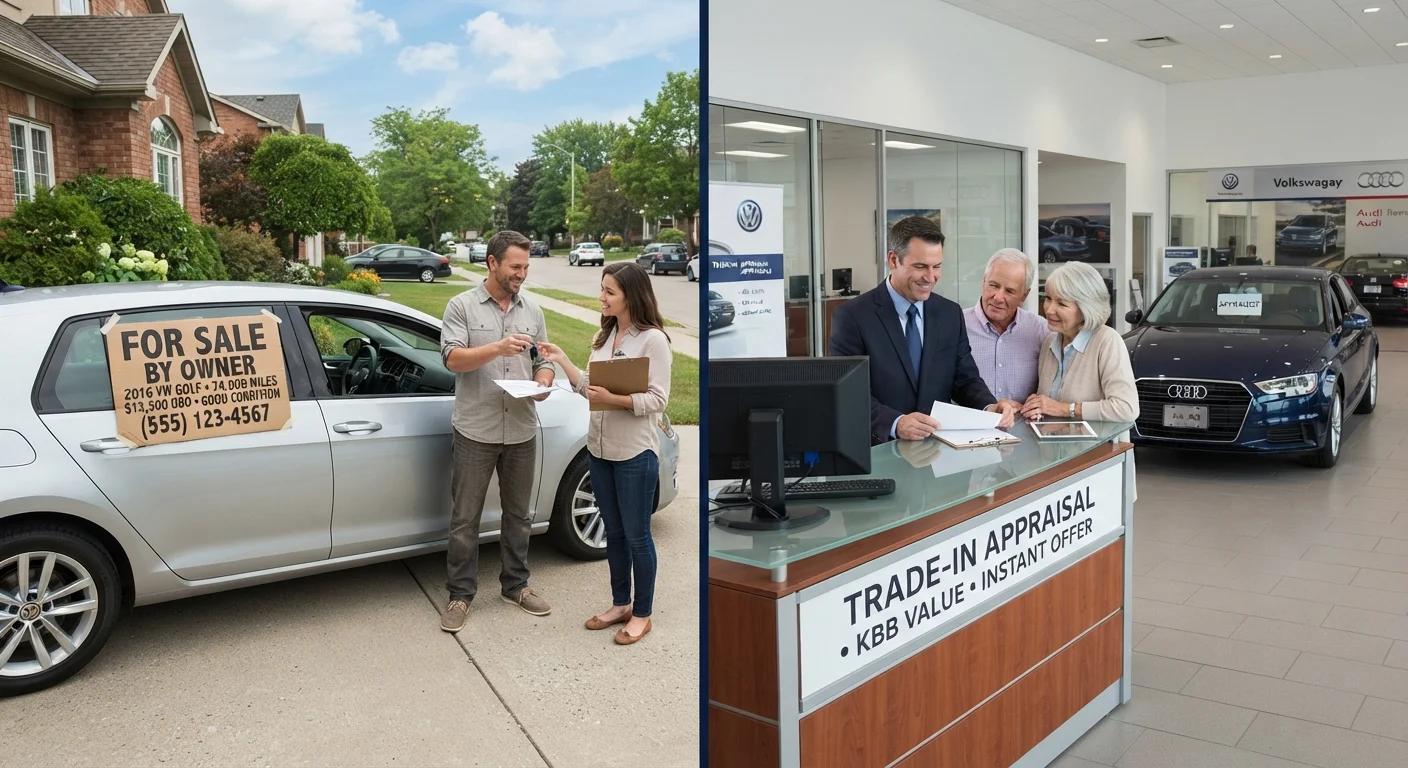
The Core Difference: Money vs. Convenience
When it comes time to part with your vehicle, two main paths exist: selling it yourself to a private buyer or handing the keys to a dealer as part of a trade-in. The central trade-off is straightforward - private sales generally produce more money, while trade-ins offer a far simpler process. Which matters more depends entirely on your priorities and circumstances.
A dealer buying your car as a trade-in is purchasing it at a wholesale price. They need room to recondition the vehicle, market it, and earn a profit on resale. A private buyer, by contrast, is paying retail - they're getting the car for their own use, not to flip it. That gap, often several thousand dollars, is where the financial case for a private sale lives.
Understanding how dealers arrive at trade-in figures is worth doing before any negotiation. See our explanation of how dealers calculate trade-in value for a closer look at the factors they weigh.
| Criterion | Private Sale | Trade-In |
|---|---|---|
| Likely sale price | Closer to retail value | Wholesale/below market |
| Time to complete | Days to several weeks | Same day possible |
| Effort required | High - listing, calls, test drives | Low - dealer handles most steps |
| Paperwork burden | Seller manages title and bill of sale | Dealer manages paperwork |
| Sales tax benefit | None | May reduce taxable purchase price |
| Outstanding loan handling | Seller coordinates with lender | Dealer coordinates payoff |
| Buyer negotiation | Direct with individual buyers | With dealership appraiser |
What a Private Sale Actually Requires
Selling privately is not passive. You'll need to research your car's fair market value, write a compelling listing with quality photos, field inquiries, coordinate test drives safely, and negotiate directly with buyers. Once you agree on a price, you'll handle the title transfer, bill of sale, and - if applicable - coordinating the payoff with your lender.
That process can take days or weeks depending on demand, your asking price, and local market conditions. For a detailed walkthrough, see what the private sale process actually involves - from pricing through paperwork and safe payment handling.
The upside is financial. Vehicles with strong private-market demand - popular models in good condition with reasonable mileage - can fetch meaningfully more than any dealer would offer. That premium is the reward for the extra legwork.
$1,000-$3,000+
Typical private sale premium over trade-in
Industry observers and automotive valuation sources generally estimate private sales yield several thousand dollars more than dealer trade-in offers for the same vehicle.
45+ states
States offering trade-in sales tax credit
Most U.S. states allow buyers to deduct the trade-in value from the taxable price of a new vehicle purchase, reducing the overall tax owed at time of sale.
The Trade-In Tax Advantage
One often-overlooked benefit of trading in at a dealership is the potential sales tax reduction. In many U.S. states, when you apply a trade-in toward the purchase of another vehicle, you're only taxed on the difference between the two prices - not the full cost of the new car. Depending on your state's tax rate and the value of your trade-in, that can represent a meaningful saving.
Sales Tax Rules Vary by State
The trade-in tax credit applies in most but not all U.S. states. States like California, Michigan, and others each have their own rules about how - and whether - trade-in value offsets taxable purchase price. Before factoring this into your decision, verify current rules with your state's Department of Motor Vehicles or a licensed tax professional.
This advantage doesn't apply in every state, and the rules vary. It's worth checking your state's specific policy before assuming the tax benefit offsets the price difference between trade-in and private sale proceeds.
For sellers who aren't simultaneously purchasing a vehicle, this benefit is irrelevant - making private sale the stronger financial option in those cases.
Which Route Fits Your Situation?
There's no universally correct answer. If your vehicle has a lien, a private sale requires coordinating with your lender to satisfy the loan at closing - a step that adds complexity some sellers prefer to avoid. Dealers handle this routinely. If you have flexibility in your timeline and the car is desirable, the private market typically rewards patience.
It's also worth noting that trade-in offers can vary significantly between dealerships - so if you lean toward trading in, getting multiple appraisals is a sound strategy before committing.
Ultimately, treating both options as legitimate and worth evaluating - rather than defaulting to one - puts you in the best position. Run the numbers, account for your time, and weigh what matters most in your current situation. Both paths lead to the same destination; they just cost different things to travel.