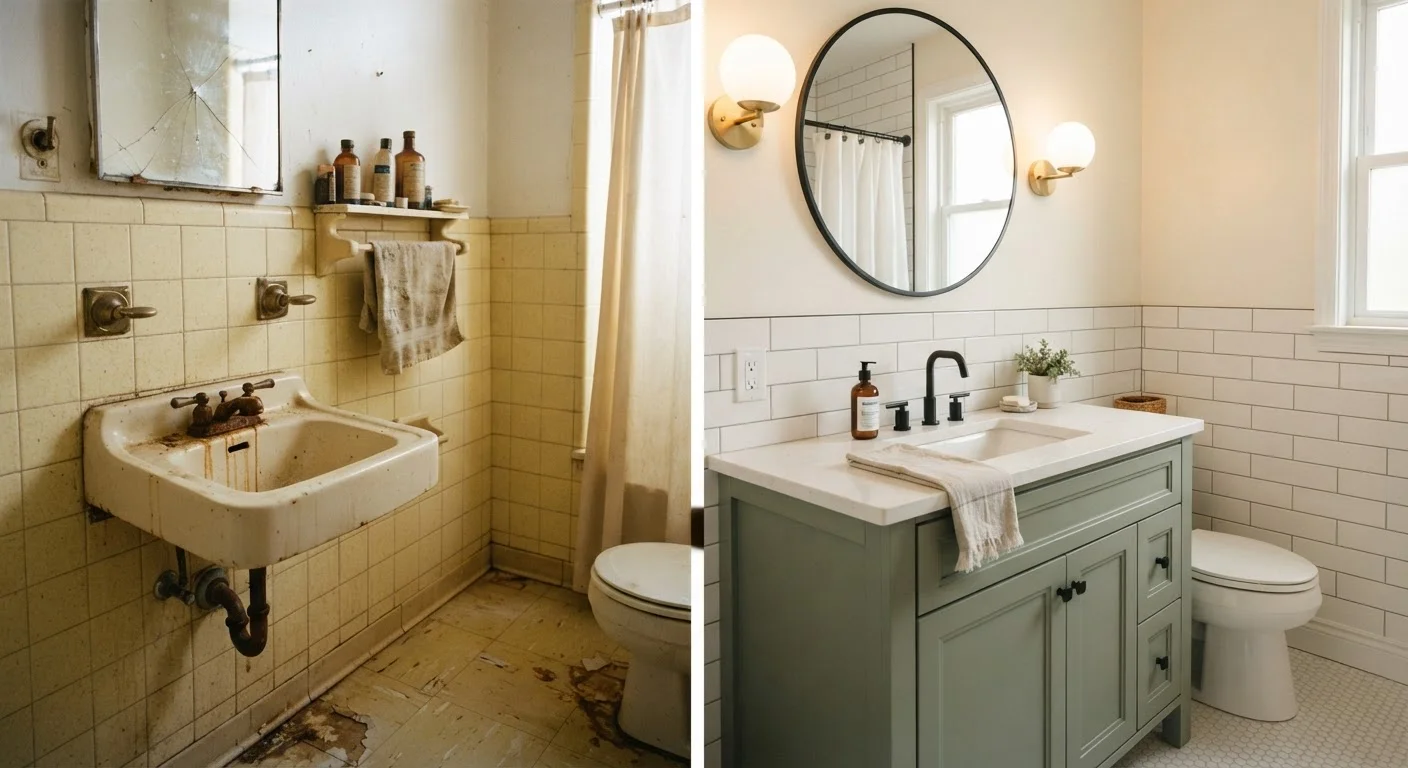
What Each Approach Actually Involves
The term "bathroom remodel" gets applied loosely to everything from swapping out a faucet to gutting a room down to the studs. Understanding what each approach genuinely entails helps set realistic expectations - and prevents spending money on work you don't need.
A full bathroom remodel typically involves removing existing fixtures, tile, cabinetry, and sometimes drywall or subfloor. It may include upgrading plumbing supply and drain lines, updating electrical panels or adding circuits for GFCI outlets and ventilation fans, and installing new tile from the substrate up. Depending on scope, permits are often required - and in most jurisdictions, licensed contractors must perform electrical and plumbing work. Costs for a mid-range full remodel generally range from roughly $10,000 to $25,000 or more, with timelines of two to six weeks.
A cosmetic refresh works within the existing structure. This includes repainting walls and cabinets, replacing a vanity top or faucet, swapping mirrors and light fixtures, re-caulking the tub surround, installing new hardware, and updating accessories. These projects typically cost $500 to $5,000 depending on which elements you tackle, and many can be completed over a weekend or two. No permits are generally required for purely cosmetic changes, though you should always verify local requirements before beginning any work.
| Criterion | Full Bathroom Remodel | Cosmetic Refresh |
|---|---|---|
| Typical cost range | $10,000-$25,000+ | $500-$5,000 |
| Typical timeline | 2-6 weeks | 1-5 days |
| Permits typically required | Yes, often | Rarely |
| Addresses structural issues | Yes | No |
| Plumbing/electrical work | Included as needed | Not included |
| Layout can be changed | Yes | No |
| Disruption level | High - bathroom unusable | Low - minimal downtime |
| Best for pre-sale ROI | Moderate recoupment | Often stronger relative ROI |
Signals That You Need a Full Remodel
Certain conditions make a cosmetic refresh inadequate - not because of preference, but because surface work cannot fix what's structurally or systemically wrong.
- Water damage or mold: Soft spots in the floor, stained drywall, or persistent musty odors indicate moisture has penetrated the substrate. Painting over or tiling on top of damaged material accelerates deterioration and creates health concerns.
- Outdated or failing plumbing: Galvanized steel pipes, frequent drain clogs, or low water pressure point to infrastructure issues. A new vanity installed over failing supply lines is a temporary fix at best.
- Non-functional layout: If the toilet placement, door swing, or shower configuration genuinely impairs use - especially in a primary bath - only a layout change resolves it. That requires opening walls and moving drain lines.
- Electrical deficiencies: Bathrooms built before modern codes may lack GFCI outlets, adequate ventilation, or sufficient circuits for modern lighting. These must be corrected by a licensed electrician.
If any of these conditions apply, attempting a refresh first typically leads to doing the remodel anyway - at additional cost. For broader context on evaluating structural renovation projects, see our look at structural realities behind major remodeling work.
When to Get a Professional Assessment First
If you suspect water damage or mold but aren't sure of the extent, having a contractor or home inspector evaluate the space before deciding on your approach is worthwhile. Opening a small test area of drywall or flooring can reveal whether the damage is localised or widespread - information that significantly changes the project scope and budget. This step costs relatively little and prevents the more expensive mistake of beginning a cosmetic refresh over a problem that requires full remediation.
Maximising a Cosmetic Refresh
When the bathroom's bones are solid, a well-executed refresh can deliver a surprising level of transformation. Prioritising the right elements matters.
Lighting has an outsized impact. Replacing a builder-grade bar fixture with layered lighting - a vanity fixture plus recessed or sconce options - changes the entire feel of a room. This is typically a straightforward swap for a licensed electrician or a confident DIYer comfortable with standard wiring.
Vanity and mirror updates are among the most visible changes. Many homeowners choose to paint existing cabinet boxes and replace only the doors and hardware rather than replace the entire unit - an approach similar to cabinet refacing. For a direct comparison of those trade-offs in kitchen and bath applications, see our guide on cabinet refacing versus full cabinet replacement.
Re-caulking and grout refresh are lower-cost but high-impact. Discolored grout and failing caulk read as neglect even in otherwise clean bathrooms. Re-caulking a tub surround and applying grout colorant can make existing tile look significantly newer without any demolition.
Hardware and accessories - towel bars, toilet paper holders, robe hooks, and faucets - create visual cohesion. Mixing finishes (chrome alongside brushed nickel) is a common source of visual clutter; unifying these elements is inexpensive and effective.
If you're considering a refresh partly to add a tile feature, our detailed walkthrough on tile backsplash installation sequencing covers surface prep and layout steps relevant to bathroom applications as well.
Cost, Disruption, and Resale Considerations
Budget and timeline are often the deciding factors when homeowners are on the fence between approaches. A full remodel demands weeks without a functioning bathroom - a real logistical challenge in a single-bathroom home. It also involves contractor scheduling, permit timelines, and decision fatigue across dozens of selections. See our guidance on managing daily life during a major renovation if you proceed with that route.
50-70%
Typical resale recoupment for a mid-range bathroom remodel
Industry remodeling cost-versus-value analyses consistently show mid-range bathroom renovations recouping roughly half to two-thirds of their cost at resale, though this varies by market.
$10,000+
Average cost of a full mid-range bathroom renovation
National remodeling cost data places a mid-range full bathroom remodel above $10,000, with significant variation by region, size, and fixture selections.
2-5 days
Typical completion time for a cosmetic bathroom refresh
Projects limited to painting, fixture swaps, hardware updates, and re-caulking can typically be completed over a long weekend without trade contractors.
For homeowners preparing to sell, the math often favors the refresh. Research from the remodeling industry consistently shows that bathroom remodels - even mid-range ones - recoup only a portion of their cost at resale, typically in the range of 50-70%. A targeted refresh costing $2,000 to $4,000 can improve a buyer's first impression meaningfully without the financial exposure of a $20,000 renovation. Our overview of which pre-sale projects tend to recoup their cost explores this further across multiple project types.
For homeowners planning to stay long-term, the calculus shifts: the comfort, functionality, and enjoyment of a well-designed space may well justify the investment of a full remodel - especially if the current layout genuinely frustrates daily use. The right answer depends on your home's condition, your timeline, and your honest assessment of what the space actually needs. If you're also evaluating how improvement investments compare across project types, our analysis of room additions versus finishing existing space offers useful framing for thinking about where renovation dollars tend to go furthest.