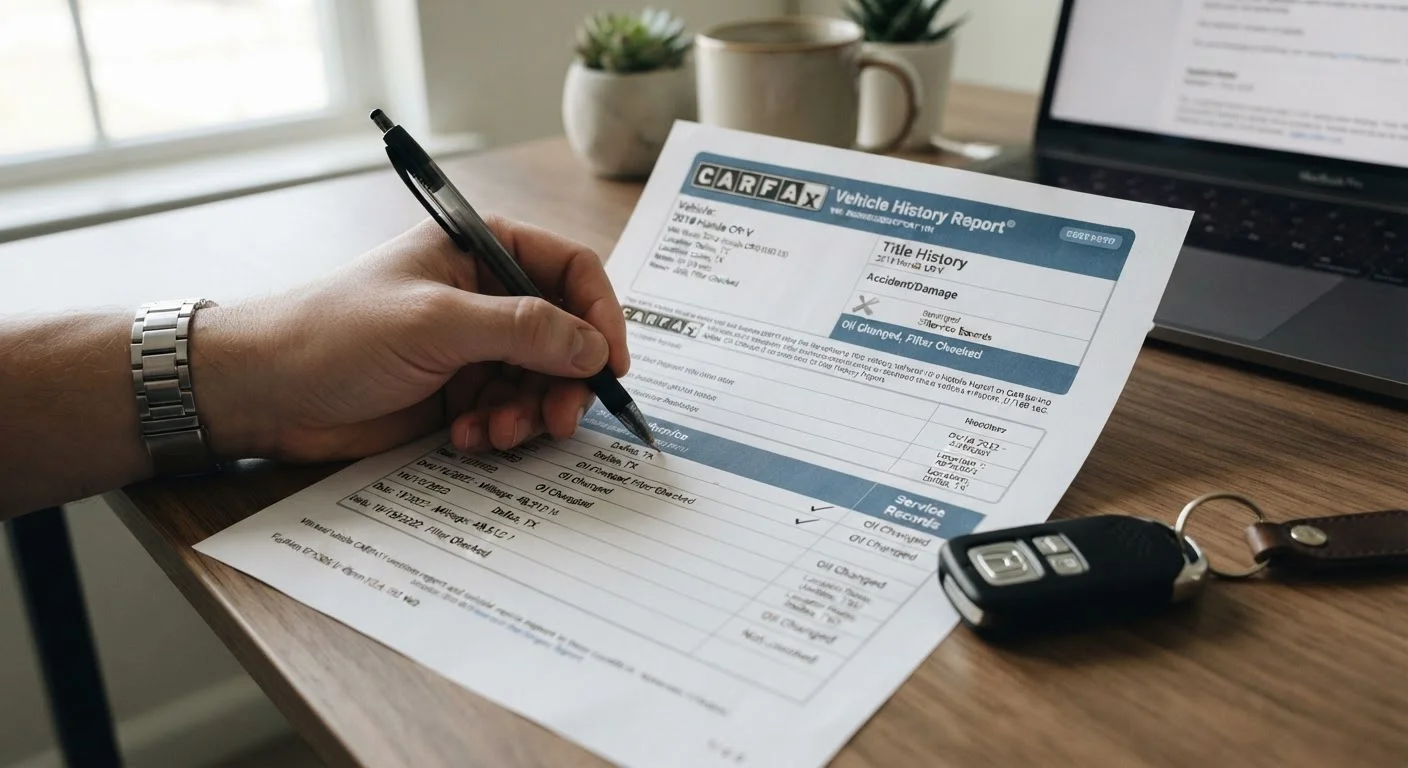
Why Vehicle History Reports Can Feel Overwhelming
A vehicle history report can run several pages and include dozens of data entries - registration records, reported accidents, lien information, odometer readings at each inspection, and more. For a first-time used car buyer, it can read like a bureaucratic wall of text. The good news: most sections follow a predictable structure, and once you know which entries carry real weight, the rest falls into place.
Think of the report as a paper trail, not a verdict. It reflects what was officially reported - insurance claims, state DMV records, emissions checks - but it cannot capture everything. A private repair made without filing an insurance claim, for example, may not appear at all. That's why a history report works best as one layer of due diligence alongside a physical test drive and ideally a pre-purchase inspection from an independent mechanic.
What you will need
What Each Section Is Actually Telling You
Reports typically open with title information - the most consequential section. Look for title brands such as salvage, rebuilt/reconstructed, flood, lemon law buyback, or odometer rollback. These designations are assigned by states and insurers and indicate that something significant happened to the vehicle. A salvage title, for instance, means an insurer declared the car a total loss at some point. These aren't minor notes - they affect insurability, resale value, and long-term reliability in meaningful ways.
The accident and damage history section requires more nuance. A single reported fender-bender repaired by a certified shop is very different from multiple structural damage entries. Pay attention to what was damaged (cosmetic vs. frame or airbag deployment), whether repairs were documented, and how long ago the incident occurred. Our deeper breakdown of vehicle history report sections covers damage classifications in more detail.
The odometer history table shows mileage readings logged at different points - emissions tests, inspections, title transfers. Look for a consistent upward trend. Any reading that is lower than a prior entry is a red flag for potential odometer fraud. Mileage in context matters: high miles on a well-maintained highway-driven vehicle can be less worrying than low miles on a car with no service records.
The ownership history section shows how many owners the vehicle has had and in which states. Frequent ownership changes in a short period can indicate dissatisfaction with the vehicle. Multiple state registrations may also signal a car that has moved around to avoid specific inspection regimes - worth noting, though not automatically disqualifying.
Finally, check the recall section if the report includes one. Open recalls mean the manufacturer has identified a safety issue and issued a free repair - but the work hasn't been done yet. You can verify open recalls independently through the NHTSA website using the VIN. Understanding your rights and options around recalls is worthwhile reading before closing any deal.
Service Records May Exist Outside the Report
Vehicle history reports only capture data that was officially submitted - dealer services, insurance claims, and state inspections. Oil changes at independent shops, private repairs, and work done by a previous owner at home often won't appear. If service history looks sparse, ask the seller directly and request any physical maintenance receipts they have.
Using the Report as a Negotiation Tool
A history report isn't only a screening device - it's leverage. If the report shows a past accident with documented professional repairs and no structural damage, that's actually a positive data point. If it shows an open recall or an undisclosed title brand, you have grounds to renegotiate the price or walk away.
Bring specific entries to the seller and ask direct questions. Ask for repair receipts that correspond to reported incidents. If service records are sparse, ask the seller why - sometimes records exist but were never submitted to the reporting system. Well-documented maintenance history is one of the clearest indicators of how seriously a previous owner took care of the vehicle.
For a broader framework on approaching a used vehicle purchase from start to finish, see our used car buying roadmap. A vehicle history report is one important checkpoint in that process - valuable precisely because it gives you documented facts, not just a seller's word.
A Clean Report Is Not a Guarantee
A vehicle history report reflects only what was officially recorded. Unreported accidents, private repairs, and undisclosed flood damage can all go undetected. Never rely solely on a history report - always combine it with a hands-on inspection and, when possible, an independent mechanical evaluation before completing a purchase.