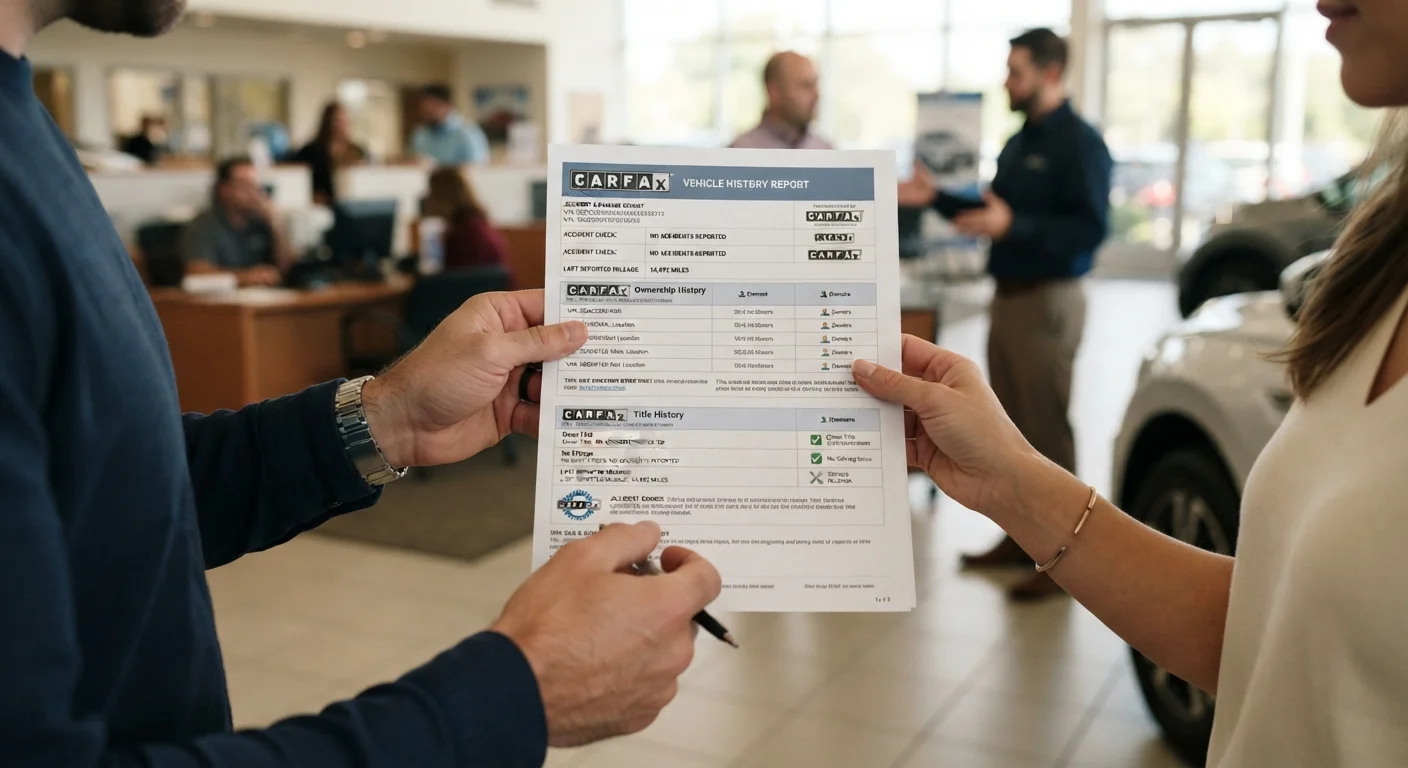
What a Vehicle History Report Actually Contains
A vehicle history report aggregates records from a wide network of sources: state departments of motor vehicles, insurance companies, auto auctions, law enforcement databases, and participating repair facilities. The result is a timeline of a vehicle's documented life-from the moment it was first titled through every ownership transfer, accident claim, and emissions inspection on record.
Understanding what you're looking at starts with knowing the structure. Most reports organize data into consistent sections: title history, odometer readings, accident and damage events, ownership and usage history, and service records. Each section answers a different question about the vehicle's past. To get a deeper understanding of the VIN itself-the identifier that connects all of this data-see our guide on what the VIN tells you.
What you will need
How to Work Through the Report Step by Step
Reading a vehicle history report effectively means going section by section rather than scanning for a single red flag. The steps below walk you through the process in the order that surfaces the most consequential information first.
Vehicle Identification Number (VIN)
The unique 17-character code used to pull the report for a specific vehicle.
Vehicle History Report
The document-digital or printed-containing the vehicle's ownership, accident, and title history.
Pre-Purchase Inspection from a Licensed Mechanic
A hands-on mechanical evaluation that confirms or contradicts what the history report says.
Locate and verify the VIN
Before pulling a report, confirm the VIN from at least two physical locations on the vehicle: the dashboard plate visible through the windshield and the driver-side door jamb sticker. Cross-check both against the title or registration document. A mismatch between locations is an immediate red flag.
Read the title history section first
This section lists every state where the vehicle was registered and any title brands applied. Common brands to watch for include:
- Salvage: An insurer declared the vehicle a total loss after damage or theft.
- Rebuilt/Reconstructed: A salvage vehicle was repaired and re-inspected, but its history remains significant.
- Flood: Water damage was reported-corrosion and electrical issues can be long-term problems.
- Lemon law buyback: A manufacturer repurchased it due to persistent defects.
Multiple state registrations in a short period may indicate title washing-a practice where a branded title is obscured by moving the vehicle across state lines.
Examine the odometer history
Reports list odometer readings recorded at each title transfer, inspection, or service visit. Read these entries chronologically. Mileage should increase consistently over time. Look for:
- A reading that is lower than a previous entry (rollback)
- Large unexplained gaps between entries
- A notation of 'odometer discrepancy' or 'not actual mileage'
Review the accident and damage records
Accident entries typically come from insurance claims, police reports, or inspection databases. Pay close attention to the severity descriptors:
- Minor/cosmetic damage: Bumper scuffs or door dings with no structural involvement.
- Moderate damage: May include frame or body panel replacement-request repair documentation.
- Airbag deployment: Indicates a significant collision; verify airbags were properly replaced by a certified shop.
- Structural damage: Frame damage affects crash safety and handling-consider this a serious concern.
Note that not all accidents are reported. Private cash repairs often go unrecorded, which is why a physical inspection matters.
Check ownership and use history
This section reveals how many owners the vehicle has had and, importantly, how it was used. Look for entries such as:
- Rental or fleet use: High-volume, sometimes harder-driven miles with variable maintenance standards.
- Lease return: Often well-maintained, but confirm with service records.
- Commercial use: Delivery or rideshare use adds wear beyond what the odometer alone reflects.
Multiple private owners in a short timeframe can indicate recurring issues that prompted repeated resales.
Scan the service and maintenance records
Many reports include records from dealerships and participating repair shops. Look for regular oil changes, scheduled maintenance at manufacturer-recommended intervals, and any recurring repairs to the same system-repeated transmission or brake work, for example, can signal an unresolved problem. Gaps in service records don't necessarily indicate neglect, but they're worth asking the seller about directly.
A Report Is a Starting Point, Not a Guarantee
Vehicle history reports are only as complete as the data reported to them. Private repairs, unreported accidents, and out-of-network service visits may never appear. Always follow up a report review with an in-person inspection by a qualified, independent mechanic before finalizing any purchase decision.
Title Brands Can Affect Insurance and Financing
Vehicles carrying salvage, rebuilt, or flood titles are frequently ineligible for standard financing and may face limitations on insurance coverage. Some insurers will decline comprehensive and collision coverage on branded-title vehicles entirely. Verify insurability and financing eligibility before committing to a purchase.
Putting the Report in Context
A vehicle history report is one of the most useful tools available to a used-car buyer, but it has real limits. Data only appears if it was reported-private repairs, out-of-area accidents, and off-the-books transactions are invisible to any reporting service. That's why industry guidance consistently recommends pairing any report with a pre-purchase inspection from a mechanic who has no financial stake in the sale.
For a deeper look at how to interpret what you find-specifically which flags are deal-breakers and which are minor concerns worth negotiating on-our editorial on reading a vehicle history report without getting lost covers the nuances in detail.
Don't Rely Solely on One Report Provider
Different report providers draw from different data sources, and no single service captures everything. If a purchase is significant, consider pulling a report from more than one source and comparing results. Cross-referencing can surface discrepancies that a single report misses.
This article is for general informational purposes only. Always consult a qualified mechanic or licensed automotive professional before making any vehicle purchase decision.