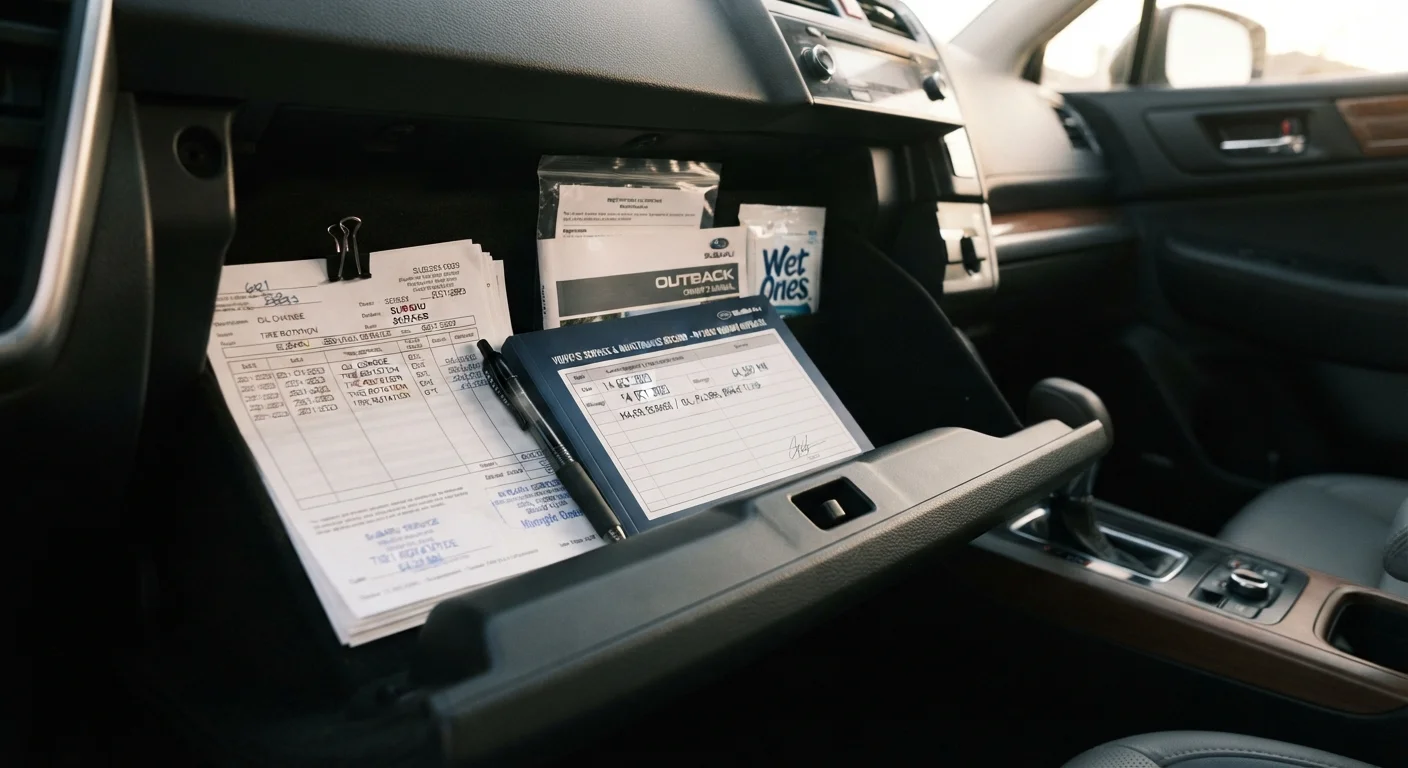
Why Maintenance Records Matter More Than Most Drivers Realize
Most drivers know they should keep up with oil changes and tire rotations, but far fewer think carefully about documenting that work. A well-maintained vehicle without proof of its service history leaves a lot on the table - both financially and practically.
When a dispute arises over a warranty claim, a manufacturer or dealer will often ask for service records to confirm that the vehicle was maintained according to schedule. Without them, even legitimate claims can be denied or delayed. Similarly, prospective buyers of a used vehicle place real weight on documented history - a stack of receipts or a complete digital log signals that the car was cared for, which can meaningfully support the asking price. For more context on how this plays out during a sale, see how vehicle history reports are read by buyers.
Beyond transactions, complete records help any mechanic - or you - identify patterns. If the same component keeps failing, a timeline of services makes it far easier to spot the root cause.
What Every Maintenance Record Should Include
Not all documentation is equal. A receipt that says "oil change" tells part of the story; a complete entry tells all of it. Every record you keep should capture these core details:
- Date of service - even approximate dates help establish a timeline.
- Odometer reading - mileage at the time of service is often more useful than dates alone.
- Work performed - be specific (e.g., "replaced front brake pads and rotors" rather than "brake work").
- Parts used - brand, part number if available, and whether parts were OEM or aftermarket.
- Who did the work - shop name and location, or "owner-performed" for DIY tasks.
- Cost - useful for budgeting and for evaluating future repair decisions.
Documenting DIY Maintenance
If you handle any maintenance yourself, document it the same way a shop would. A handwritten entry with the date, mileage, and parts used carries real weight - especially when paired with a receipt for the parts purchased. Unsupported claims of DIY service carry less credibility during a sale or warranty dispute than documented entries with corresponding part receipts.
If you handle any maintenance yourself, document it the same way a shop would. A handwritten entry with the date, mileage, and parts used carries real weight - especially when paired with a receipt for the parts purchased. See when DIY maintenance makes sense for guidance on which tasks are appropriate to handle at home.
Choosing a Format and Sticking With It
There is no single correct way to keep maintenance records - the format that you will actually use consistently is the right one.
Choose one system and use it every single time a service occurs.
Gaps in a maintenance log are almost as problematic as no log at all. Consistency demonstrates diligence and makes the record credible to buyers, mechanics, and warranty administrators. Switching formats midway through ownership creates confusion and missing entries.
Scan or photograph every receipt immediately after a service visit.
Paper receipts fade and tear. A digital copy stored in a cloud folder - organized by year - ensures you have permanent, searchable proof regardless of what happens to the physical document.
Record mileage at every service, not just the date.
Manufacturer maintenance schedules are often mileage-based, not calendar-based. Mileage records allow you - and any future owner or mechanic - to verify that interval-based services were completed on schedule.
Document declined services and the reason for the decision.
Sometimes a shop recommends a service and you defer it. Noting that it was identified but deferred - and why - prevents ambiguity later and helps you track outstanding items for the next visit.
Transfer records to the new owner when selling the vehicle.
Handing over a complete service history builds buyer confidence, supports your asking price, and reduces the chance of post-sale disputes. Buyers who can verify the vehicle's history are more likely to proceed with confidence.
Whatever system you choose, store backups. A paper logbook kept in the glovebox can be lost or damaged. A photo of every receipt saved to a dedicated folder in cloud storage takes seconds and creates a durable archive.
Keeping maintenance records also feeds naturally into broader financial planning. Understanding what your vehicle actually costs to maintain each year - versus what you budget for it - connects directly to personal budgeting fundamentals. Drivers who track these costs are better positioned to decide whether an extended warranty makes financial sense; that decision is explored in depth in our article on extended warranties versus self-insuring repair costs.
Getting Started: Quick Actions You Can Take Today
If your records are incomplete or nonexistent, don't let that discourage you. Starting now - even mid-ownership - is far better than waiting until you're about to sell or face a repair dispute.
Dealers and independent shops can often print a service history for work they completed on your vehicle. Calling your regular shop and asking for a summary of past services is a straightforward first step toward reconstructing a record.
This article is for general informational purposes only and does not constitute legal, financial, or mechanical advice. Consult a qualified mechanic or licensed professional for guidance specific to your vehicle and situation.