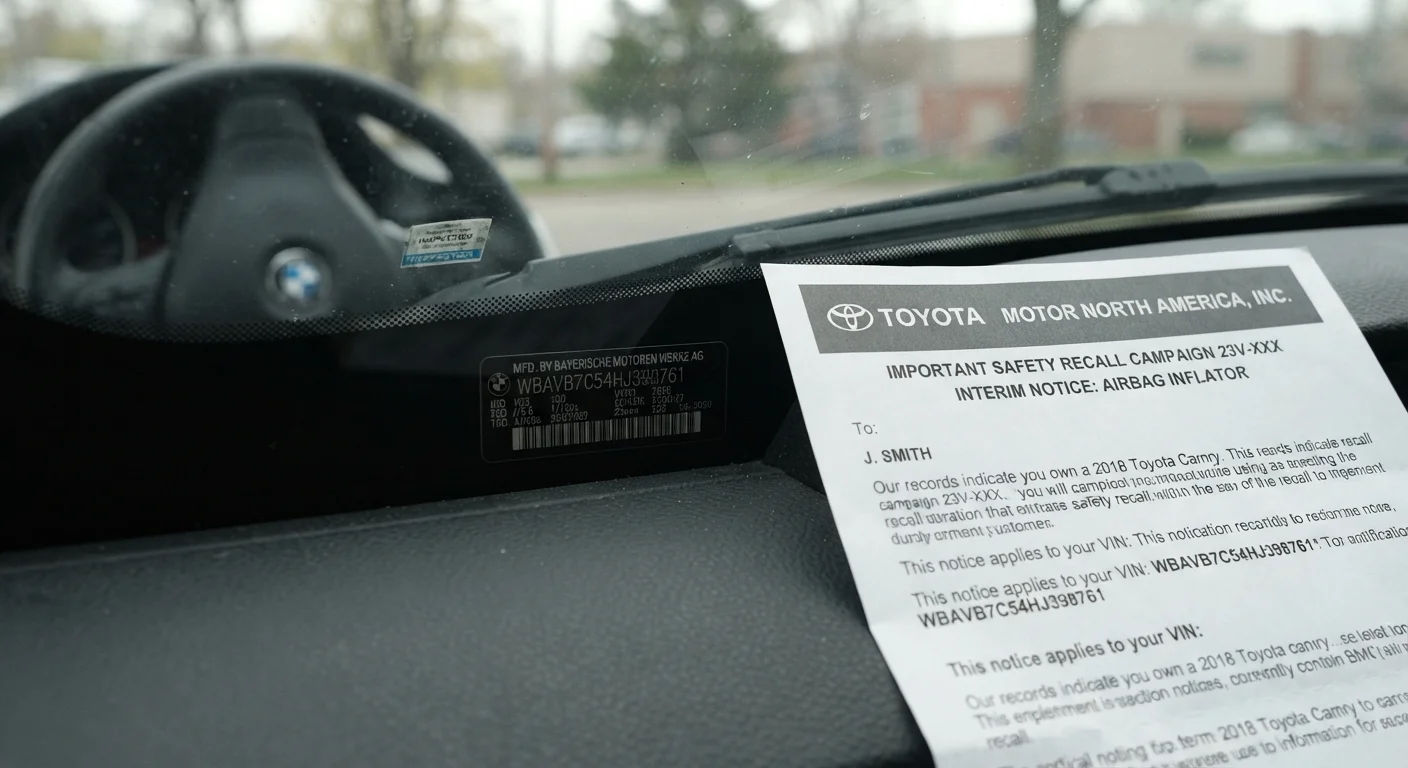
What a Vehicle Recall Actually Means
A vehicle recall is issued when a manufacturer or the National Highway Traffic Safety Administration (NHTSA) determines that a production vehicle - or one of its components - has a defect that poses an unreasonable risk to safety, or fails to meet federal motor vehicle safety standards. Recalls can cover anything from software errors in driver-assistance systems to faulty ignition switches or defective airbag inflators.
Manufacturers are legally required under the National Traffic and Motor Vehicle Safety Act to notify registered owners by first-class mail within 60 days of a recall decision, and to provide a free remedy. NHTSA oversees this process and maintains a public database of all active and historical recalls.
It's worth noting: you are not legally required to have a recall repaired. However, choosing not to address a known safety defect puts you, your passengers, and other road users at risk - and may affect insurance or liability considerations depending on circumstances. For context on how remedies are generally structured, our article on refund, replacement, or repair options covers the broader consumer rights landscape.
Recall Repairs Are Always Free
Federal law requires manufacturers to remedy safety recalls at no cost to the vehicle owner, regardless of whether you purchased the vehicle new or used and regardless of the vehicle's age at the time of the recall. You should never be asked to pay for parts or labor on a covered recall repair. If a dealer attempts to charge you, contact the manufacturer's customer service line and NHTSA directly.
How to Check and Act on an Open Recall
The process of identifying and resolving a vehicle recall is straightforward for most owners. You'll need your VIN, access to NHTSA's online database, and a scheduled appointment at an authorized dealership. Here's what that looks like in practice.
What you will need
NHTSA Recall Lookup Tool (recalls.nhtsa.dot.gov)
The official U.S. government database for checking open vehicle recalls by VIN or by make, model, and year.
Vehicle Registration or Title
Confirms your VIN and ownership details when scheduling a recall repair with a dealership.
Manufacturer's Customer Service Line
Used to escalate recall repair scheduling issues or inquire about parts availability if a dealership cannot accommodate you promptly.
Locate Your Vehicle Identification Number (VIN)
Your VIN is a unique 17-character code assigned to your vehicle. You can find it in three common places:
- On the dashboard, visible through the lower-left corner of the windshield from outside the vehicle
- On the sticker inside the driver's door jamb
- On your vehicle title, registration card, or insurance documents
Write it down exactly as shown - every character matters.
Check the Official NHTSA Recall Database
Go to recalls.nhtsa.dot.gov and enter your full 17-character VIN into the search field. The tool will return any open safety recalls associated with your specific vehicle. Each result will include:
- A description of the defect or safety concern
- The potential risk to drivers or passengers
- The remedy the manufacturer must provide
- Whether the remedy is currently available
NHTSA also allows you to sign up for recall alerts tied to your VIN so you're notified automatically if a new recall is issued.
Review the Recall Details and Assess Urgency
Not all recalls carry the same level of risk. Read the recall description carefully to determine:
- Whether the defect affects a safety-critical system (brakes, steering, airbags, fuel systems)
- Whether the manufacturer has classified it as a high-priority or urgent recall
- Whether a remedy is already available or still in development
If parts are not yet available, the manufacturer is required to notify you when they become so. In the meantime, NHTSA or the manufacturer may offer interim guidance on precautions you can take.
Contact an Authorized Dealership to Schedule the Repair
Recall repairs must be performed by an authorized dealership for your vehicle's brand - not by independent repair shops, which are not certified to perform recall work under federal guidelines. Call the dealership's service department, provide your VIN, and confirm that parts are in stock for your specific recall.
You are entitled to a loaner vehicle or rental reimbursement from many manufacturers if the repair requires an extended service visit, though this varies by manufacturer and recall terms.
Confirm Repair Completion and Keep Your Documentation
After the repair is completed, ask the dealership for a written repair order or service record that clearly states:
- The recall campaign number
- The work performed and parts replaced
- The date of completion
Store this documentation with your vehicle records. It confirms the recall was addressed and can be valuable when selling the vehicle. You can also verify the recall is closed by re-checking your VIN on the NHTSA site after the repair.
Some Recalls Involve Serious Safety Risks
Certain recalls - particularly those involving braking systems, steering components, or airbag inflators - can present an immediate safety hazard while driving. If NHTSA or the manufacturer classifies a recall as posing an unreasonable risk to safety, consider limiting use of the vehicle until the repair is completed. Review the recall description carefully to understand the nature of the defect.
Check Recalls When Buying Used
Before purchasing a used vehicle, always run the VIN through NHTSA's recall database. Open recalls do not automatically transfer as a seller's obligation, and you could inherit a safety issue. Pair this with a full vehicle history report - see our guide on reading a vehicle history report for what else to look for.
Product recalls extend beyond vehicles - if you own other consumer goods with potential safety concerns, see our related article on checking product safety recalls for how to search official databases.
This article provides general information about vehicle recalls for educational purposes only. Specific recall details, remedies, and timelines vary by vehicle and manufacturer. Always verify information through NHTSA's official recall database and contact your authorized dealership for guidance on your specific situation.