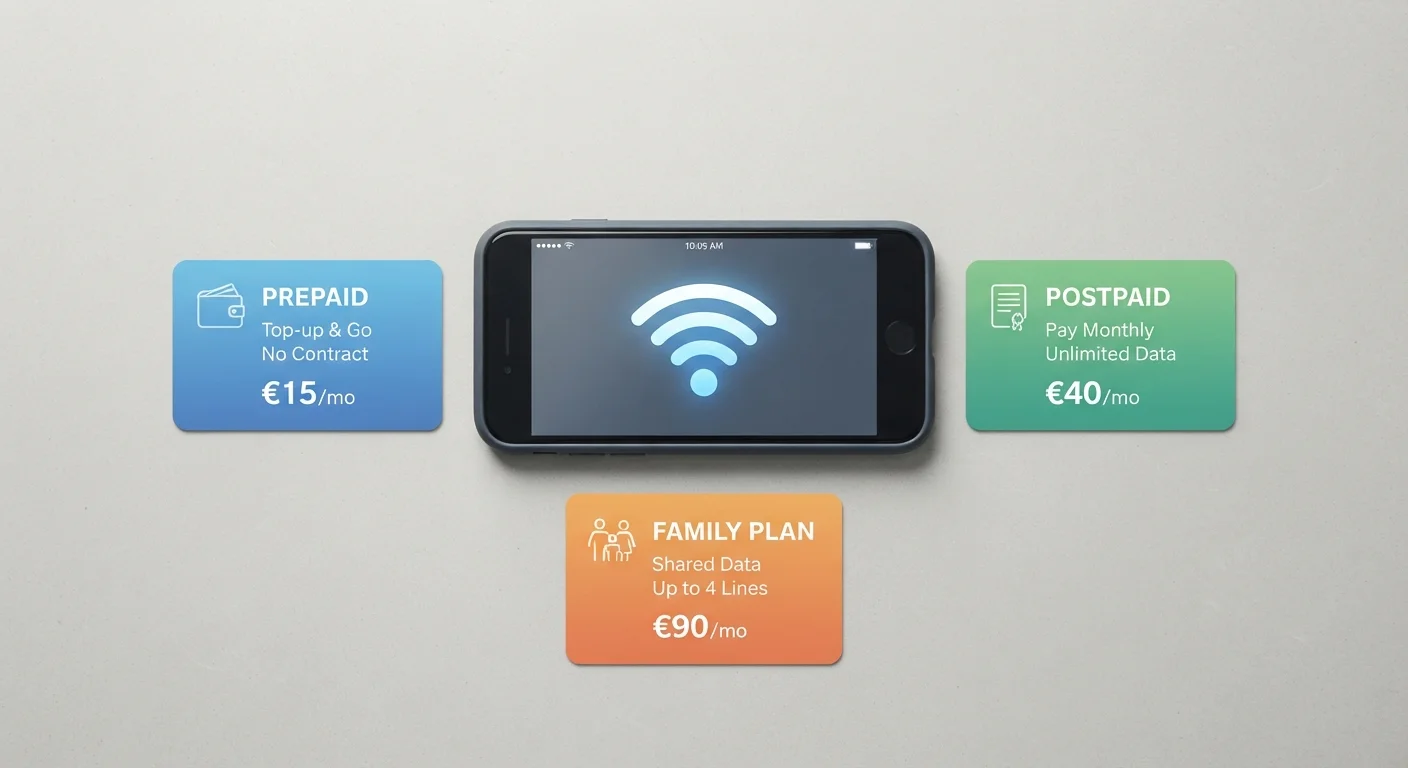
How Cellular Plan Structures Work
Choosing a cellular plan can feel overwhelming when carriers present dozens of tiers and bundles. Stripping away the marketing language, nearly every consumer plan falls into one of three structural categories: prepaid, postpaid, or a family/shared plan. Understanding how each is structured - not just what it costs today - helps you avoid the common trap of signing up for something that stops making sense in six months.
Carriers license spectrum from networks (the major ones being Verizon, AT&T, and T-Mobile in the U.S.) and deliver service either directly or through MVNOs - smaller resellers that lease wholesale access to those same towers. Your plan type determines your billing relationship, contract obligations, and sometimes your network priority when towers are congested. For a deeper look at how calls and data actually travel, see how phone calls travel over modern networks.
Prepaid Plans: Pay Before You Use
Prepaid plans require payment before service is activated for a billing cycle. You fund an account - weekly, monthly, or by the gigabyte - and service runs until that balance is consumed or the cycle ends. There is no credit check and no annual contract.
- Cost structure: Flat monthly fee paid upfront; no surprise overage charges.
- Flexibility: Switch carriers or pause service at any time without early-termination fees.
- Device financing: Generally not available; phones are purchased outright or brought unlocked.
- Network priority: Many prepaid and MVNO lines are deprioritized during network congestion compared to postpaid subscribers on the same towers.
Prepaid works particularly well for light data users, travelers using temporary SIMs, teenagers on a spending limit, or anyone managing a tight monthly budget. Because spending is capped by definition, it can also integrate naturally into a broader household budget - a discipline the budgeting basics framework can reinforce.
Bring Your Own Device to Save More
Most prepaid and MVNO carriers accept unlocked phones, meaning you can keep a device you already own and avoid paying for built-in financing. Before switching, confirm your current phone is unlocked with your existing carrier - most providers are required to unlock devices after the financing period ends. This alone can reduce your monthly line cost by a meaningful amount.
Postpaid Plans: Pay After You Use
Postpaid plans bill you at the end of each month based on the tier you selected. You typically pass a credit check at signup, and many carriers offer device installment financing tied directly to the account. Service is billed whether or not you use it.
- Cost structure: Monthly invoice after service period; potential for additional charges if you add lines or exceed plan terms.
- Device access: Trade-in programs and installment financing are standard, making flagship phones more accessible upfront.
- Network priority: Postpaid subscribers generally receive higher priority than prepaid or MVNO users during congestion.
- Perks: Postpaid tiers often bundle streaming subscriptions, international roaming passes, or hotspot data.
The tradeoff is a higher baseline monthly cost and sometimes a contractual commitment if you accept device financing. Understanding what 5G access actually delivers on your specific plan tier is also worth investigating - see what 5G means for everyday phone users for context.
Device Financing Ties You to the Carrier
When you accept a phone on a carrier installment plan, the device is typically locked to that network until it is fully paid off. Switching carriers early means either paying off the remaining balance or leaving the phone behind. Read the installment agreement carefully before signing, particularly the early payoff terms and any associated promotional credits that may be clawed back if you leave early.
Family and Shared Plans: Pooling Resources
Family plans - sometimes called multi-line or group plans - let two or more people share a single account, often with a combined data pool or individual data allowances billed under one invoice. They are offered in both prepaid and postpaid flavors, though postpaid family plans dominate the market.
| Prepaid | Postpaid | Family Plan | |
|---|---|---|---|
| Billing timing | Before service period | After service period | After service period (shared) |
| Contract required | No | Often (with financing) | Often (with financing) |
| Credit check | No | Yes | Yes (account holder) |
| Device financing | Rarely available | Standard offering | Standard offering |
| Network priority | Lower (deprioritized) | Higher | Higher (postpaid type) |
| Per-line cost | Low to moderate | Moderate to high | Lowest with 3+ lines |
| Best for | Flexibility seekers | Full-service users | Households of 2 or more |
The per-line cost typically drops significantly with each additional line, which is why a family of four can end up paying less per person than a solo postpaid subscriber. The account holder is responsible for the full bill, which requires trust and clear communication among members. Some carriers allow each line to carry separate data limits while still billing centrally.
Family plans can also raise questions about account management, especially when participants leave the household or if one member needs their own account later. These considerations echo broader themes in managing shared financial arrangements - much like the structural tradeoffs explored in comparing insurance coverage types.
Key Factors to Weigh Before Deciding
Once you understand the structural differences, narrowing down to the right plan type comes down to a few concrete questions:
- How many lines do you need? One line almost never justifies a family plan; three or more almost always makes it the most cost-effective structure.
- Do you need device financing? If you want to spread the cost of a new smartphone over 24-36 months, postpaid is the practical path.
- How much data do you actually use? Review three months of past bills before committing to an unlimited tier you may not need.
- Is coverage reliable in your area? Plan type does not determine coverage - the underlying carrier network does. Check carrier coverage maps for the areas where you spend the most time.
- How important is contract flexibility? If your income or living situation is variable, the absence of early-termination risk on prepaid may outweigh a slightly higher per-GB cost.
No plan type is inherently superior. The decision should be driven by honest self-assessment of usage patterns and financial priorities, not promotional incentives.