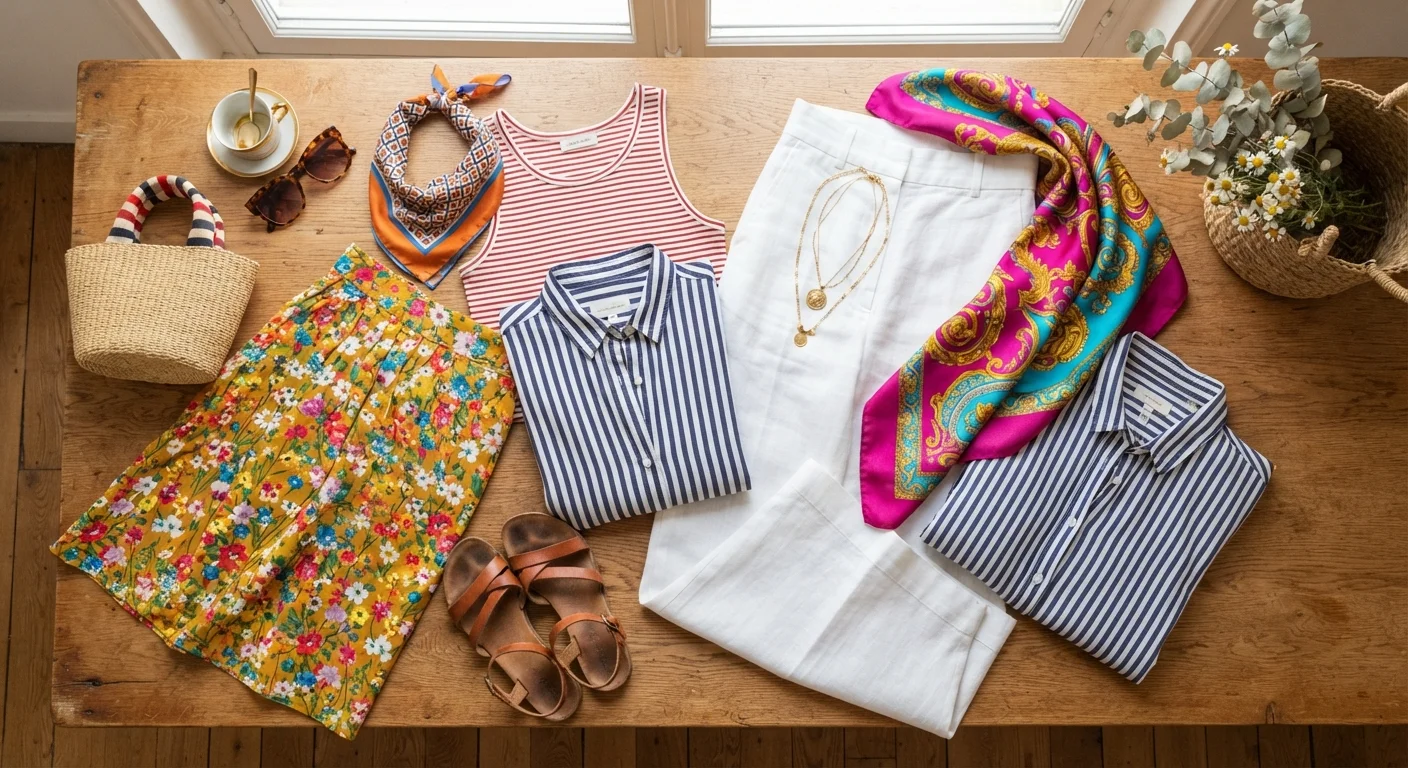
Where 'Rules' Come From - and Why They Stick
Most style rules didn't arrive from a council of great designers. They evolved from class signaling, retail convenience, and cultural gatekeeping - and many have been passed down with such confidence that they started to feel like law. The truth is more freeing: personal style has far fewer hard boundaries than you've probably been told.
Understanding where a rule comes from is often the fastest way to decide whether it deserves your loyalty. If it exists to help you look and feel your best, keep it. If it exists to police your choices or signal membership in a particular group, it's worth a second look. For a deeper dive into building a wardrobe that actually reflects your life rather than someone else's expectations, see our guide on aligning style with your actual routine.
Myth
You should never wear white after Labor Day.
Fact
This is an American social custom from the early 20th century - not a design principle. White is worn year-round by people across the globe.
The "no white after Labor Day" rule is believed to have originated as a class marker in late 19th and early 20th century American society - a way for established elites to distinguish themselves from newly wealthy arrivals who hadn't learned the unspoken codes. It has no basis in color theory, garment care, or aesthetics. Winter whites, cream tones, and ivory are staples in many designers' cold-weather collections. Wear white whenever you feel like it.
Myth
Mixing prints always looks chaotic and should be avoided.
Fact
Mixing prints can look intentional and polished when the pieces share a common color or vary meaningfully in scale.
The instinct to avoid mixing prints usually comes from a fear of looking "too much." But print mixing is a longstanding technique in fashion - the key is contrast in scale (a large floral with a small stripe, for example) and a shared color that ties the two together. When those two elements are present, the combination reads as deliberate rather than accidental. The everyday fashion hub is a great resource if you want to explore versatile styling approaches like this one.
Myth
Tall people shouldn't wear heels - it only makes them look more imposing.
Fact
Height is not a style problem to be solved. Anyone can wear heels; the only real criterion is comfort and personal preference.
This myth positions tallness as something to minimize - a premise that is both unfounded in styling logic and mildly unkind. Heels change posture and proportion for everyone regardless of starting height; whether that effect appeals to you is purely a matter of personal preference. Tall people who love heels should wear them without apology. Those who prefer flats should wear those. Neither choice is more or less stylish. The broader reality behind body-shape dressing advice is worth examining if rules like this one have shaped your wardrobe choices.
Myth
You shouldn't repeat outfits - it signals that you don't have enough to wear.
Fact
Outfit repetition is normal, sustainable, and practiced by many well-dressed people intentionally.
The fear of repeating outfits is rooted in a particular cultural moment - largely amplified by social media - rather than any genuine style principle. In reality, a well-chosen outfit worn multiple times is a sign of a thoughtful wardrobe, not a limited one. Capsule wardrobe philosophy is built entirely on this premise. Our article on wearing the same outfit twice breaks down what the research and common sense both suggest about outfit repetition.
Myth
Certain colors don't suit certain skin tones - some people just can't wear some colors.
Fact
Any color can work with any skin tone; the variables are saturation, undertone, and placement near the face.
Color theory for personal styling is real but nuanced - and it's frequently oversimplified into blunt rules like "cool tones only for fair skin" that don't hold up. Undertone (warm, cool, or neutral) is a useful reference point, but it doesn't eliminate entire color families from consideration. The saturation of a color, how it's styled, and whether it appears near your face all affect how it reads. The most reliable test is to try the color and observe the actual result - not to rule it out in advance based on a generalization.
Giving Yourself Permission to Experiment
Debunking myths is only useful if it changes how you actually get dressed. The goal isn't to swing from rigid rule-following to deliberate rule-breaking - it's to replace anxiety with curiosity. When you stop asking "is this allowed?" and start asking "does this work for me?", the whole process becomes a lot more enjoyable.
1 in 3
Americans avoid certain clothing due to style 'rules'
Survey data from fashion consumer research consistently shows a significant share of people self-edit based on perceived rules rather than personal preference.
74%
People who say confidence improves how an outfit looks
Multiple consumer style surveys have found that self-assurance is ranked above garment quality or trend-relevance by observers assessing how well-dressed someone appears.
That shift takes practice. Start small: mix one print you'd normally avoid, wear a color in a season you've been told it doesn't belong in, try a silhouette that "doesn't suit your body type" according to a magazine quiz. Notice how it actually feels - not how it's supposed to feel according to a rule you absorbed years ago. Drawing inspiration from style icons is a great starting point, as long as you treat their choices as a reference rather than a blueprint to replicate. Likewise, understanding how trends actually work helps you engage with fashion on your own terms, rather than feeling obligated to keep up.
The styling habits that make this feel effortless over time are learnable - consistency and small repeated choices matter more than any single bold move. Check out these practical styling habits for a practical framework. And if body-shape rules have ever made you feel like your wardrobe options are limited, it's worth exploring what the body-shape advice actually gets right and wrong before accepting any of it at face value.