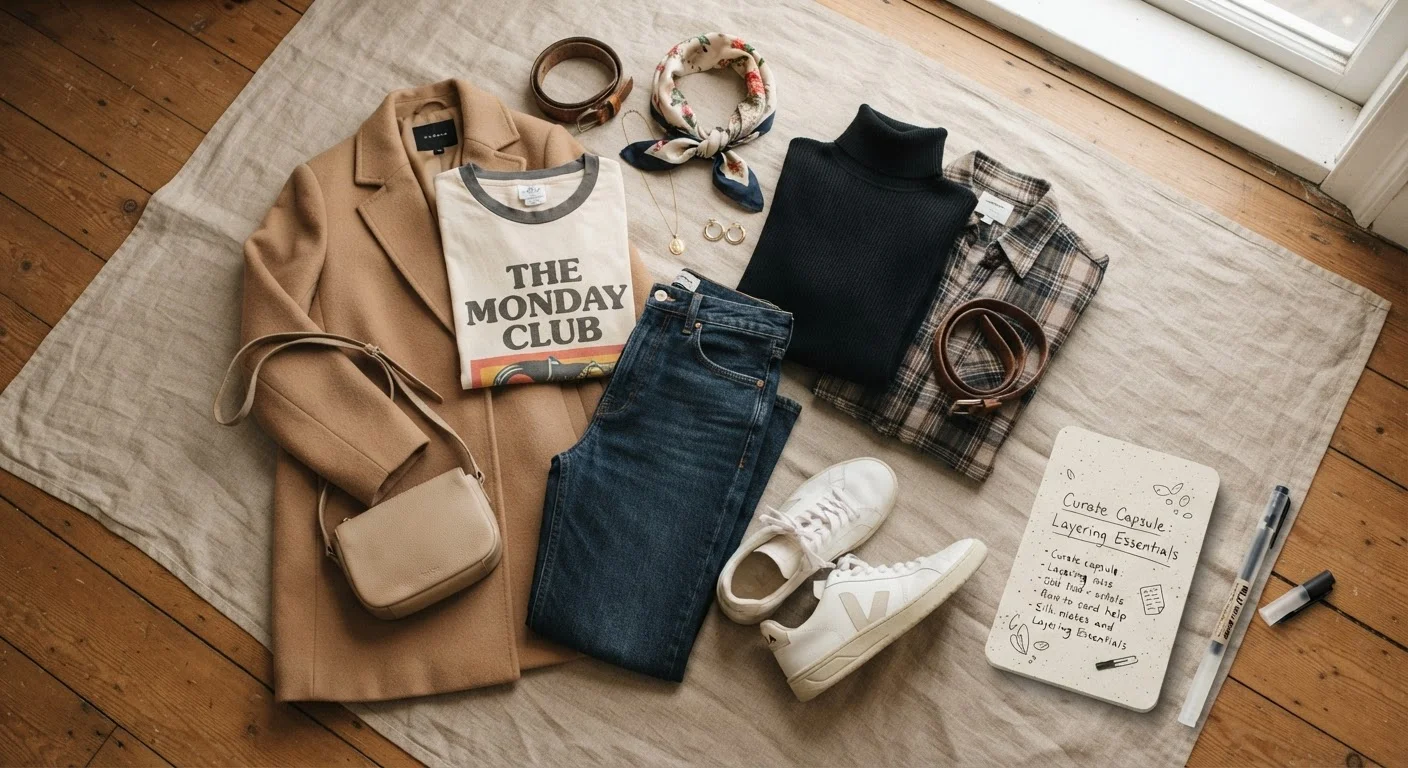
Where Trends Actually Come From
Fashion trends don't appear out of nowhere, and they aren't handed down from a single authority. They emerge from a tangle of sources: designers presenting collections months before clothes hit stores, street photographers capturing what real people wear, musicians and athletes who influence millions, and - increasingly - social media creators who can make a single outfit go viral overnight.
The result is a system where trends now move faster than ever. What might have taken a full season to travel from runway to retail a few decades ago can now surface, peak, and feel dated within a few months. This acceleration is why it helps to understand the mechanics before you spend a dollar.
~52
Micro-seasons some fast fashion retailers operate per year
Industry analysts have noted that some major fast fashion retailers have moved from two seasons per year to as many as 52 or more, dramatically accelerating trend cycles.
20-30 yrs
Typical fashion trend cycle length
Fashion historians and theorists commonly observe that major style trends tend to return on roughly 20-to-30-year cycles, as younger generations rediscover aesthetics they didn't experience firsthand.
Trends also tend to move in waves across different market segments. A silhouette that appears in a luxury collection might take a year or two to show up at accessible price points - by which time fashion-forward circles have often moved on. Knowing where you typically encounter trends helps you gauge their staying power.
The Difference Between a Trend and a Style Shift
Not all trends are created equal, and treating them as if they are is where most wardrobe (and budget) mistakes happen. A micro-trend is hyper-specific and fast-moving - think a single viral color or an unusually shaped bag that floods every feed for a season. A macro-trend is a broader shift in how people dress: a move toward looser fits, a return to natural fibers, a preference for quieter color palettes. Macro-trends tend to last several years and are worth paying attention to because they affect a wider range of garments.
Before engaging with any trend, it's worth asking: Is this a moment or a movement? A moment rewards restraint. A movement might justify a few considered additions to your wardrobe - especially if they complement what you already own.
A Simple Test Before You Buy
Before adding a trend piece to your cart, ask yourself two questions: Does this work with at least three things I already own? And would I still want to wear this in 18 months? If the answer to either is uncertain, give yourself a week before deciding. Impulse-trend purchases are among the easiest wardrobe regrets to avoid with a small delay.
For a deeper look at how trends and personal aesthetics diverge, explore the distinction between personal style and fashion trends. Understanding that separation is one of the most clarifying things you can do for your wardrobe.
Why You're Not Obligated to Participate
Fashion media and retail marketing create a sense of urgency around trends that doesn't reflect reality. The implicit message - that wearing last season's clothes is somehow a failure - is a commercial framing, not a style truth. Dressing well has never required being current. It requires being intentional.
Personal style is a different concept from trend-following entirely - and developing yours is a much more durable investment. When you know what silhouettes flatter you, what colors you reach for instinctively, and what kind of life your clothes need to support, trends become optional input rather than mandatory instructions.
If you need a reality check on which style "rules" actually hold up, many common style myths have little real grounding and are worth examining critically.
How to Engage With Trends Selectively
Selective trend participation isn't about being contrarian - it's about being deliberate. The goal is to extract value from trends without letting them drive impulsive decisions. A few practical ways to do that:
- Audit what you already own before buying anything trend-driven. Does the new item work with at least three things already in your closet? If not, pause.
- Distinguish inspiration from instruction. Style references are most useful as a starting point, not a script. The same applies to trends.
- Consider cost-per-wear. A trend piece worn twice before it feels dated costs far more per wear than a classic worn for years. This connects directly to broader budgeting principles worth keeping in mind.
- Think about production and longevity. Fast and slow fashion involve real trade-offs - understanding them helps you make purchases you'll feel good about longer term.
Trends are a conversation, not a command. The most confident dressers are those who know which parts of that conversation are worth joining - and when it's perfectly fine to sit one out.
“Fashion fades, only style remains the same.”
— Coco Chanel, Fashion designer and founder of the Chanel brand