Why Habits Beat One-Off Wardrobe Overhauls
Most wardrobe frustration doesn't come from owning the wrong things-it comes from not having a consistent system. A single weekend closet cleanout feels productive, but without habits to sustain it, the chaos creeps back within weeks. The good news: small, repeated actions do most of the heavy lifting when it comes to building a style that feels like you.
The habits below aren't about chasing trends or following rigid rules. They're about making thoughtful decisions once so you don't have to keep making them every morning. Whether you're building from scratch or refining what you already have, these are the practices that pay off over time. For a deeper look at putting this into practice, our guide to dressing with intention covers the broader principles behind a coherent personal style.
Edit your wardrobe to what you actually wear
Cluttered closets create decision fatigue, not more options. When you regularly remove pieces that no longer fit, feel good, or reflect your current life, what remains becomes genuinely usable. A practical rule: if something hasn't been worn in 12 months and there's no specific occasion it's waiting for, it's taking up space that a more useful piece could fill.
This isn't about owning less for its own sake-it's about owning better. Our article on what a capsule wardrobe actually means walks through how this concept works in practice.
A curated closet of pieces you love beats a stuffed wardrobe of things you tolerate.
Build a small library of reliable outfit formulas
An outfit formula is a repeatable combination-fitted trousers plus a tucked blouse plus a loafer, for example-that works almost every time. Having three to five of these in your back pocket removes the guesswork from most mornings. You can rotate the specific pieces while keeping the structure consistent.
Formulas are especially powerful because they travel across seasons with minor adjustments. Our guide on outfit formulas that actually work offers reliable combinations grounded in real style principles.
Outfit formulas are reusable frameworks-swap the pieces, keep the structure.
Dress for your real routine, not an aspirational one
One of the most common wardrobe mistakes is buying for the life you'd like to have rather than the one you're living. If you work from home four days a week, a closet full of formal wear will always feel like a mismatch. Aligning your wardrobe with your actual schedule-what you do Monday through Sunday-means every piece earns its place.
This habit also reduces guilt around clothes that "should" work but never get worn. For a structured way to audit your routine and wardrobe together, see our article on dressing for the life you actually live.
Your wardrobe should serve your Monday, not your fantasy Friday night.
Learn the basics of garment care
Clothes that are washed at the wrong temperature, over-dried, or stored carelessly deteriorate faster than they need to. Understanding a few fundamentals-turning dark clothes inside out, air-drying knits flat, using the right cycle for delicates-extends the life of your wardrobe considerably. That means better value per wear and fewer replacement decisions to make.
Our article on why clothes shrink, fade, and pill explains what causes the most common damage and how to prevent it without a complicated routine.
Proper care isn't fussy-it's what keeps your favourite pieces looking sharp longer.
Organise your wardrobe by how you actually get dressed
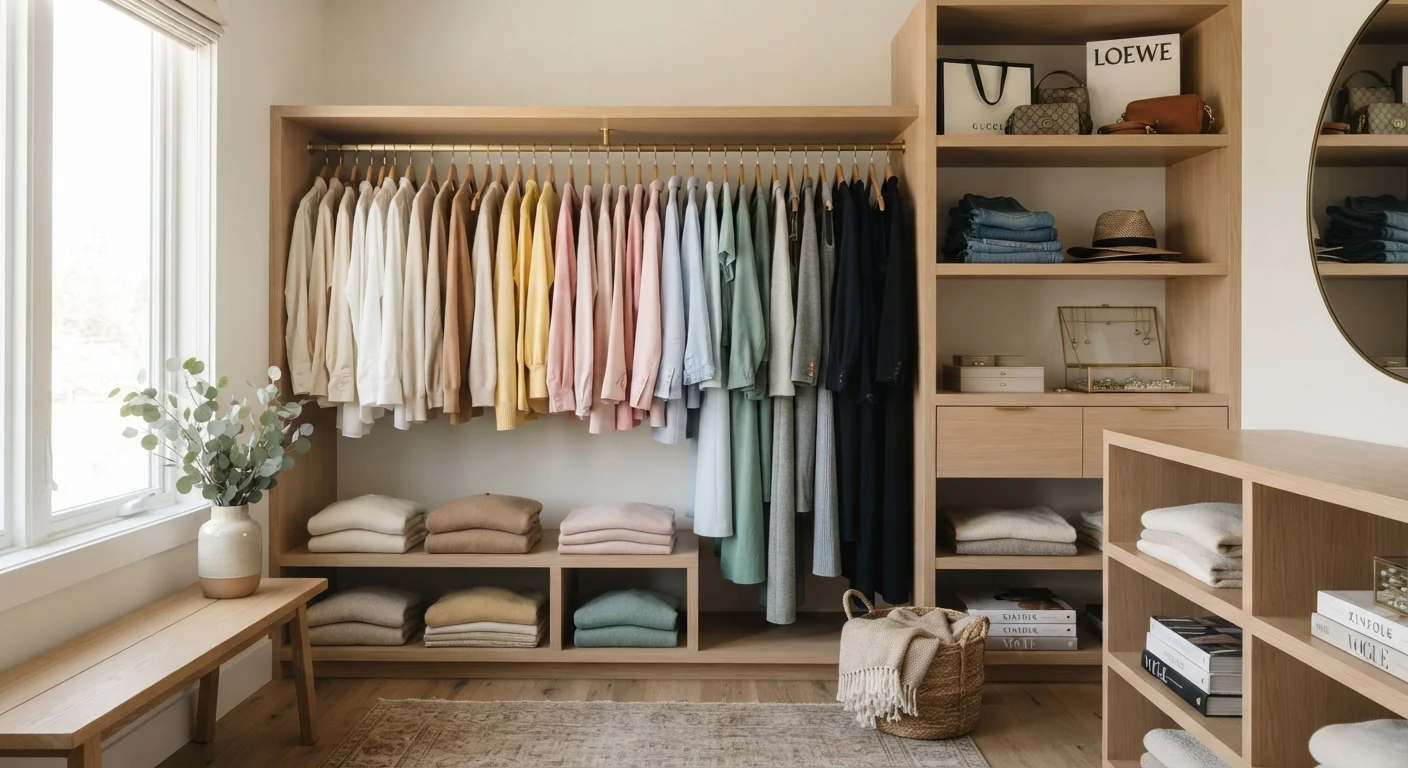
Organisation systems work best when they match your natural behaviour. If you reach for tops first thing in the morning, they should be the most accessible items. If you build outfits around shoes, having footwear visible makes sense. Colour-coding, grouping by occasion, or simply keeping frequently worn pieces at eye level-any approach works as long as it reflects your real process.
The goal is frictionless access. When your wardrobe is laid out in a way that makes sense to you, getting dressed stops being a rummage and starts being a decision.
The best wardrobe organisation is the one that matches how you actually think.
Invest selectively in fit through tailoring
Fit is arguably the single biggest factor in whether an outfit looks intentional or accidental. An inexpensive piece that fits well often looks better than a costly one that doesn't. Getting key items altered-hemming trousers, taking in a shirt at the waist, adjusting a sleeve length-can transform pieces you already own into ones that feel made for you.
For guidance on which alterations offer the most impact and what to expect from the process, our article on getting clothes tailored covers the essentials.
Good fit elevates any outfit-and tailoring makes it achievable on any budget.
Do a mini seasonal review instead of a full overhaul
Rather than doing one massive wardrobe purge per year, a lighter seasonal check-in keeps things manageable. Before each season fully arrives, spend 20-30 minutes pulling out what's relevant, setting aside what isn't, and noting any genuine gaps. This prevents the panic of realising mid-winter you have no warm layers that still fit properly.
This habit pairs naturally with smarter transition strategies-our article on seasonal wardrobe transitions without starting from scratch offers a practical framework for moving through seasonal shifts with your style intact.
A seasonal check-in takes 30 minutes and saves a full morning of wardrobe frustration.
Building a Style That Works Without Thinking
The goal of any good styling habit is to get you to a place where getting dressed is almost automatic. That doesn't mean looking the same every day-it means your choices become intuitive because your wardrobe is edited, organised, and aligned with how you actually live. Check out our Everyday Fashion hub for ongoing practical guidance as your style evolves.
Make it a monthly habit, not a project
Rather than saving wardrobe decisions for a big annual overhaul, try a 15-minute monthly check-in. Pull out anything that doesn't fit or hasn't been worn, and note what combinations you've been reaching for repeatedly. Small, regular attention keeps your wardrobe functional without the overwhelm of a full-day reorganisation.
One often-overlooked habit is learning which pieces can carry multiple outfits across different contexts. Our article on accessories that change an outfit is a great place to start if you want more variety without more clutter.
Style confidence builds gradually-each habit you lock in makes the next one easier. Give yourself permission to start with just one or two of these and add from there.