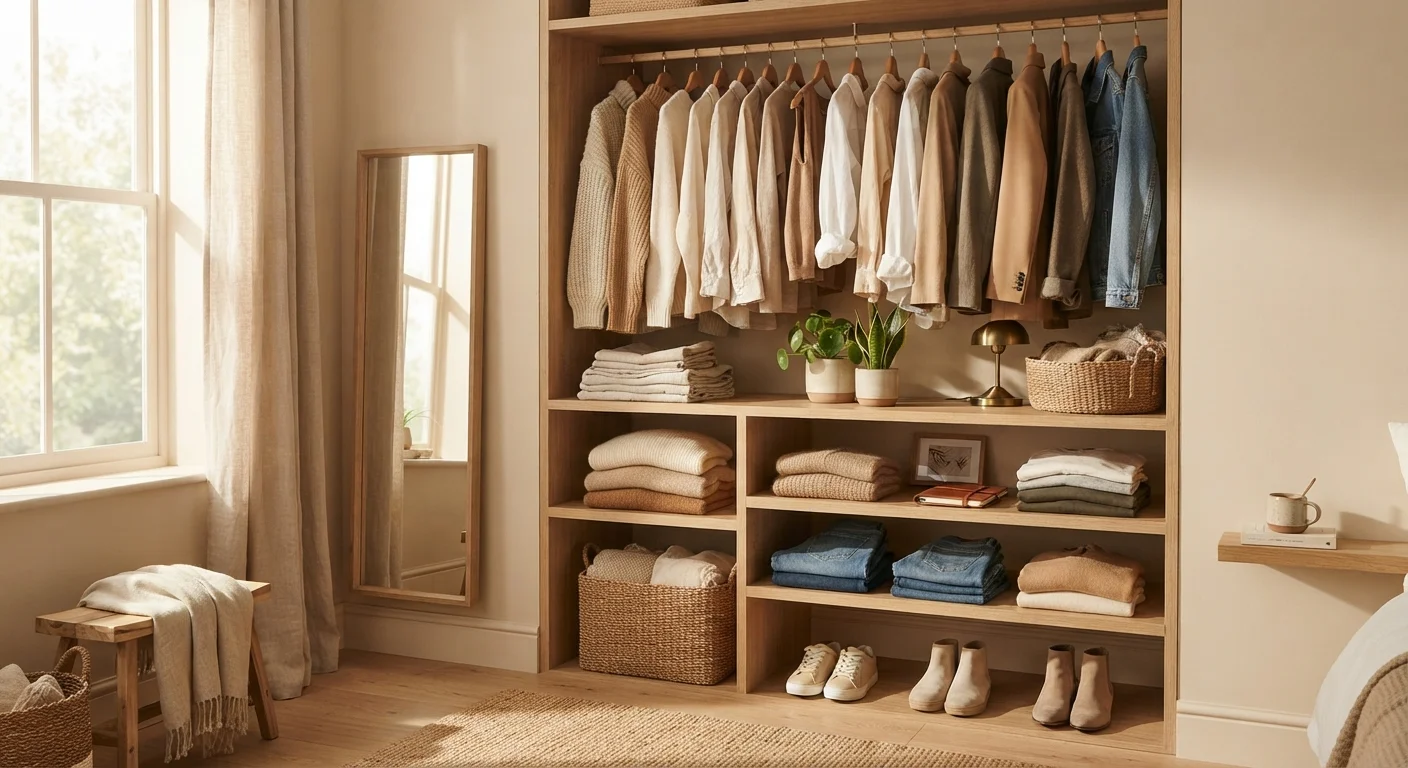
Why Most Wardrobes Feel Off
If getting dressed regularly feels harder than it should, the problem usually isn't taste - it's alignment. Most of us build our wardrobes in fragments: a piece grabbed during a sale, something bought for a specific event, items carried over from a different life chapter. The result is a closet that doesn't coherently serve the actual week in front of us.
The concept of dressing for your real life rather than an aspirational one is deceptively simple, but it's transformative in practice. When your clothes match your routine, getting dressed becomes a moment of self-expression rather than a source of friction. As explored in dressing with intention, a coherent wardrobe is built on self-awareness first and aesthetics second.
Don't Build for an Aspirational Life
It's tempting to fill your closet with clothes for the person you imagine becoming - the one who attends galas, works in a sleek office, or vacations constantly. But a wardrobe that serves your actual Tuesday is far more empowering than one built for a highlight reel. Dressing for the life you have right now doesn't mean settling - it means showing up fully and confidently in every moment that's actually yours.
The good news: you don't need a massive overhaul or a large budget to fix this. You need a clearer picture of your life and a more deliberate approach to what earns space in your closet. That's exactly what the steps below are designed to help you build.
What you will need
How to Align Your Wardrobe With Your Real Routine
The following steps walk you through a practical process - from mapping your week to filling the right gaps - that results in a wardrobe built around how you actually live. You'll need a little time, some honest reflection, and the tools below to get started.
Notebook or Notes App
Used to map out your weekly routine and record wardrobe observations during the audit process.
Full-Length Mirror
Helps you realistically assess fit, proportion, and how pieces work together as actual outfits.
Clothing Rack or Clear Floor Space
Gives you room to pull items out and review them by category without visual overwhelm.
Donation Bags or Boxes
Keeps items you're editing out organized and ready to go without cluttering your space again.
Map Out Your Actual Weekly Routine
Before touching a single hanger, spend ten minutes writing down how your week actually breaks down. How many days do you work from home versus commute? Do you have kids to drop off, regular gym sessions, weekend social events, or outdoor hobbies? Be specific and honest. Most people dramatically underestimate how casual their real week is - and overestimate how often they need formal or occasion wear.
Once you have your week mapped, assign rough percentages to each context: work, casual errands, active/athletic, social outings, and special occasions. These percentages will become your wardrobe blueprint.
Audit What You Currently Own by Category
Pull everything out - or at minimum, mentally sort your closet - into the same categories you identified in Step 1. How much of your closet is dedicated to each life context? Many people discover their closet skews heavily toward one category (often workwear or occasion wear) while their actual most-lived-in category is underserved.
This is the core insight of a lifestyle-aligned wardrobe. If 60% of your week is casual but only 20% of your closet reflects that, your daily getting-dressed experience will feel like a mismatch. For a deeper look at this process, the style audit guide walks through a practical checklist to evaluate what you own against what you actually use.
Identify the Gaps and the Excess
Now you have two lists: what your life demands and what your closet currently offers. Where are the gaps? You might find you have three blazers but only two pairs of comfortable pants suitable for your mostly casual job. You might have plenty of going-out tops but nothing that transitions easily from work to a weeknight dinner.
Equally important is spotting the excess - items that belong to a life chapter you've moved on from, or pieces you bought for someone else's lifestyle. If your style no longer feels like you, this step often reveals why.
Edit With Intention, Not Emotion
With your gaps and excess identified, start a thoughtful edit. Items that don't fit your current routine, don't fit your body well, or no longer reflect your personality are candidates to donate, sell, or store. Keep the focus on function and genuine enjoyment - not guilt over purchase price or obligation to keep gifts.
Good fit is non-negotiable. A well-fitted piece in a simple fabric will outperform a trend-driven piece in a poor cut every single time. For more on why this matters, see fit versus style.
Fill Gaps Strategically and Slowly
Once you know exactly what your wardrobe is missing, you can shop with genuine purpose instead of browsing habit. Focus on the categories that your week most demands. Look for pieces that bridge multiple contexts - something smart enough for a work video call that's also comfortable enough for a school pickup counts double.
You don't need to rebuild everything at once. Prioritize the one or two gaps causing the most daily friction, then fill others over time. Great personal style is about clarity and intention, not how much you spend in a single season.
Establish Habits That Keep Your Wardrobe Aligned
A lifestyle-aligned wardrobe isn't a one-time project - it needs occasional recalibration, especially when your routine shifts. Schedule a light audit every season: spend fifteen minutes checking whether what's hanging in your closet still matches how your weeks actually look. Life changes - a new job, a new hobby, a new city - and your wardrobe should evolve with it.
Building small habits around how you get dressed each day also compounds over time. See the styling habits that make getting dressed easier for a set of practical routines that keep your wardrobe working smoothly without constant effort.
Track What You Actually Wear
For one week, turn every hanger backward after you wear a piece. After seven days, the items still facing the original direction haven't made the cut - and that's valuable data. This simple visual trick gives you honest, no-guesswork insight into which parts of your wardrobe are genuinely working for your routine.
Avoid Over-Editing in One Session
Clearing out your entire wardrobe in a single afternoon can lead to impulsive decisions you'll regret. Removing too much at once can leave real gaps that prompt hasty, unplanned purchases. Take a phased approach - assess one category at a time - and give yourself a few weeks before donating items you're uncertain about.
Once you've worked through this process, you may find that your wardrobe needs less than you thought - just a smarter edit and a few well-chosen additions. For a broader look at how this kind of intentional dressing evolves over time, personal style through every decade offers useful context on how your aesthetic naturally shifts alongside your life.