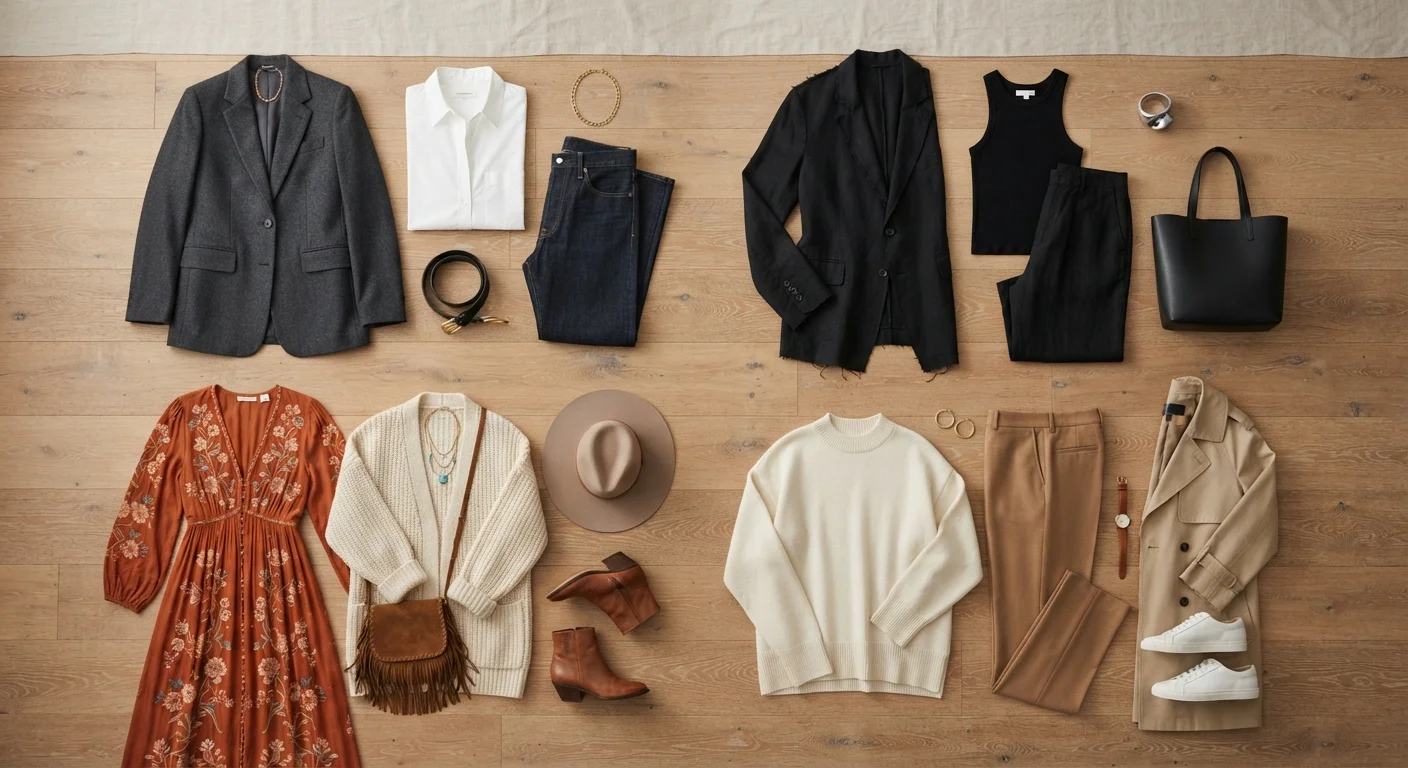
The Core Style Archetypes at a Glance
Understanding style archetypes is one of the most practical steps you can take toward building a wardrobe that actually feels like you. Rather than scrolling endlessly through inspiration boards with no filter, archetypes give you a framework - a way to decode why certain looks resonate and others feel off. For a broader entry point into this process, see Finding Your Style Identity From Scratch.
| Number of widely recognized archetypes | 7-10 (varies by framework) (Common across personal styling methodologies) |
| Most commonly identified archetype | Classic (Frequently cited in personal styling surveys) |
| Average archetypes per person | 2-3 dominant influences (Style consultants' general guidance) |
| Style fluidity | Archetypes can shift with lifestyle and age (Widely noted in fashion education literature) |
Here's a concise rundown of the most widely recognized archetypes:
- Classic
- Anchored in quality basics, neutral tones, and refined silhouettes. The classic wardrobe ages beautifully and rarely looks out of place. Think crisp button-downs, well-cut trousers, structured bags.
- Minimalist
- Similar to classic in its restraint but often more architectural. A monochromatic palette, clean hems, and deliberate simplicity define this archetype - every piece earns its place.
- Romantic
- Soft florals, flowing fabrics, delicate details like lace or ruffles. Romantic dressing evokes warmth, softness, and an almost storybook quality. It can be casual or dressy.
- Bohemian
- Layered textures, global prints, natural fabrics, and an easy, uncontrived feel. Bohemian style values individuality and movement over polish.
- Streetwear
- Born from skate culture, hip-hop, and athletic wear. Graphic tees, relaxed fits, sneakers, and bold logos define this urban, youth-inflected aesthetic.
- Preppy
- Collegiate and polished, with heritage references - plaid, polos, loafers, layered knitwear. Traditional in flavor but increasingly remixed with contemporary pieces.
- Edgy / Avant-Garde
- Experimental in proportion, texture, and concept. This archetype embraces asymmetry, unconventional materials, and outfits that provoke thought as much as admiration.
How to Identify Your Dominant Archetype - and Blend Thoughtfully
Most people don't live fully inside a single archetype. A person might lean classic at work, romantic on weekends, and borrow from edgy aesthetics for evenings out. That's not inconsistency - it's nuance. The goal is to identify your dominant threads and use them to build intentional outfits rather than starting from scratch every morning.
Archetypes Are a Starting Point, Not a Label
Style archetypes exist to help you articulate your instincts, not confine you to a category. Most people dress from a blend of two or more archetypes depending on context - workdays, weekends, and special occasions can all pull from different aesthetic wells. Think of them as a vocabulary, not a verdict.
A few practical steps for identifying your archetype:
- Audit what you actually wear. Pull out the pieces you reach for week after week. Patterns in silhouette, color, and fabric will emerge quickly.
- Notice your instinctive reactions. When you see an outfit and think "that's exactly me," file that response. Do it enough times and a pattern becomes clear.
- Look at occasions, not just garments. Different contexts often call on different archetypes. Recognizing that is useful, not confusing.
When blending archetypes, contrast tends to work better than layering too many similar moods. Classic structure grounded in a bohemian print? That tension is interesting. Romantic silhouettes with an edgy monochrome palette? That contrast creates something original. For a deeper exploration of how these approaches compare, comparing classic, trendy, and eclectic dressing is a useful next step.
Style archetype
A broadly recognized pattern of aesthetic preferences that shapes how a person puts outfits together. Archetypes aren't rigid boxes - they're useful reference points for understanding your instincts.
Classic
A style archetype rooted in timeless, well-constructed garments with clean lines, neutral palettes, and minimal trend influence. Think tailored trousers, structured coats, and quality basics that outlast seasons.
Minimalist
A pared-back aesthetic that prioritizes simplicity, intentionality, and a limited, cohesive color palette. Minimalism values fewer, carefully chosen pieces over volume.
Avant-garde
An experimental approach to dressing that challenges conventional silhouettes, proportions, and norms. Avant-garde style treats clothing as conceptual expression as much as everyday wear.
Romantic
A style archetype defined by soft fabrics, flowing silhouettes, floral or delicate prints, and a generally feminine or dreamy aesthetic sensibility.
Archetype blending
The intentional combination of two or more style archetypes to create a personal, hybrid aesthetic - for example, pairing structured classic tailoring with bohemian accessories.
Your archetype blend can also shift as your life does - a career change, a move, a new social environment can all recalibrate your instincts. That's completely normal and worth embracing. For more on how style works across different contexts, see building a style that travels well. And if you want to use style icons as reference points without copying them wholesale, using style icons as a reference point offers a grounded perspective. Wherever you land on the archetype spectrum, the full picture lives in the complete approach to developing a personal style.