What Personal Style Actually Means
Personal style isn't about looking expensive or following the latest runway moment - it's about communicating who you are before you say a word. Think of it as a visual shorthand for your values, your mood, and the life you're actively living. That distinction matters, because a lot of style advice points people toward aspirational images rather than their actual day-to-day reality.
If you're starting from scratch with your style identity, the first honest question to ask is: What do I reach for when nothing is expected of me? Those unrestricted choices - the worn-in jacket, the color you always default to - are where your genuine aesthetic already lives. This guide builds on that instinct and helps you shape it into something deliberate and functional.
Style Is Not a Luxury Pursuit
Developing a personal style has nothing to do with a particular budget. Intentionality - not price tags - is what creates a coherent, expressive wardrobe. Many of the most distinctive personal styles are built almost entirely from thrifted, secondhand, or budget-friendly pieces. What matters is curation, not cost.
Understanding Style Archetypes
Style archetypes are broad aesthetic categories that help you articulate a visual direction. Common frameworks include the Classic (structured, timeless pieces), the Romantic (soft fabrics, feminine details), the Minimalist (clean lines, restrained palette), the Bohemian (layered textures, organic prints), the Edgy (sharp silhouettes, contrast), and the Casual-Cool (relaxed fits, effortless layering). None of these are rigid boxes - most people sit comfortably across two or three.
The value in identifying your archetypes isn't to limit yourself - it's to give your shopping and styling decisions a filter. When you know you lean Minimalist with Romantic accents, you can evaluate a new piece against that lens instead of buying impulsively and wondering why it never gets worn.
Create a "style board" using only photos of outfits you've actually worn and felt great in - not aspirational images. Real data from your own life is more useful than any curated inspiration feed.
Styling decisions grounded in personal evidence (what actually worked on your body, in your life) produce more consistent, satisfying results than imitation of external aesthetics.
When shopping, hold a new piece against your existing palette before purchasing. If it doesn't pair naturally with at least three things you already own, it's likely a gap-creator, not a gap-filler.
Impulse purchases that don't integrate with an existing wardrobe are a leading cause of the 'full closet, nothing to wear' feeling that undermines style confidence.
Explore the everyday fashion hub for practical archetype-inspired outfit ideas that work across seasons and budgets.
Auditing What You Already Own
Before you add anything new, take stock of what's already in your closet. Pull everything out - yes, everything - and sort into three piles: love and wear regularly, keep but rarely wear, and never wear. The middle pile is the most revealing: those pieces tell you where your aspirational style and your real life are out of sync.
Look for patterns in the "love" pile. Are the colors consistent? Do certain silhouettes dominate? That repetition is your style signature trying to introduce itself. For the "never wear" pile, ask honestly whether the barrier is fit, occasion, or simply a mismatch with who you actually are today.
Avoid the 'Aspirational Closet' Trap
Keeping clothes for the life you wish you had - the formal event that never comes, the fitness routine you haven't started - silently clutters your wardrobe and obscures your real style. Be honest about your actual routine when deciding what stays. A closet built for your real life will always serve you better than one built for a fantasy.
This process also connects directly to dressing for your actual routine. The guide to aligning style with your real routine walks through exactly how to match what you own to how your days actually unfold.
Building a Wardrobe That Holds Together
Cohesion is the difference between a wardrobe and a collection of individual pieces that never quite talk to each other. Two tools create cohesion faster than anything else: a shared color palette and a consistent silhouette language.
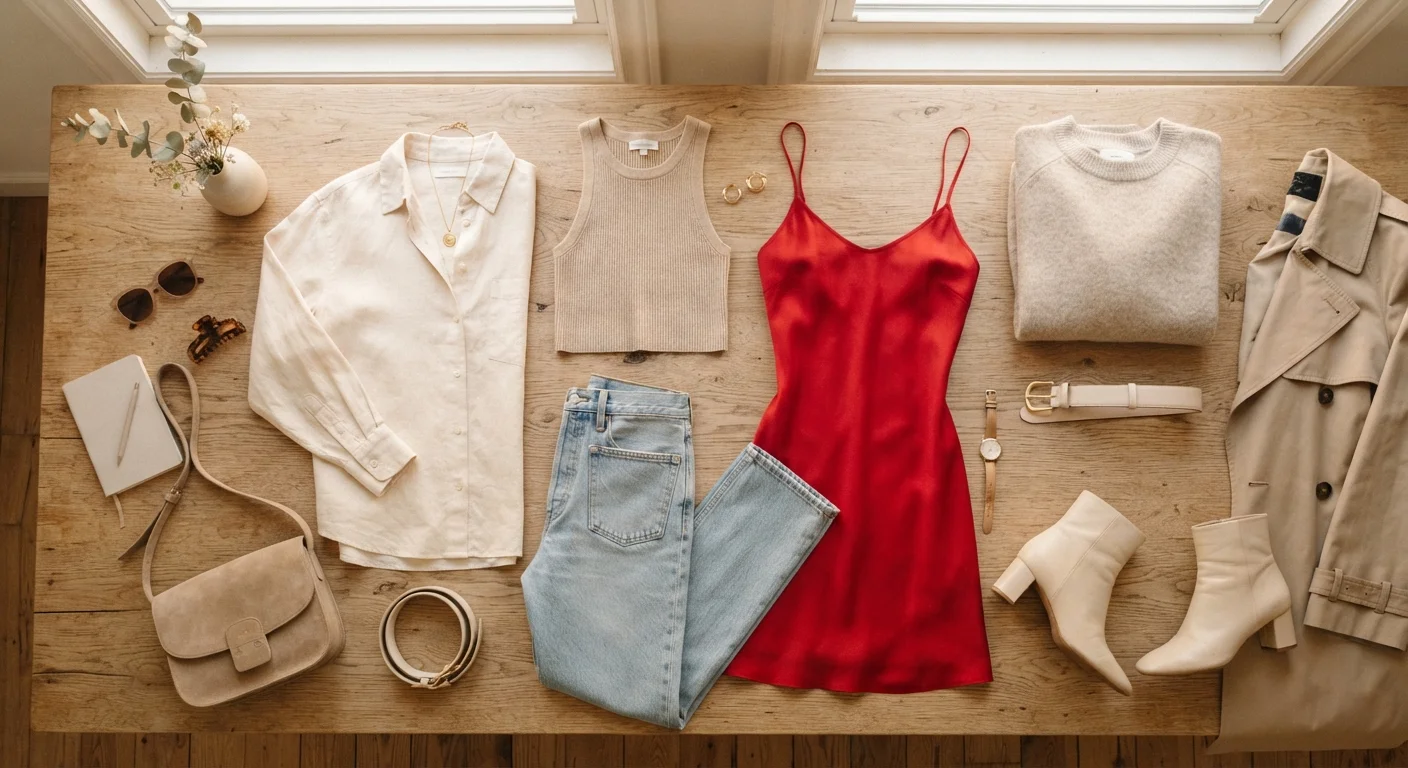
A workable palette for most people is three neutrals (think white, ecru, charcoal, navy, or camel) plus one or two accent colors that genuinely excite you. When the majority of your closet sits within that palette, getting dressed becomes intuitive and almost every combination works.
Silhouette language means understanding which proportions feel most like you - relaxed on top with slim on the bottom, oversized everywhere, tailored throughout - and making that the default. Mixing proportions intentionally is a style skill; doing it accidentally is how outfits fall flat.
~80%
Clothes worn only rarely or never
Research cited by wardrobe psychology studies suggests most people regularly wear only about 20% of what they own, leaving the majority unused.
3-5
Core palette colors for maximum versatility
Professional stylists commonly recommend a palette of three neutrals and one to two accents as the foundation for a highly mix-and-match wardrobe.
Expressing Style Across Every Context
One hallmark of a truly developed personal style is that it shows up consistently whether you're heading to a work meeting, a weekend farmers market, or a friend's birthday dinner. That doesn't mean wearing the same outfit everywhere - it means your aesthetic thread is recognizable across all three.
Achieving this is largely a matter of having versatile foundation pieces that can be styled up or down, and understanding which details (a particular accessory, a favored color, a recurring texture) travel well between contexts. An active lifestyle? The fitness and exercise hub has useful guidance on building movement into your routine, which in turn informs how much comfort and flexibility your wardrobe actually needs to accommodate.
The 'Three Ways' Test for New Pieces
Before adding anything to your wardrobe, mentally style it three different ways using what you already own. If you can only think of one combination, the piece isn't earning its keep. Versatility is the cornerstone of a coherent, context-flexible wardrobe.
Maintaining and Evolving Your Signature Look
Personal style isn't static, and it shouldn't be. Life changes - careers shift, bodies change, values evolve - and a wardrobe that was perfect three years ago may feel like someone else's story today. Building in a seasonal review (even a quick one) keeps your wardrobe honest and prevents accumulation of pieces that no longer represent you.
The goal isn't perfection - it's alignment. When what you wear feels like an accurate reflection of who you are right now, getting dressed stops being a chore and starts being one small, enjoyable act of self-expression. That's the whole point of developing a personal style: not to impress anyone, but to feel unmistakably like yourself, every single day.
“Getting dressed is a form of self-expression - a way of presenting yourself to the world and to yourself. When your clothes reflect who you actually are, there is a real psychological benefit: a sense of coherence and confidence.”
— Karen Pine, Professor of Psychology and author of research on clothing and self-perception