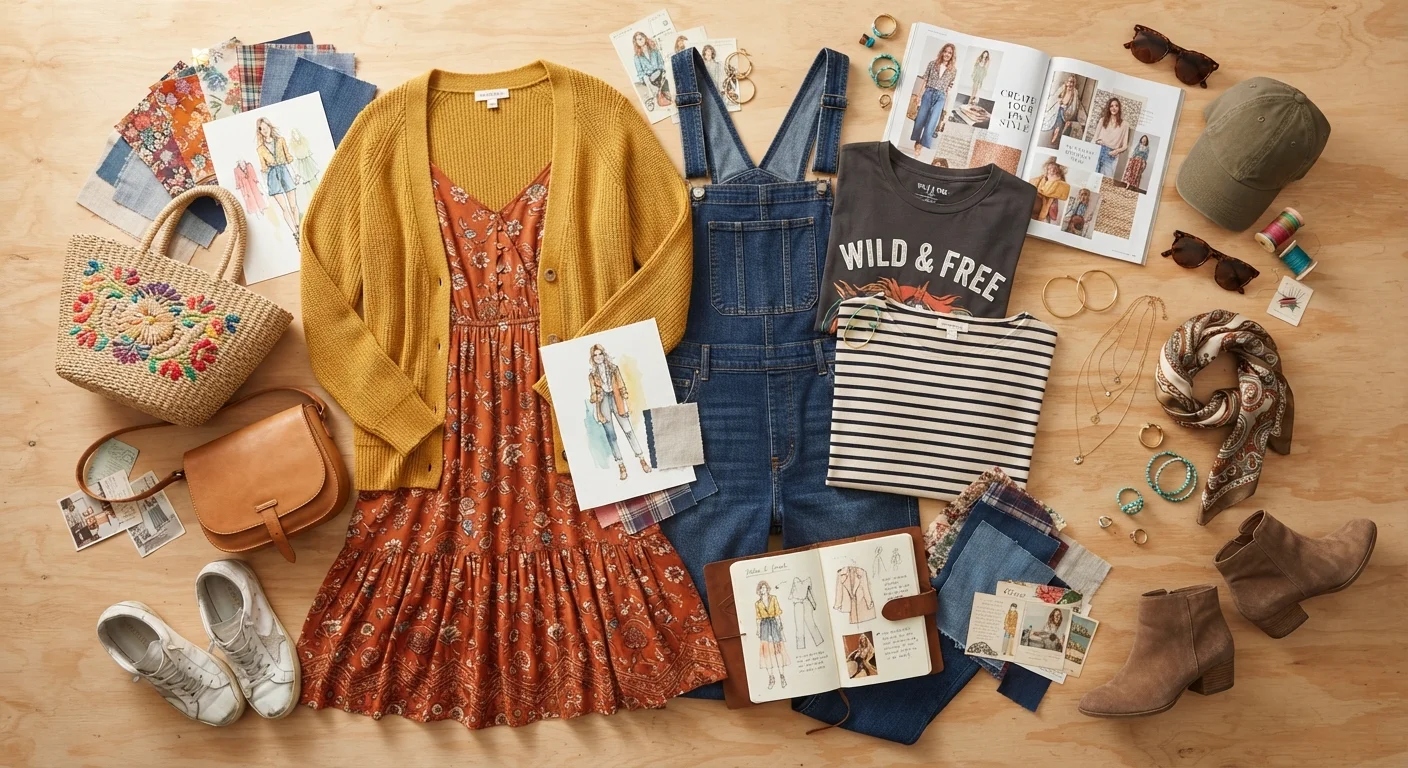
What Is a Style Identity (and Why Does It Matter)?
A style identity is simply the consistent visual language you use to present yourself to the world. It's the through-line connecting the colors you reach for, the silhouettes that make you feel at ease, and the overall mood your outfits project. Unlike fashion - which is driven by trends and seasons - personal style is driven by you.
Having a style identity isn't about being rigid or label-obsessed. It's about removing daily decision fatigue, building genuine confidence, and making sure your outward appearance feels aligned with who you actually are. When your clothes make sense to you, getting dressed stops being stressful and starts feeling like a small act of self-expression.
Style identity
The consistent visual language and recurring preferences - colors, silhouettes, textures - that make your overall look feel recognizably yours.
Aesthetic
The overall mood or visual vibe of an outfit or wardrobe, such as minimalist, bohemian, or classic. It's broader than any single item.
Capsule wardrobe
A small, curated collection of versatile clothing pieces that mix and match well together, making it easier to create many outfits from fewer items.
Color palette
A limited set of colors that work together harmoniously in your wardrobe, making it easier to combine pieces and create cohesive looks.
Silhouette
The overall shape or outline an outfit creates on the body - for example, fitted and streamlined versus relaxed and oversized.
For a thorough end-to-end exploration of this topic, the complete approach to developing a personal style covers everything from style archetypes to wardrobe cohesion.
Gathering Inspiration Without Getting Overwhelmed
Before you touch your closet or spend a single dollar, spend time gathering visual references. Create a private mood board - a notes folder on your phone, a pinboard, or a dedicated notebook - and save images that genuinely attract you. Not images of who you want to be, but what instinctively pulls your eye right now.
After collecting 30-50 images over a week or two, step back and look for patterns. Do you keep saving earthy tones? Relaxed tailoring? Bold prints? Minimalist layering? Those recurring elements are the early language of your personal aesthetic. This exercise costs nothing and is surprisingly revealing.
Make Your Mood Board Work Harder
When reviewing your saved inspiration images, note not just the clothes but the overall feeling each image evokes - calm, energetic, playful, polished. Mood words are often more useful than trend labels when you're translating inspiration into real purchases. Try writing three mood words that sum up your collection before you ever set foot in a store.
Explore the everyday fashion hub for practical, accessible ideas as you move from inspiration to action.
Understanding Your Body, Lifestyle, and Comfort Needs
Great personal style works for your actual life - not the life you imagine having. Before you build a wardrobe, honestly assess three things: how your body moves and what feels physically comfortable, what your real daily routine looks like, and what environments you dress for most often.
If you work from home five days a week, a closet full of structured blazers won't serve you. If you're on your feet all day, footwear comfort isn't optional. Style that fits your actual routine is style you'll actually wear - and that's the whole point. See our guide on aligning your style with your actual routine for a deeper look at this approach.
Avoid Dressing for an Aspirational Life
One of the most common style missteps is building a wardrobe for the life you wish you had rather than the one you're actually living. Clothes that don't fit your real routine stay unworn, which wastes both money and closet space. Always ground your style decisions in honest self-assessment of your day-to-day reality.
Building Your Starter Wardrobe With Intention
Once you have a clearer sense of your aesthetic and lifestyle needs, resist the urge to overhaul everything at once. Instead, identify five to eight versatile pieces that align with your emerging style - items that can mix with what you already own and serve multiple occasions.
Think about color cohesion. A palette of three to four complementary colors will make everything in your closet easier to combine. Neutral anchors (think stone, navy, or black) pair well with one or two accent shades you genuinely love. If budget is a consideration - and for most of us it is - our budgeting basics hub has straightforward strategies to help you plan purposeful purchases without overspending.
Also revisit what you already own. You may have pieces that fit your emerging style perfectly - they just haven't been styled intentionally yet. Clothes you forgot you loved can become the anchors of a more coherent wardrobe. For additional guidance, dressing with intention walks through proven practices for building a wardrobe that holds together.
Letting Your Style Evolve Over Time
Here's a liberating truth: your style identity is never truly finished, and that's a good thing. As you move through different chapters of life, your preferences, priorities, and aesthetics will naturally shift - and they should. A style that felt exactly right at 25 might feel too restrictive (or not expressive enough) at 40.
Give yourself permission to experiment, to get it wrong occasionally, and to grow. Try a new silhouette, test a color outside your usual palette, or explore a subculture aesthetic you've always been curious about. Not every experiment will stick - but each one teaches you something useful about what resonates. How your aesthetic naturally evolves across decades is a great next read when you're ready to think longer-term.
The goal isn't a perfect wardrobe. It's a wardrobe that genuinely feels like yours - right now, today, in the life you're actually living.