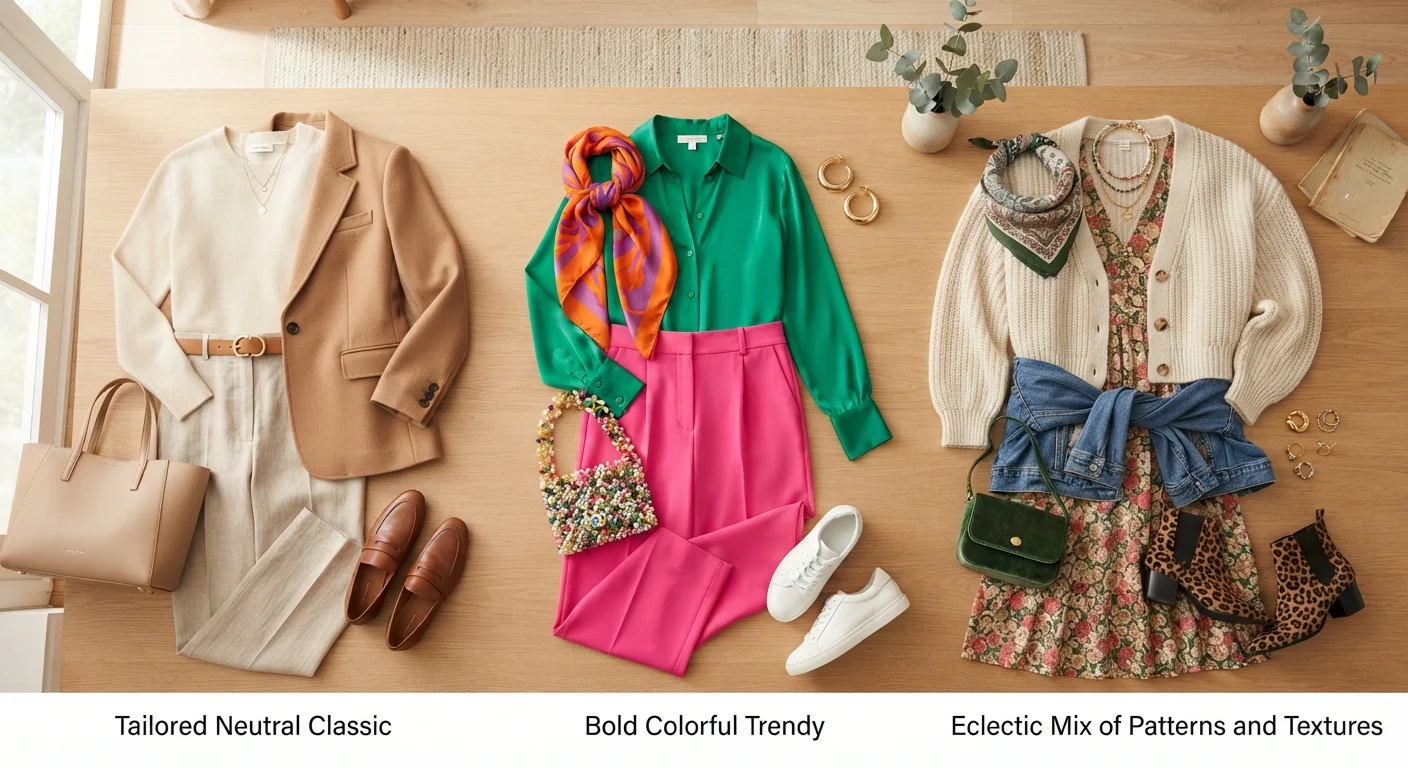
What Each Approach Actually Means
Before comparing trade-offs, it helps to define what we mean by each term - because all three get used loosely in everyday conversation.
Classic dressing centers on garments and silhouettes with demonstrated longevity: tailored trousers, structured blazers, simple knitwear, and neutral color palettes. The operating principle is that well-made foundational pieces transcend seasonal trend cycles. Think less about what's new and more about what endures.
Trend-led dressing tracks what's currently prominent in fashion media, runways, and street style. It's reactive and cultural - you're participating in a shared style moment. This can mean bold prints, specific silhouettes that are having a moment, or micro-trends from social media. The appeal is freshness and social relevance; the trade-off is a shorter shelf life per piece.
Eclectic dressing is less about following any system and more about curating from everywhere: vintage finds, unexpected combinations, clashing prints, mixed eras. It reads as highly individual because it is - it's driven by personal instinct rather than tradition or trend. For a deeper look at the full spectrum of style identities, the style archetypes guide offers a useful reference map.
| Classic | Trend-Led | Eclectic | |
|---|---|---|---|
| Longevity of pieces | High - years to decades | Low to moderate - 1-2 seasons | Variable - depends on sourcing |
| Cost over time | Higher upfront, lower long-term | Lower upfront, higher cumulative | Low to moderate with thrifting |
| Wardrobe coherence | High - pieces integrate easily | Moderate - can fragment | Challenging but rewarding when done well |
| Creative expression | Restrained and refined | Culturally current | High - highly individual |
| Effort to maintain | Low - few seasonal changes | High - constant updating | Moderate - requires sourcing time |
| Risk of feeling dated | Low | High | Low - personal rather than trend-defined |
The Real Trade-Offs: Cost, Effort, and Longevity
How each approach plays out in practice depends heavily on budget and lifestyle. Classic dressing often demands a higher upfront investment in quality basics, but cost-per-wear tends to be low because those pieces stay relevant for years. Budgeting basics matter here - buying fewer, better things is a genuine financial strategy, not just a style platitude.
Trend-led dressing can feel affordable item-by-item, but the cumulative cost of refreshing a wardrobe each season adds up quickly. It also generates more waste - pieces bought for one trend cycle often get discarded when the moment passes. For readers curious about a more sustainable route into trend participation, secondhand shopping is worth exploring as a middle path.
Eclectic dressing is cost-variable - thrifting and vintage sourcing can keep it very affordable, but the time investment in sourcing is real. It also requires the most editorial confidence: combining disparate pieces in a way that reads intentional rather than chaotic takes practice.
Test Your Instinct With a Simple Exercise
Pull out five pieces you reach for most often and lay them side by side. Do they share a color family, a silhouette, a feeling? That pattern is your natural style instinct - and it's more reliable than any label you might apply. Use it as a filter when shopping, not a constraint on your wardrobe.
Style Coherence: Does Your Wardrobe Tell a Consistent Story?
One underrated dimension of each approach is how easily it produces a coherent wardrobe - one where pieces work together and getting dressed doesn't feel like a daily puzzle.
Classic dressing wins on coherence almost by default. Because the palette and silhouettes are restrained, mix-and-match potential is high. Trend-led wardrobes can become fragmented - each seasonal haul may not integrate well with what came before. Eclectic dressing has the highest coherence risk, but also the highest reward when it works: a genuinely eclectic wardrobe that feels unified is a form of personal branding.
It's worth distinguishing classic from simply dull. A well-executed classic wardrobe is intentional, not timid - for more on that distinction, timeless versus boring breaks it down clearly. Similarly, minimalist versus maximalist thinking can help clarify where eclectic dressing sits on the spectrum.
Finding Your Natural Instinct - and Building From There
Most people don't dress in a pure style category. You might gravitate toward classic foundations but enjoy one or two trend-forward pieces per season. Or you might be fundamentally eclectic but anchor the look with classic outerwear. Recognizing your natural instinct - rather than forcing a label - is actually the more useful exercise.
A good starting question: when you see something you love while shopping, what draws you to it? Is it that it will clearly work with everything else you own (classic instinct)? That it feels exciting and current right now (trend instinct)? Or that it's unlike anything you already have and you can't stop thinking about it (eclectic instinct)?
Dressing with intention goes deeper into how to translate those instincts into a wardrobe that consistently reflects who you are. And if you're still working out where trends fit into your personal picture, personal style versus fashion trends is a grounding place to start.
This article is for informational and educational purposes only. Style choices are personal and subjective; the approaches described reflect general frameworks, not prescriptive rules.