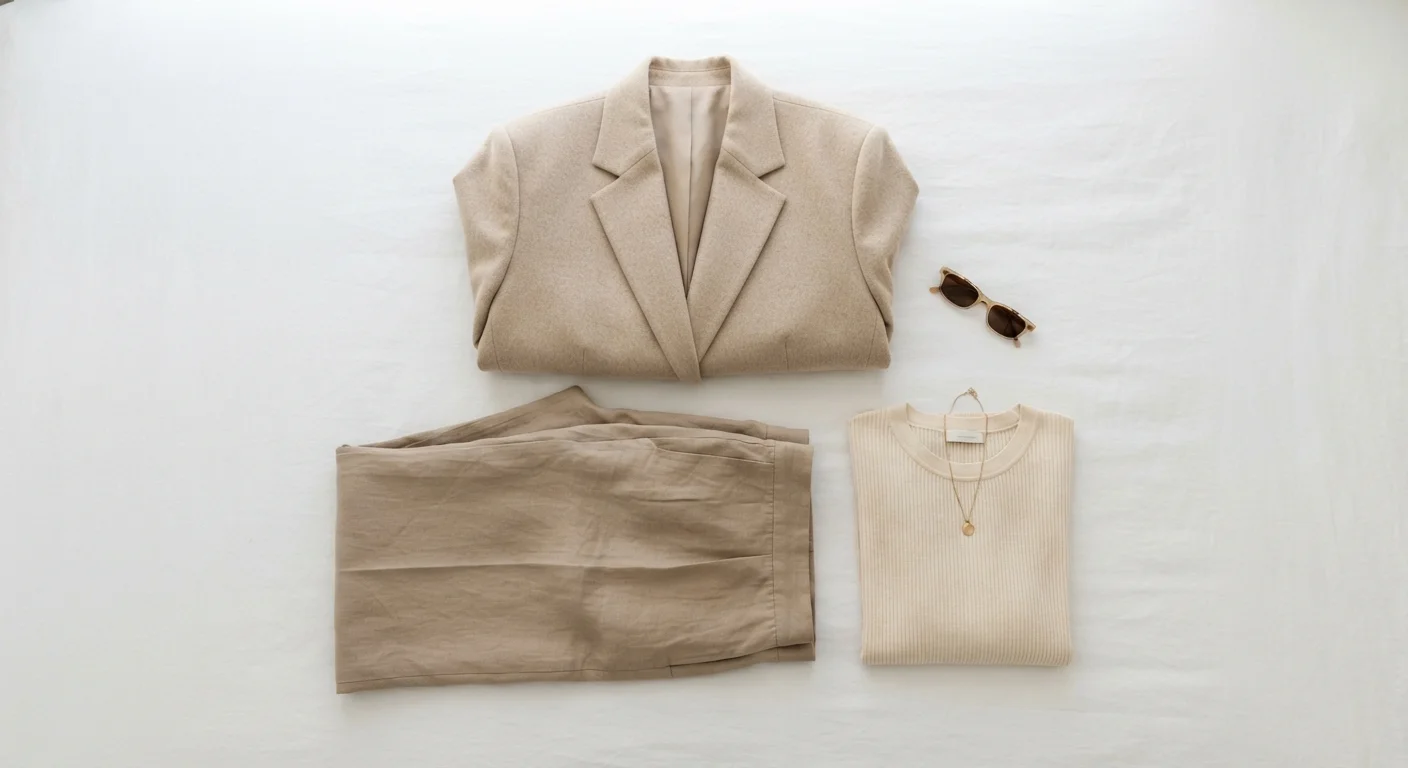
Why Silhouette Is the First Thing People Actually See
Before anyone registers your color palette or the brand label on your bag, they see shape. Silhouette is processed by the eye almost instantly - it's the broadest visual cue an outfit sends. A dramatic A-line skirt reads as structured and feminine from across a room. A boxy, oversized coat reads as relaxed and deliberate. Neither is inherently better, but both communicate something clear before a single detail is noticed.
This is why two outfits built from similarly priced basics can look entirely different in impact. The one that looks more pulled-together usually has a clearer, more intentional silhouette. Understanding this shifts the focus away from chasing specific pieces and toward thinking about the shape you're creating as a whole.
Silhouette is also one of the most inclusive styling tools available. Rather than prescribing one "flattering" shape, working with silhouette means choosing the outline that feels most authentic and confident for your body and your personality. That might be a strong-shouldered column shape one day and a softer, draped A-line the next. Both are valid creative choices.
Try the Mirror-at-a-Distance Test
Step back from a mirror far enough that you can't read labels or see fine details - about 8-10 feet works well. What shape does your outfit create? Does the outline feel balanced? This distance view mimics how others actually see you at first glance and is a quick way to spot proportion issues before you leave the house.
Proportion: The Invisible Framework Behind Every Great Outfit
If silhouette is the big picture, proportion is the internal logic that makes it work. Proportion describes how the volumes, lengths, and weights of individual garments relate to each other within an outfit. It's the reason a tucked-in shirt often looks more polished than an untucked one - it creates a visible break between top and bottom, giving the eye a sense of structure.
The most actionable proportion principle is straightforward: balance volume. When one part of an outfit is loose or oversized, counter it with something more fitted elsewhere. Wide-leg trousers pair naturally with a slim or tucked top. An oversized sweater works with straight-leg or slim pants. This contrast creates visual interest without tipping into imbalance. When every element is voluminous - a boxy top, wide trousers, a chunky sole - the eye loses its reference point and the outfit can read as unintentional, even if each piece is stylish on its own.
Proportion also involves length relationships. Where a hem falls relative to your widest point, whether a cropped jacket hits at the hip or above it, and how sleeve length interacts with your torso length all shape the final silhouette. These aren't rigid rules - they're variables you can play with deliberately. Proportion in dressing explores this concept in even more depth.
#1
Factor in outfit perception: overall shape
Fashion psychology research consistently notes that silhouette and overall shape are registered before color or detail when forming a first impression of an outfit.
~80%
Of styling issues linked to proportion or fit
Style consultants frequently cite proportion and fit - rather than wardrobe size or budget - as the most common root cause when clients feel their outfits aren't working.
Putting It Into Practice Without Starting Over
The good news: you don't need a new wardrobe to start working with proportion and silhouette more intentionally. The shift is mostly perceptual. Start by identifying which pieces in your closet read as voluminous and which are more fitted. Then look at how you're currently combining them. If most of your go-to outfits pair loose with loose, that's an easy place to experiment.
Small interventions make a significant difference. A half-tuck pulls a long top away from a shapeless silhouette. Rolling up sleeves shortens the visual length of an oversized piece. A belt over a dress or long cardigan introduces waist definition that changes the entire outline. Fit factors beyond size labels are worth understanding here - because how a piece drapes on your specific frame affects its proportional contribution to any outfit.
If a piece consistently throws off your proportions no matter how you style it, a targeted alteration can help. Getting clothes tailored is often simpler and more affordable than people assume, and even a hemline adjustment can transform how a piece behaves in an outfit. For a reliable foundation to build from, outfit formulas that actually work offer proportion-smart combinations you can adapt immediately. And once your silhouette feels right, adding texture and fabric is the natural next step to adding depth.
This article is for informational and styling purposes only. Style principles are general guidance and may vary based on individual preference, body type, and context.