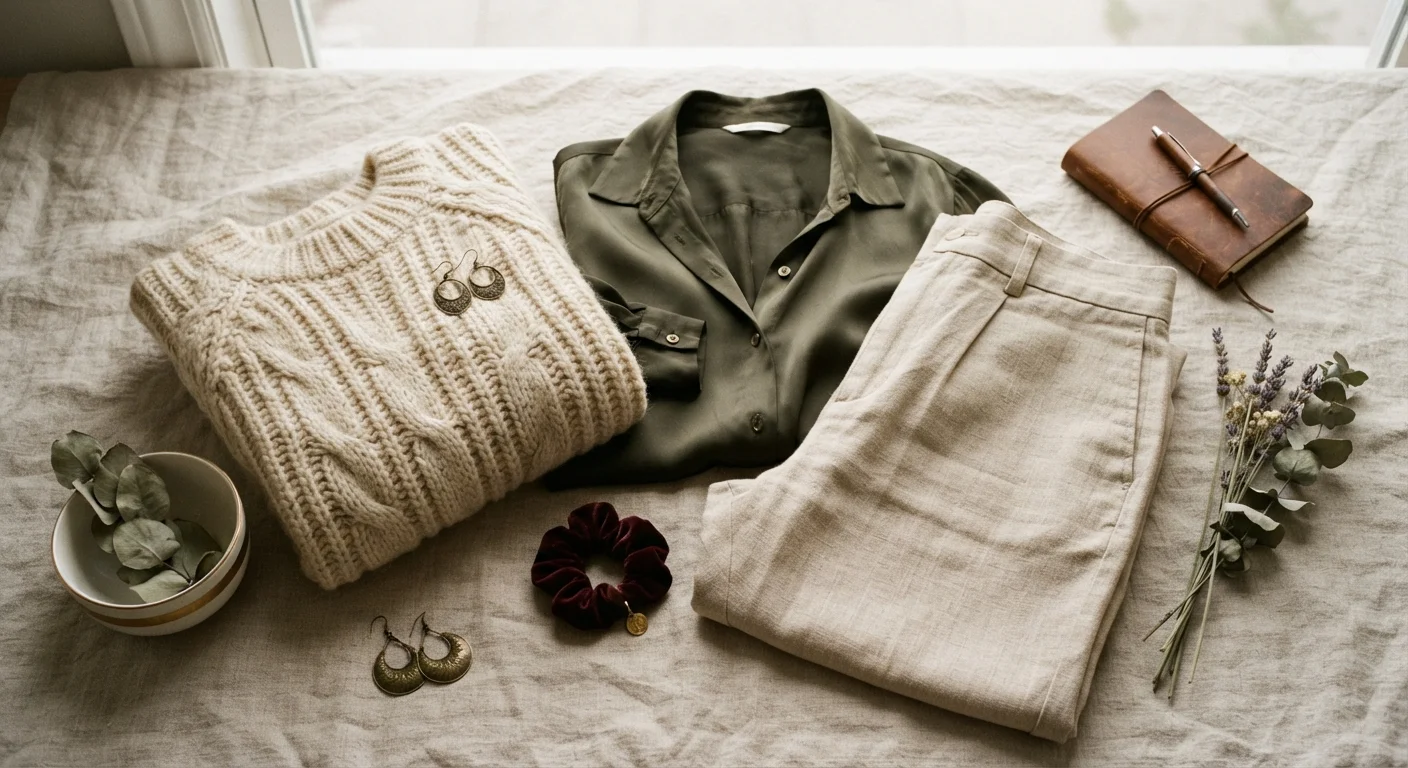
Why Texture Is the Missing Piece in Most Outfits
Most of us learn to think about outfits in terms of color and silhouette - does this go together? Is the fit right? But there's a third dimension that quietly separates a forgettable outfit from one that feels genuinely put-together: texture. If you've ever stared at a perfectly color-coordinated look and felt something was still off, texture might be exactly what's missing.
Texture is the surface personality of a fabric. It's the reason a chunky ribbed sweater and a glossy satin skirt in the same cream tone create a more compelling outfit than two pieces in the same fabric. When all your garments share a similar surface quality - say, everything is smooth and matte - the eye has nothing to travel between. There's no tension, no story. Why your outfits never feel quite right often comes down to this kind of invisible flatness that color alone can't fix.
3
Texture dimensions to vary per outfit
Style educators frequently reference surface quality, weight, and construction as the three variables that determine textural contrast in outfit-building.
~60%
Of outfit perception tied to fabric, not color
Fashion researchers studying garment perception suggest that fabric behavior and surface quality significantly influence how dressed-up or polished an outfit reads, often more than color choice alone.
How Fabric Properties Create Texture
Texture isn't just about how a fabric feels under your fingertips - it's equally about how it behaves in light and space. Fabrics reflect or absorb light differently, which changes how they read next to each other. Silk catches light and creates highlight and shadow. Wool absorbs it and looks soft and dimensional. Linen sits somewhere in between, with a natural slub that adds organic interest.
Drape is part of texture too. A fluid fabric like crepe falls differently than structured canvas or stiff organza, and that movement affects proportion and silhouette in ways that matter as much as the fit itself. For a deeper look at how volume and shape interact with the body, proportion and silhouette are worth understanding alongside texture.
Start With a Texture Anchor Piece
When building a new outfit, try choosing one piece with notable texture first - a chunky knit, a tweed jacket, a velvet skirt - and build the rest of the look around it in smoother or simpler fabrics. This anchor approach prevents over-mixing while still delivering dimension. It also makes getting dressed more intentional and less random.
The Art of Mixing Textures Intentionally
The most reliable principle in texture mixing is contrast. Pair something refined with something relaxed, something smooth with something tactile, something structured with something that flows. This contrast creates the visual dialogue that makes an outfit interesting to look at.
Here's a useful mental framework: think in terms of surface quality (matte vs. shiny), weight (light vs. substantial), and construction (loose-weave vs. tight, knit vs. woven). Aim to vary at least one of those three in any outfit, and you'll naturally introduce texture depth. A linen blazer over a silk slip dress plays on matte vs. shiny and structured vs. fluid simultaneously - simple, but it reads as intentional.
Monochromatic outfits are actually one of the best playgrounds for texture mixing. When color is held constant, texture becomes the main event. This is why all-black or all-camel outfits can look remarkably dynamic when the pieces are deliberately varied in surface. When outfits feel off even when the clothes are fine, the culprit is often a sameness of texture rather than a mismatch of color.
Caring for Your Fabrics to Preserve Their Texture
Texture only works for you if it's maintained. A velvet that's been crushed in the dryer or a linen that's been over-starched loses the very surface quality that made it interesting in the first place. Part of dressing with intention is understanding how to keep your fabrics looking and behaving as they should.
For an approachable guide to handling everything from silk to wool at home, caring for delicate fabrics covers the practical maintenance side. Taking care of your clothes also means your investment in quality textures pays off over time, rather than fading after a few washes.
Texture is one of those elements of personal style that, once you start noticing it, you can't unsee. It's the reason some outfits feel rich and considered while others fall flat despite being technically correct. Start small - mix one smooth piece with one textured one - and let your eye develop from there. Your wardrobe will thank you.
Texture and Occasion Are Connected
Certain textures carry social signals worth being aware of. Velvet, brocade, and metallic fabrics tend to read as more formal, while linen, jersey, and denim sit at the casual end of the spectrum. When mixing textures across formality registers - say, pairing sequins with denim - the contrast itself becomes a style statement, so wear it with confidence if that's the intention.