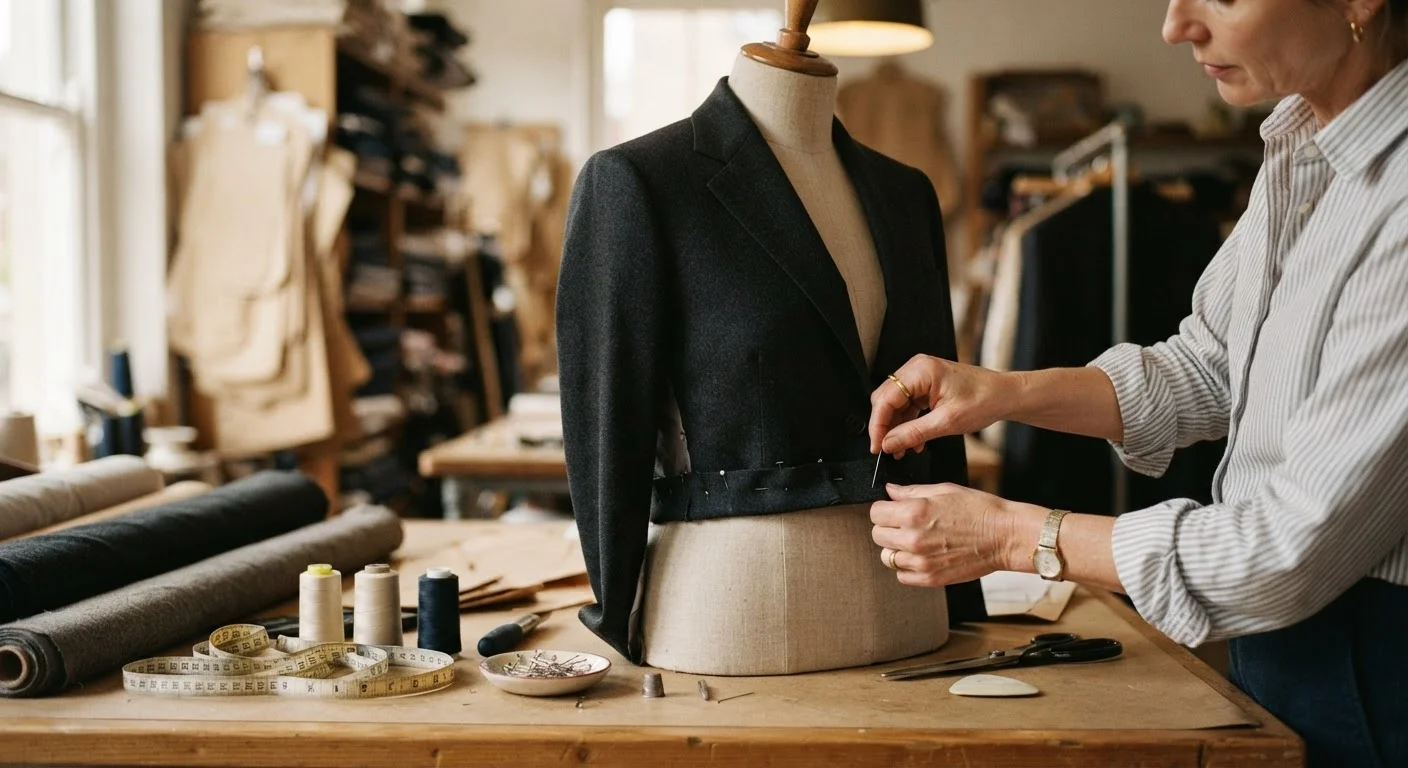
Why tailoring changes the entire equation
Most of us buy clothes off the rack designed for a statistical average that fits almost no one perfectly. The result? Garments that look fine on a hanger but feel awkward in real life. Tailoring closes that gap - and it doesn't require a luxury budget or a wardrobe full of suits to be worthwhile.
The alterations that move the needle most are often the simplest: hemming trousers or a dress, taking in the waist of a blazer, or shortening sleeves. These changes cost relatively little but produce an outsized improvement in how put-together an outfit reads. If you've ever felt like your outfits never feel quite right, fit is usually the first place to investigate.
Tailoring also extends the life of pieces you already love. A dress you've avoided wearing because the hem drags, or a jacket you shelved because the sleeves are too long, can re-enter regular rotation after a single appointment. That's a win for your personal budget and your wardrobe confidence.
Shoulder seams are a hard limit
The shoulder seam is the anchor of any garment. Moving it requires reconstructing much of the upper body of a jacket or blouse - a technically demanding job that adds significant cost. Before bringing in a structured piece, check that the shoulder seam sits exactly at your shoulder point. If it doesn't, factor that complexity into your budget decision.
How to work through the process
The steps below walk you through the process from diagnosis to pickup. Whether this is your first tailor visit or you're returning after a gap, following them in order avoids the most common frustrations.
What you will need
Full-length mirror
Helps you identify fit issues at home before your tailor appointment.
Tailor or alterations specialist
The trained professional who assesses and executes all adjustments to your garment.
Measuring tape
Useful for noting your own measurements and communicating preferred hem lengths.
Identify what actually feels wrong
Stand in front of a full-length mirror wearing the garment with its intended shoes. Look for specific issues: pooling fabric at the hem, shoulder seams that slide forward, excess fabric at the waist, or sleeves that hit at the wrong point on your hand. Name the problem in concrete terms - "the waist is two inches too loose" beats "it just doesn't fit."
Understanding how silhouette shapes an outfit can help you articulate what's off more precisely before you book an appointment.
Decide whether the piece is worth altering
Ask yourself two questions: Is the garment well-constructed (quality seams, sturdy fabric, adequate seam allowance)? And does it serve a real role in your wardrobe? A well-made blazer you reach for constantly is an excellent candidate. A fast-fashion top with thin seams and no extra fabric to work with probably isn't.
As a rough rule, alteration cost shouldn't exceed 30-50% of what the garment is worth to you. For higher-quality or sentimental pieces, that math can shift considerably.
Find a qualified tailor or alterations specialist
Look for tailors with experience in your specific garment type - bridal and formalwear specialists aren't always the right fit for everyday denim or knitwear. Ask friends or read local reviews. A short consultation visit (many tailors offer these free or for a small fee) lets you assess their communication style before committing.
Attend your fitting prepared
Arrive wearing the shoes and undergarments you intend to pair with the garment. Bring any reference images if you have a specific result in mind. Be ready to stand, sit, and move during the fitting - fit in motion matters just as much as fit standing still.
[tip_callout]Communicate clearly and confirm the plan
Describe the result you want, not the method. Say "I'd like this to skim the hip rather than cling" rather than telling the tailor exactly how many inches to take in. They understand construction; your job is to describe how you want to feel in it. Before you leave, confirm the specific changes being made, the cost, and the pickup timeline in writing or via text if possible.
Try it on at pickup before you leave
Always try the garment on at the tailor's shop before taking it home. Move around, check every altered point, and speak up immediately if something doesn't feel right. Reputable tailors expect a final check and will make minor adjustments on the spot or schedule a quick follow-up. Once you're home and satisfied, care for the garment well - proper garment care protects that alteration investment for years to come.
Some fabrics resist alteration
Delicate fabrics like heavily beaded pieces, sheer chiffon, or leather can be difficult or impossible to alter without visible marks. Always ask your tailor to assess the fabric before committing. A short consultation upfront saves you from disappointment later.
Building tailoring into your regular styling habits - even just once or twice a year - gradually builds a wardrobe that fits your actual body rather than a theoretical one. That shift, more than any trend or shopping haul, is what makes getting dressed feel effortless.