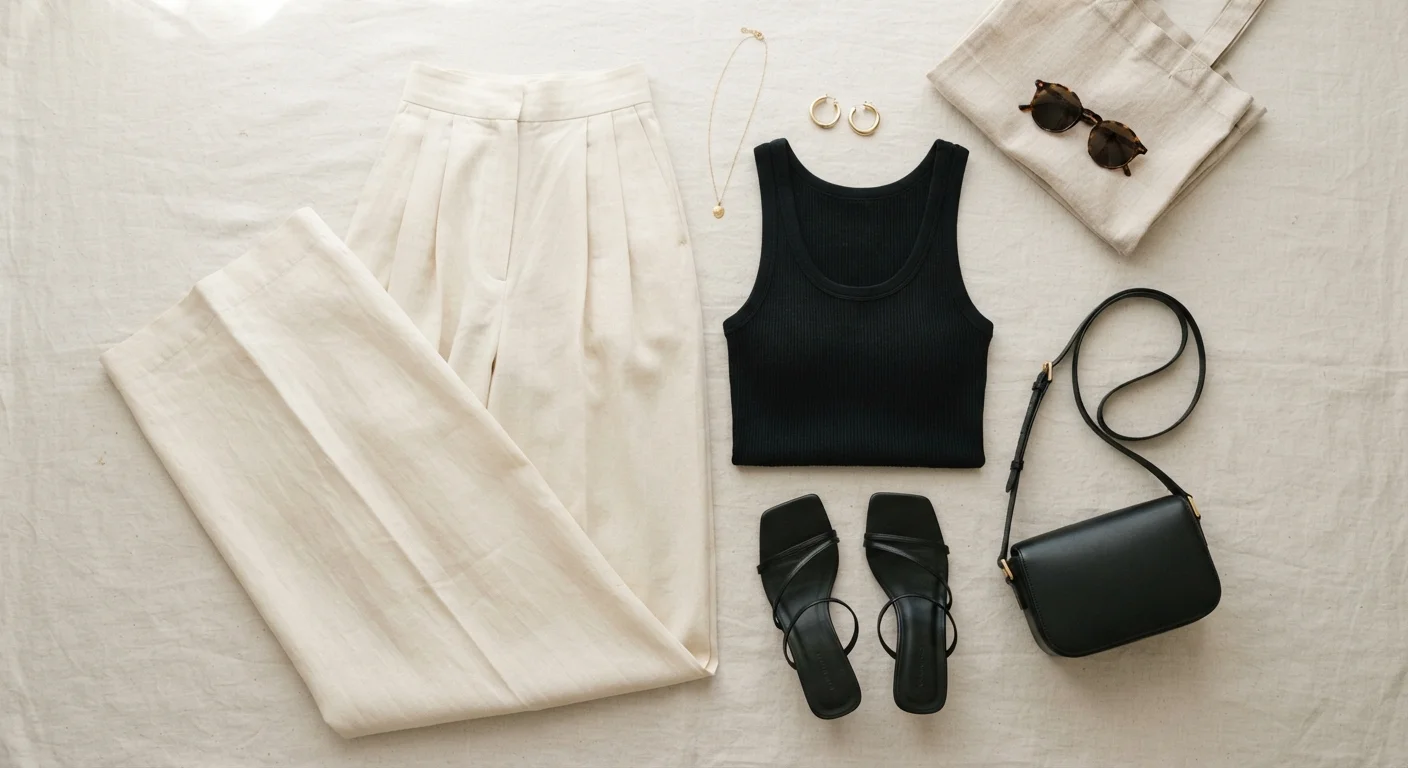
Why Proportion Is the Quiet Engine Behind Great Outfits
Most style advice focuses on color, fit, or trend - but proportion is the underlying force that determines whether an outfit reads as cohesive or chaotic. It operates quietly in the background, and most people don't consciously notice it until something feels wrong.
The basic idea: every garment has a visual volume. Wide-leg trousers occupy a lot of visual space. A fitted turtleneck occupies very little. When you put pieces together, those volumes either create harmony or compete with each other. That push and pull is proportion at work.
If your outfits regularly feel "off" despite wearing clothes you like individually, proportion is often the culprit. As explored in Why Your Outfits Feel Off Even When Your Clothes Are Fine, the problem is rarely the clothes themselves - it's how they relate to each other.
#1
Most common reason outfits feel unintentional
Fashion stylists consistently cite proportion imbalance - not color or fabric - as the primary issue when clients say their outfits don't look 'put together'.
2 pieces
Average outfit where proportion matters most
Most everyday outfits involve just two or three pieces, making the volume relationship between them the single most visible styling variable.
The Core Principle: Volume Contrast Creates Balance
The most practical proportion rule in everyday dressing is this: contrast volume top to bottom. A full, billowy skirt pairs naturally with a tucked-in fitted top. Wide-leg trousers look balanced with a streamlined blouse. Oversized outerwear sits well over slim trousers or fitted jeans.
This doesn't mean you can never wear two relaxed pieces together - it means you need to be intentional when you do. A slouchy trouser and an oversized sweater can work, but the silhouette needs a defined waist, a belt, or a deliberate tuck to give it shape. Without that anchor, the outfit loses its visual structure.
Try the One-Third, Two-Thirds Rule
A classic proportion guideline from fashion design is to aim for one-third of the outfit in one visual weight and two-thirds in another - for example, a cropped top (one-third) over high-waisted wide trousers (two-thirds). This creates an asymmetric visual balance that tends to look dynamic and deliberate rather than split evenly down the middle.
Length also plays a major role. Cropped tops raise the visual midpoint of the body and work especially well with high-waisted or wide bottoms. Longer, tunic-style tops over slim pants push volume downward. Neither is wrong - but each creates a different proportion story, and knowing what you're doing helps you make it look intentional.
For a deeper look at how silhouette shapes the way clothing reads, Proportion and Silhouette: The Underrated Backbone of Great Outfits breaks down these concepts in detail.
Applying Proportion Without Starting Over
Good news: improving proportion rarely requires buying anything new. It usually just means rethinking combinations. Start by pulling out a piece that feels awkward in outfits and ask what visual volume it carries. Is it wide? Boxy? Long? Then look for what you own that contrasts it.
Layering is another place where proportion shifts unexpectedly. Adding a long duster coat over an already-voluminous outfit multiplies the visual weight. Adding the same coat over fitted jeans and a simple top creates a balanced, editorial look. The coat didn't change - the relationship between pieces did.
Texture also contributes to perceived volume, even when the cut is slim. A chunky knit reads heavier than a silky shell of identical dimensions. Mixing fabrics thoughtfully is part of proportion awareness - something Texture and Fabric: The Dimension Most People Overlook explores in full.
Building this awareness is part of developing a coherent personal style over time. Dressing With Intention offers a broader framework for making deliberate, consistent choices across your whole wardrobe.