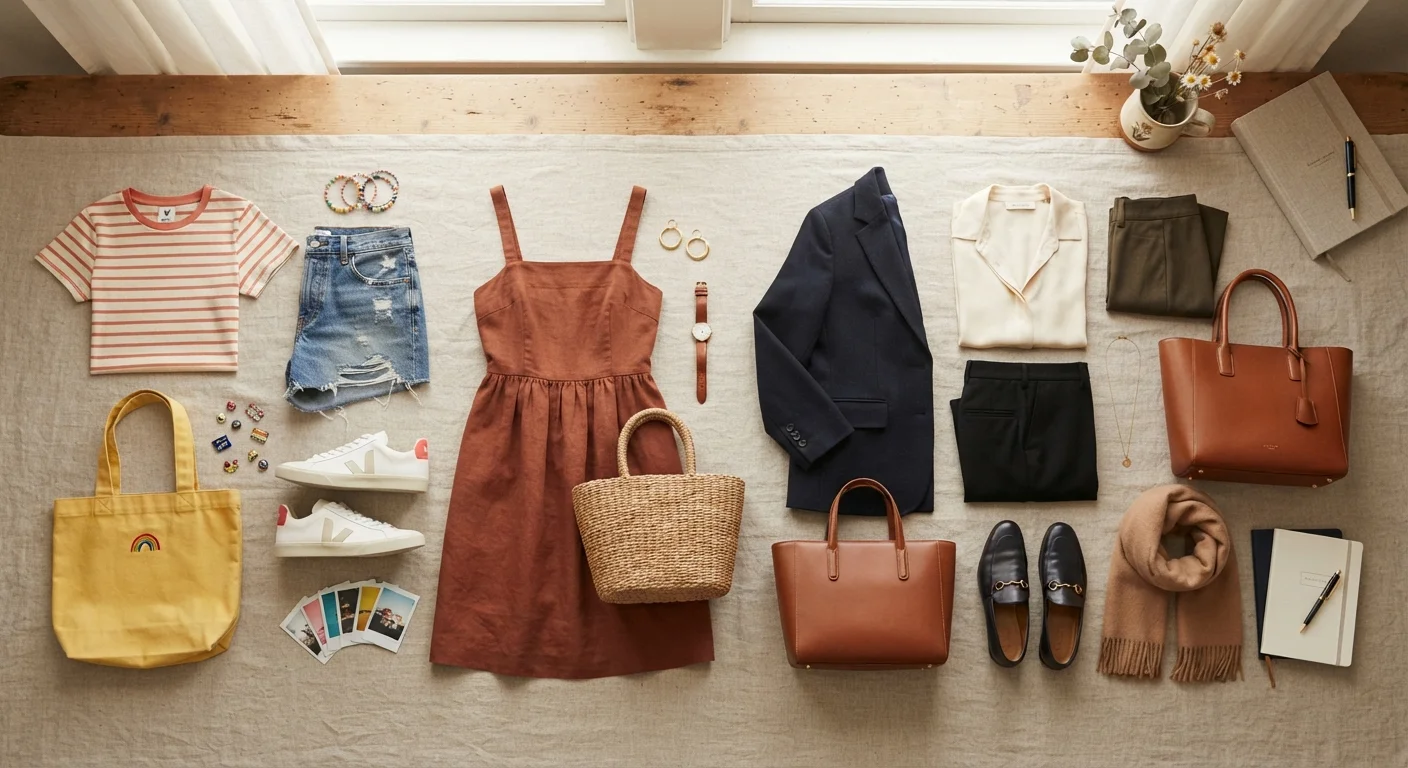
Why Style Was Never Meant to Stay Still
Think about who you were at 22 versus who you are today. Your values, relationships, daily rhythm, and understanding of yourself have almost certainly shifted - sometimes dramatically. Your wardrobe is simply one of the most visible expressions of that same ongoing change.
Personal style isn't a destination you arrive at and plant a flag. It's a practice - something you return to, refine, and renegotiate across your entire life. The idea that you should find "your look" and keep it unchanged is both unrealistic and a little limiting. The goal isn't consistency for its own sake; it's authenticity at every stage.
If you've ever opened your closet and felt a quiet disconnect - like these clothes belong to a slightly different version of you - you've already experienced aesthetic evolution firsthand. Our article on style drift explores exactly that feeling and what it's telling you.
Style Evolution Isn't the Same as Trend Chasing
Updating your aesthetic in response to genuine life changes is quite different from chasing seasonal trends. True style evolution is inward-driven - it reflects who you're becoming. Trend adoption is externally driven, and while it can be fun, it's not the same process. Understanding that distinction helps you make wardrobe choices that hold up over time.
How Style Tends to Shift Across Life Stages
While no two style journeys are identical, some broad patterns show up consistently across generations:
- Teens and early 20s: This is peak experimentation. You're trying on identities - sometimes literally - and style becomes a way to signal belonging or differentiation. Trend-chasing is common, and that's genuinely useful: it's how you learn what resonates and what doesn't.
- Late 20s: Many people begin moving toward intentionality. Career pressures, social contexts, and a growing sense of self start to shape choices beyond just "what looks cool." The wardrobe may slim down; quality tends to matter more than volume.
- 30s and 40s: A clearer aesthetic often crystallizes here. Life responsibilities - parenthood, demanding careers, shifting social circles - push people toward styles that genuinely work for their real routines. This is also when body changes and evolving beauty needs (including how your skin changes) start meaningfully influencing choices.
- 50s and beyond: Freedom and confidence often take center stage. Many people report feeling most authentically themselves in how they dress during this period - less influenced by external expectation, more guided by genuine preference.
70%
Adults who say style becomes more personal with age
A widely cited finding in fashion psychology research suggests the majority of adults feel their style becomes more authentically their own as they move through their 30s and beyond.
3-5
Major style resets in an average adult lifetime
Fashion educators and wardrobe consultants commonly observe that most people undergo three to five significant aesthetic shifts tied to major life transitions over the course of their lives.
What Actually Drives Style Change
Style shifts rarely happen in a vacuum. The triggers are almost always tied to real-life change:
Life transitions - a new job, a move, a relationship change, or a health shift - are among the most powerful catalysts. They force you to reconsider what your clothes need to do for you day-to-day. See how this plays out practically in our guide to dressing for your actual routine.
Body changes matter too - not as a reason to feel limited, but as practical context. What fits well, feels comfortable, and flatters your specific shape at 35 may be quite different from what worked at 25, and that's worth embracing rather than resisting.
Shifting values increasingly shape wardrobe choices. A growing interest in sustainability, a desire for simplicity, or a new sense of professional identity all leave visible marks on how people dress.
Audit Before You Overhaul
Before making sweeping wardrobe changes, spend a week noting what you actually reach for each morning - and what you consistently skip. Patterns will emerge quickly. This small audit prevents impulse-driven style resets and helps you evolve intentionally rather than reactively.
Building a Style That Grows With You
The most resilient personal aesthetics aren't built around trends or a specific decade's look - they're built around a set of anchoring preferences that hold up across change. Think about the silhouettes you return to, the colors that consistently make you feel like yourself, the level of formality that matches your actual life.
From there, evolution becomes additive rather than chaotic. You're not dismantling your identity every few years - you're layering in new understanding. For a deeper dive into this process, our complete personal style guide walks through every stage from exploration to confident expression.
If you travel frequently, it's worth noting that a travel wardrobe can be one of the most honest tests of whether your aesthetic is genuinely coherent - it strips away excess and reveals what you actually reach for.