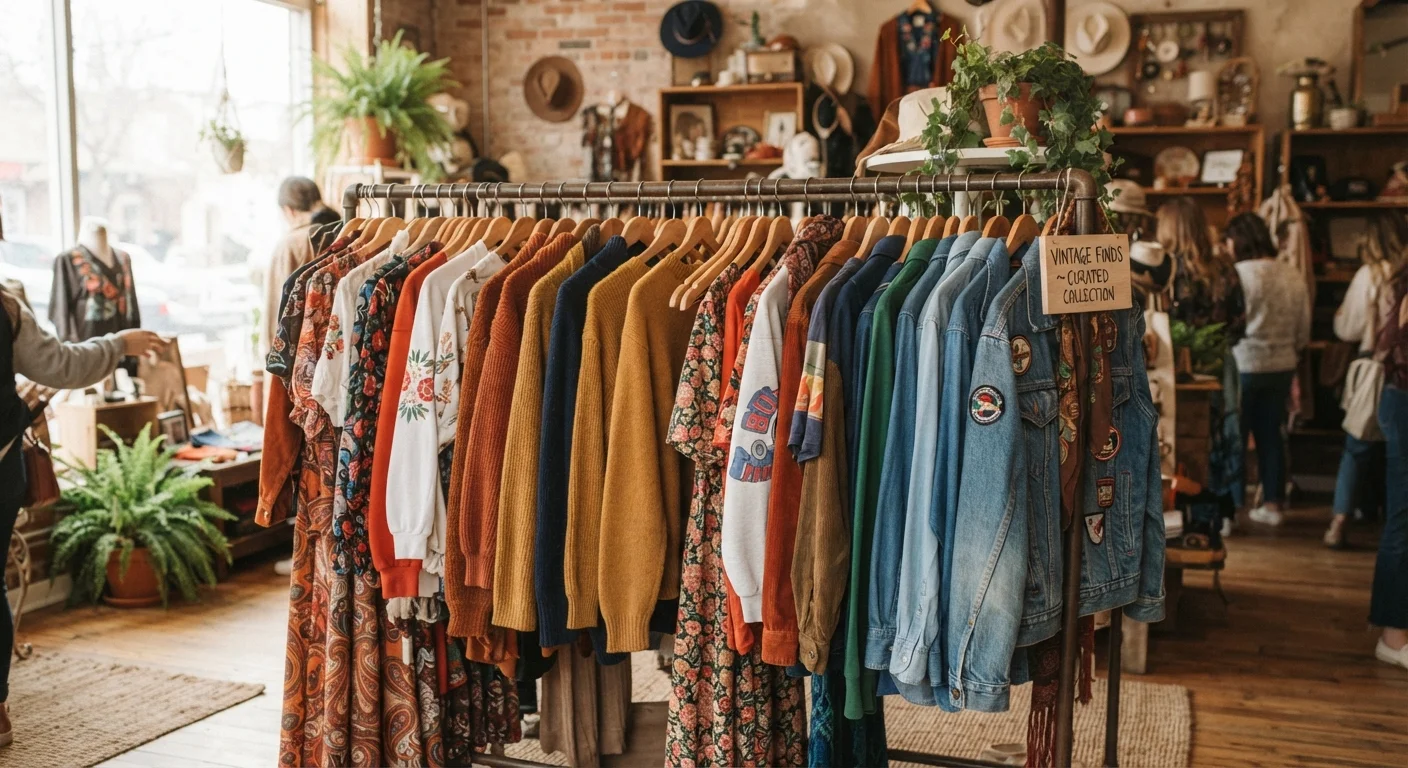
Why Secondhand Shopping Has Become a Style Conversation
Thrift stores, consignment shops, and resale platforms have moved well beyond bargain-bin territory. For a growing number of everyday shoppers, secondhand is now a primary channel for building a wardrobe that feels genuinely personal - not just assembled from whatever's on the rack at the mall this season.
The appeal is real and layered. Secondhand offers access to older silhouettes, discontinued styles, and construction quality that's increasingly hard to find in new mid-range clothing. It also fits naturally into a broader interest in understanding the trade-offs between fast and slow fashion. But it comes with friction points that are worth understanding before you commit hours to the hunt.
This breakdown looks honestly at both sides - what secondhand shopping genuinely offers, and where it regularly falls short.
The Real Advantages of Shopping Secondhand
The benefits of thrifting go beyond saving money, though that's certainly part of the picture. Here's what secondhand shopping does well:
Access to distinctive, one-of-a-kind pieces
Secondhand inventory spans decades of production, giving you access to silhouettes, prints, and construction styles that simply aren't in current retail. This is one of the most effective ways to develop a wardrobe that doesn't look like everyone else's.
Lower price points for higher-quality items
Well-made garments from earlier decades often turn up at thrift prices, because resale value doesn't always reflect original construction quality. A wool blazer or leather bag that would cost significantly more new can sometimes be found for a fraction of that.
Reduces the environmental footprint of your wardrobe
Extending the life of existing garments keeps them out of landfills and reduces demand for new production. For shoppers who care about the broader impact of their choices, this is a meaningful - if partial - lever.
Encourages more intentional purchasing decisions
The hunt-and-evaluate nature of thrifting naturally slows impulse buying. You're assessing individual pieces rather than responding to coordinated retail environments designed to encourage volume purchases.
Ideal for experimenting with new aesthetics affordably
Trying out a style direction - say, a more eclectic or maximalist approach - carries less financial risk when pieces cost a fraction of retail. If the experiment doesn't pan out, the loss is minimal.
$47B
U.S. secondhand apparel market value
According to ThredUp's 2023 Resale Report, the U.S. secondhand apparel market was valued at approximately $47 billion and projected to continue growing.
~52%
Americans who bought secondhand clothing
ThredUp's research indicated that roughly half of American consumers purchased secondhand clothing in a recent survey year, reflecting broad mainstream adoption.
One underrated advantage: the slower pace of secondhand shopping can actually sharpen your style instincts. When you're not surrounded by coordinated displays engineered to trigger impulse buys, you're forced to evaluate individual pieces on their own merits - does this actually fit my life and aesthetic? That friction can be clarifying. It's the same principle behind doing a style audit of your existing wardrobe - stepping back to see what's actually working.
Where Secondhand Shopping Falls Short
Being clear-eyed about the challenges of thrifting isn't pessimism - it's what separates a strategic shopper from someone who accumulates clutter. Here are the genuine trade-offs:
Inconsistent inventory and unpredictable availability
Unlike retail, secondhand stock changes constantly and without pattern. You cannot reliably source specific items, which makes it difficult to build a cohesive wardrobe on a defined timeline.
Time-intensive compared to conventional shopping
Finding worthwhile pieces often requires repeated visits, extensive sorting, and patience. For shoppers with limited time, the effort-to-reward ratio can be genuinely poor.
Size and fit options can be limited
Secondhand inventory skews toward the sizes most commonly donated, which doesn't serve every shopper equally. Those outside a narrow size range may consistently leave empty-handed.
Condition issues require careful inspection
Wear, staining, pilling, missing buttons, or compromised fabric integrity are real risks in secondhand clothing. Without careful evaluation, you can end up with items that need costly repair or are simply unwearable.
Resale platforms add complexity and cost
Online resale introduces shipping fees, return complications, and the gap between how items are photographed and how they actually look or fit. Misleading listings are a common frustration.
Requires existing style clarity to shop effectively
Without a clear sense of what you're looking for, thrift stores are overwhelming. Shoppers still developing their aesthetic often bring home items that don't integrate with anything they already own.
Size availability is a particularly consistent frustration. Secondhand inventory reflects what people have already owned and discarded, which doesn't map neatly onto any individual's body or size range. Shoppers at the margins of standard sizing - whether that's extended sizes, petite, or tall - often find the experience far less rewarding than those in the middle of the bell curve.
How to Make Secondhand Work for Your Personal Style
The readers who get the most from secondhand shopping tend to share a few habits. They know what they're looking for before they walk in. They understand fabric basics well enough to assess quality quickly. And they're honest about what actually fits - both their body and their lifestyle.
Know Your Style Before You Shop
Secondhand shopping rewards shoppers who already have some clarity about their aesthetic preferences. If you're unsure what your style actually is, thrift stores can feel like a chaotic grab-bag rather than a resource. Consider starting with a wardrobe audit to get grounded before your next thrift run. Having a loose mental checklist - colors you gravitate toward, silhouettes that work for your body and lifestyle - dramatically improves the signal-to-noise ratio.
If you're still developing your aesthetic, secondhand can feel overwhelming rather than exciting - too much noise, not enough signal. It's worth spending time with resources like principles for building personal style on a realistic budget before treating thrift stores as your primary wardrobe source.
Resale platforms and in-person thrift stores also serve genuinely different needs. Platforms offer searchability and specificity - you can filter by size, color, and item type - but photos can mislead and shipping adds cost and delay. In-person thrifting is tactile and immediate but demands time and consistency. Many experienced secondhand shoppers use both, depending on what they're after. For a deeper look at the practical mechanics, what to know before you go thrift shopping covers the ground-level essentials.
One more habit worth building: apply the same critical filter to secondhand finds that you'd apply to anything new. Asking the right questions before buying anything prevents thrift stores from becoming a source of cheap clutter rather than genuine wardrobe additions.