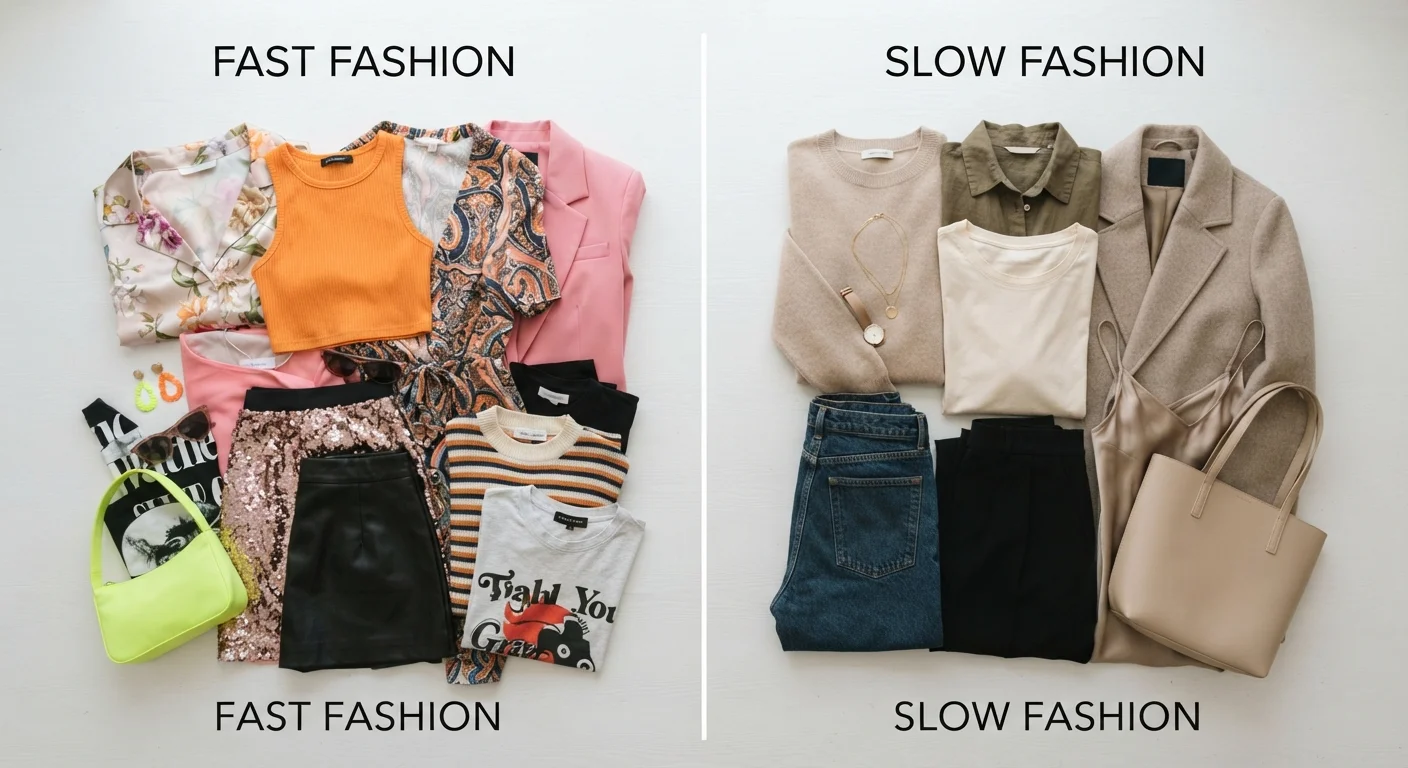
What Each Model Actually Means
Fast fashion refers to a retail model that produces high volumes of trend-responsive clothing quickly and inexpensively. Designs move from runway or street trend to store shelf in weeks, and prices are kept low through large-scale manufacturing - often in countries with lower labor costs. The appeal is obvious: you can refresh your wardrobe frequently without spending much per item.
Slow fashion is the counter-movement. It emphasizes fewer, better-made garments produced under more transparent and ethical conditions. Pricing reflects higher material quality and fairer labor practices. The expectation is that you'll buy less often but keep what you buy much longer.
Neither term is a single, regulated standard - "slow fashion" doesn't certify anything on its own, and fast fashion brands vary widely in quality and sourcing. That's why understanding clothing quality signals matters more than simply trusting a label's positioning.
| Criterion | Fast Fashion | Slow Fashion |
|---|---|---|
| Typical price per item | Low to very low | Moderate to high |
| Garment lifespan | Often shorter (months to 1-2 years) | Generally longer (several years) |
| Trend responsiveness | High - new styles constantly | Low - timeless over trendy |
| Production volume | Very high | Lower, more limited |
| Supply chain transparency | Often limited | Generally greater (varies by brand) |
| Environmental footprint per item | Typically higher due to volume | Typically lower, but not zero |
| Upfront financial accessibility | High | Lower |
| Long-term cost-per-wear | Often higher with frequent replacement | Often lower with proper care |
The Real Cost Comparison
Sticker price is the most visible difference, but it's rarely the complete picture. A $15 blouse replaced three times a year costs $45 annually. A $60 equivalent that holds up for three or more years costs the same - or less - over time. This is the cost-per-wear principle, and it's the most practical lens for evaluating clothing value regardless of which model you lean toward.
~$30
Average American annual clothing spend per item bought
Research from the American Apparel & Footwear Association has consistently found that U.S. consumers buy more clothing items per year than previous generations while spending less per piece in real terms.
3×
Increase in clothing production since 2000
Reports from the Ellen MacArthur Foundation estimate global clothing production roughly doubled between 2000 and 2015, with output continuing to grow - driven primarily by fast fashion expansion.
~35%
Of microplastics in ocean linked to synthetic textiles
A widely cited 2017 study published in Nature Communications attributed roughly a third of ocean microplastic pollution to the washing of synthetic clothing, an issue fast fashion's polyester-heavy garments contribute to disproportionately.
Fast fashion's low unit cost does lower the barrier to entry, which matters for people navigating real budget constraints. There's no shame in that reality. But it's worth being clear-eyed about what drives those prices - compressed timelines, high-volume orders, and labor cost structures that have drawn sustained criticism from labor rights researchers and journalists.
If budget flexibility is limited, building style around principles rather than price tags can help you get more from either approach.
Environmental and Ethical Trade-Offs
The fashion industry is one of the world's larger consumers of water and synthetic materials, and fast fashion's high-volume, short-lifespan model amplifies those impacts. Garments worn only a handful of times before disposal contribute to landfill waste at a scale that's well-documented by environmental researchers.
Slow fashion's lower production volumes don't eliminate environmental impact, but they generally reduce the throughput of resources per consumer. Brands in this space more often use natural fibers, recycled materials, or third-party sustainability certifications - though claims vary and independent verification is always worth seeking before taking marketing language at face value.
Labor conditions are similarly complex. Fast fashion supply chains have been linked to poor working conditions in various documented cases, though conditions differ across factories and regions. Slow fashion brands typically emphasize fair-wage commitments, though the transparency of those claims also varies. Secondhand shopping sits outside both models entirely and sidesteps many production concerns - though with its own practical limitations.
"Sustainable" Claims Aren't Always Standardized
The term "sustainable fashion" has no single legal or industry-wide definition in the United States. Some brands use certified third-party standards (like Fair Trade or GOTS for organic textiles), while others apply the term loosely in marketing. When evaluating a brand's ethical or environmental claims, looking for specific, verifiable certifications is more reliable than taking taglines at face value. Independent organizations that audit supply chain and labor practices can be useful reference points.
Building a Wardrobe That Works for You
The most useful insight here is that fast and slow fashion aren't binary choices most people actually make. Real wardrobes are usually a mix - slow-fashion staples for categories where longevity pays off (outerwear, denim, footwear), and fast-fashion or affordable pieces for trend-driven items you genuinely won't wear in three years.
Understanding how trends actually work can help you engage with them selectively rather than reactively - which reduces unnecessary spending in both models. Likewise, a clear sense of your personal style versus trend response makes it easier to spot which purchases you'll actually reach for versus which ones just felt exciting in the moment.
If you're reconsidering your overall approach to clothing and finances, it's worth noting that wardrobe decisions are part of a broader spending picture. For general guidance on managing everyday budgets, exploring savings and debt resources can provide useful context alongside any lifestyle changes.