Why Denim Literacy Actually Matters
Denim is probably the most democratic fabric in American closets. It crosses age groups, price points, and style aesthetics with ease. But walk into any store and you'll face a wall of options - different colors, fits, rises, and textures - with almost no guidance on what any of it means in practice.
That's where understanding the basics pays off. When you know what a medium-wash straight-leg looks like versus a light-wash wide-leg, you can shop faster, build outfits more confidently, and avoid buying pieces that duplicate what you already own. If you haven't recently taken stock of what's already in your closet, a wardrobe audit is a great place to start before adding anything new.
Wash
The color and surface finish of denim after it has been treated or processed. Different washes range from very dark to heavily faded and affect how formal or casual the jeans look.
Cut / Silhouette
The shape of the jeans from waist to hem - including how much room there is through the thigh and leg. Common cuts include straight, slim, wide-leg, and bootcut.
Rise
Where the waistband of the jeans sits on your body. High-rise sits at or above the natural waist; mid-rise sits at the hip; low-rise sits below the hip.
Raw denim
Denim that has not been washed or treated after dyeing. It starts stiff and dark, then fades and softens with wear over time.
Distressing
A deliberate manufacturing process that creates a worn, aged appearance through sanding, tearing, or chemical treatment. It's a style choice, not a sign of damage.
Elastane / Spandex content
A stretchy synthetic fiber sometimes added to denim fabric in small amounts to improve comfort and ease of movement.
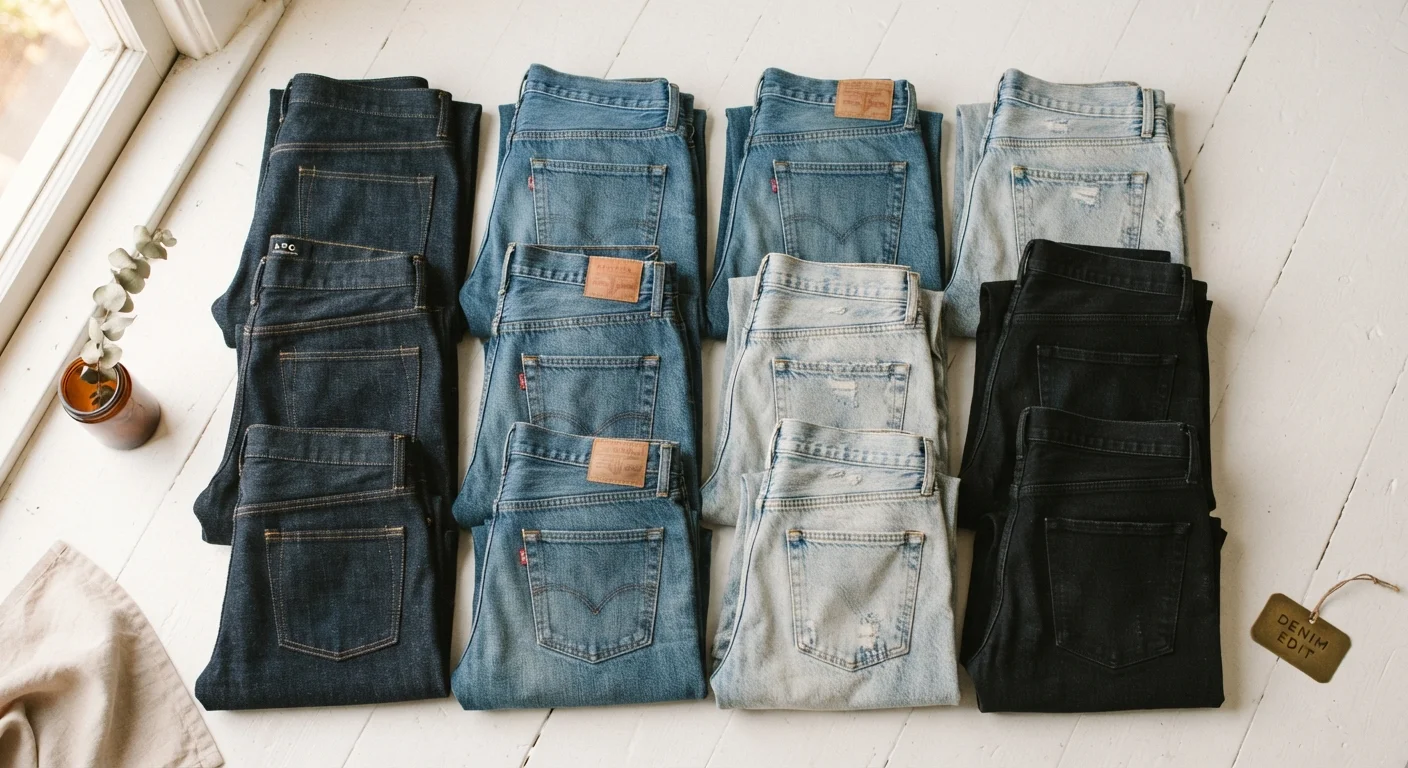
Denim Washes Explained
A denim wash refers to the color and finish of the fabric after treatment. Manufacturers use various processes - stonewashing, acid washing, enzyme washing, and simple bleaching - to achieve different looks. Here's how the main categories break down:
- Raw / dark indigo: Deep blue-black tones with minimal fading. The most formal-leaning denim. Pairs easily with blazers, button-down shirts, and polished footwear.
- Medium wash: The classic blue most people picture when they think of jeans. Versatile and relaxed - solidly casual without looking worn out.
- Light wash / stone wash: Noticeably faded, often with subtle variation. Inherently casual and laid-back. Works well with solid tops and simple outfits.
- Distressed / heavily faded: Includes visible wear marks, whiskering, or intentional tears. The most casual option - best reserved for relaxed weekends rather than mixed-use situations.
- Black denim: Technically a wash category. Dark black reads nearly as formal as dark indigo; grey-faded black reads more casual. Either pairs well with both casual and semi-dressed looks.
- White and colored denim: Seasonal and statement-driven. Treated the same way as their wash counterparts in terms of formality.
A Simple Rule for Formality
When in doubt about whether a pair of jeans is occasion-appropriate, look at two things: how dark the wash is, and whether there's visible distressing. Dark and clean almost always works harder for you. Light and distressed is best saved for genuinely casual settings.
The core principle: the darker and cleaner the wash, the more versatile and occasion-appropriate it tends to be.
Understanding Denim Cuts and Silhouettes
The cut describes how the jeans are shaped from waist to hem. It determines silhouette, comfort, and - to a large degree - what you can pair the jeans with. The most common cuts you'll encounter:
- Slim fit: Tapered through the thigh and leg without being skin-tight. One of the most adaptable cuts across body types and occasions.
- Straight leg: Consistent width from hip to hem. A classic silhouette that reads clean and unfussy. Often considered the most universally flattering starting point.
- Skinny: Close-fitting throughout, including the ankle. Very popular but more body-specific in how it looks - comfort and personal preference matter most here.
- Bootcut: Slight flare below the knee, originally designed to fit over boots. Balances proportions particularly well for those with broader hips or thighs.
- Wide leg / flared: Dramatically wider from the thigh or knee down. A fashion-forward silhouette that adds visual interest and pairs well with fitted tops.
- Relaxed / loose fit: Extra room through the seat and thigh. Comfortable and increasingly popular as a casual everyday option.
Rise - where the waistband sits relative to your natural waist - is another variable: high-rise sits at or above the natural waist, mid-rise at the hip, and low-rise below. Rise affects both comfort and proportion.
Matching Wash and Cut to the Occasion
Pairing the right wash and cut to the right setting is where denim knowledge becomes genuinely useful. A few practical scenarios:
- Casual weekend / everyday errands
- Any wash works here. Medium-wash or light-wash straight-leg or relaxed-fit jeans with a t-shirt or casual top are the path of least resistance.
- Smart casual dinner or social event
- Reach for a dark-wash slim or straight-leg in a clean, undistressed finish. Pair with a well-fitting shirt, neat shoes, and a simple top.
- Business casual (when denim is permitted)
- Dark indigo or black denim only. No rips, no heavy fading. A tailored blazer elevates the look significantly. Always check your specific workplace norms - dress codes vary widely. Our dress codes breakdown covers this in more detail.
- Casual outdoor or active-leaning day
- Relaxed or wide-leg cuts with stretch content offer more range of motion. Light or medium washes are forgiving in casual outdoor contexts.
Stretch Denim and Shape Retention
Denim with higher elastane content (above 3-4%) tends to feel very comfortable initially but may stretch out through the day and lose its intended fit faster over time. If shape retention matters to you, look for lower-stretch options or size accordingly knowing the fabric will relax slightly with wear.
Coordinating denim with the rest of your wardrobe is easier when you understand how washes interact with prints and solids. Our guide to prints and neutrals walks through that balance clearly.
Building a Smarter Denim Wardrobe
You don't need a dozen pairs of jeans. Strategic variety matters more than quantity. If you're building from scratch or refining what you have, consider anchoring your denim wardrobe around one or two versatile pairs first - a dark-wash straight leg covers the widest range of situations - then adding more specific options (wide-leg for fashion-forward days, light-wash for summer) as gaps appear.
Pay attention to fabric composition too. Most modern denim includes a small percentage of elastane or spandex for stretch and comfort. Understanding what's in your clothes helps you care for them correctly - our guide to reading clothing labels makes decoding those care tags straightforward. And if you want to understand how denim behaves compared to other fabrics in your wardrobe, our fabric reference guide is a useful complement.
Style Audit Guide
Before buying new denim, understand what you already own. This wardrobe audit walks you through evaluating your current pieces and identifying real gaps.
Dress Codes Decoded
Confused about whether your jeans fit the setting? This guide breaks down what casual, smart casual, and business casual actually mean in practice.
Clothing Labels Reference
Learn how to read the care and fabric composition tag on your denim so you know exactly what you're wearing and how to maintain it.
Denim is supposed to make getting dressed easier - not harder. Once you know what you're looking at, it usually does exactly that.