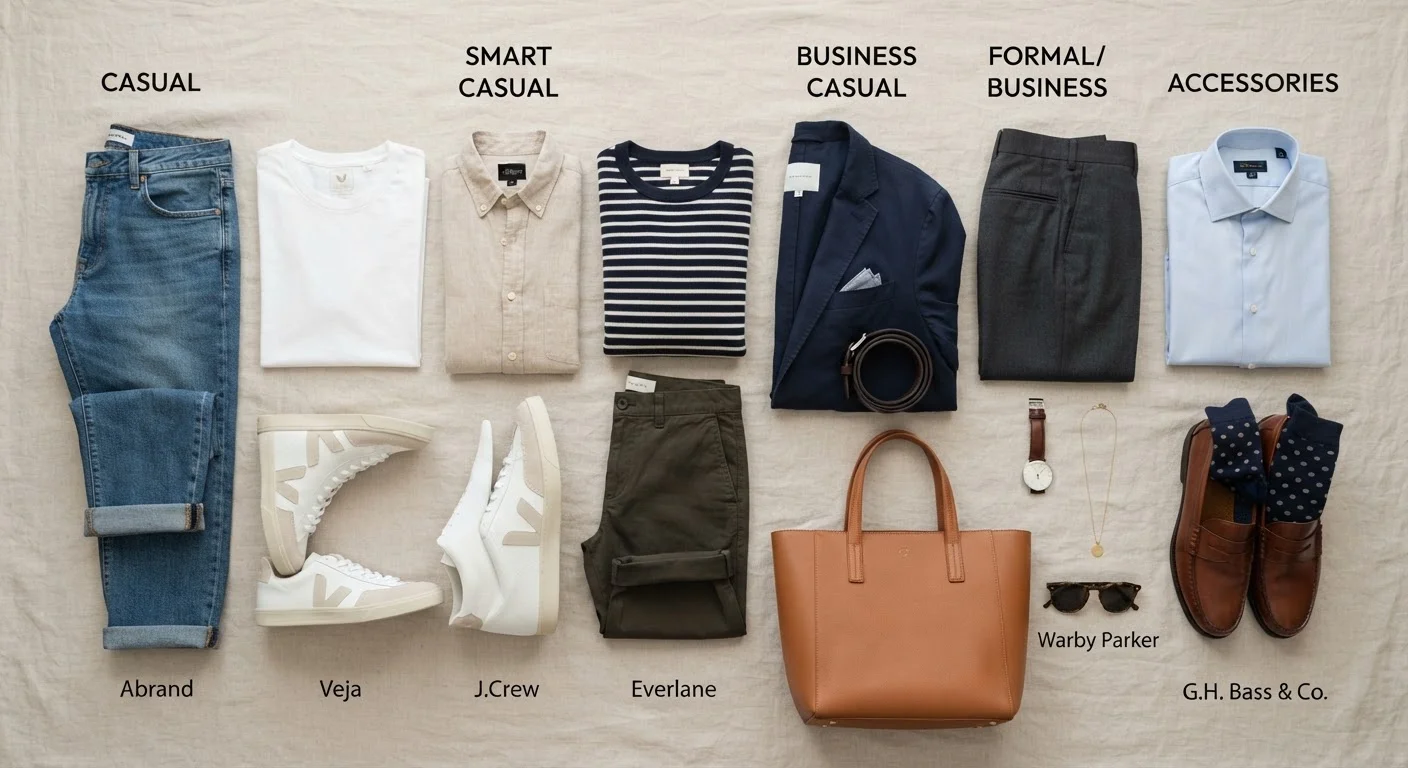
Why Dress Codes Still Matter
Dress codes can feel like an obstacle course of vague instructions - and you're definitely not alone if you've ever stared at an invitation that said "smart casual" and had absolutely no idea what to pack. The good news? Once you understand the logic behind each label, the whole system becomes much less stressful.
Dress codes exist to set expectations - for the event, the host, and your fellow guests. Reading them correctly is less about fashion rules and more about context and respect. And the more fluent you become, the more confident you'll feel walking into any room. For deeper guidance on building a look that's authentically yours, explore personal style tips to anchor these dress codes in your own aesthetic.
| Most common workplace dress code | Business Casual |
| Most frequently misunderstood dress code | Smart Casual |
| Key rule for any dress code | Fit and cleanliness matter more than price |
| When uncertain, do this | Dress one level above the stated code |
| Black tie occasion attire | Floor-length gown or tuxedo |
The Dress Code Spectrum, Explained
Think of dress codes as a sliding scale from fully relaxed to formally structured. Here's where each common label lands:
Casual
Casual means comfortable - jeans, T-shirts, sneakers, and everyday basics are all fair game. The key distinction is between intentional casual and sloppy. Clean, well-fitting clothes in good condition still matter even when the dress code is relaxed. Curious how denim fits into this? Understanding denim washes and cuts can help you figure out which jeans work where.
Smart Casual
This is the one that trips people up most often - and for good reason. Smart casual sits squarely between casual and business casual, blending polished pieces with relaxed ones. Think dark jeans paired with a blazer, or chinos and a neat button-down. The rule of thumb: elevate one element. If the bottoms are relaxed, make the top more refined, and vice versa. For a much deeper dive, Smart Casual Explained breaks it all down clearly.
Business Casual
Business casual is the default of the modern workplace. It generally means no ties or suits required, but also no jeans or sneakers. Slacks, blouses, dress shoes, cardigans, and structured dresses all fit comfortably here. The exact interpretation can vary by industry - a tech company's business casual looks very different from a law firm's.
Business Formal / Business Professional
This calls for a full suit or tailored separates in neutral or classic colors - navy, gray, charcoal, black. Accessories should be understated and shoes polished. This is the standard for interviews, courtrooms, and formal corporate settings.
Cocktail Attire
Cocktail attire is festive but not floor-length. Think knee-to-midi length dresses, dressy separates, or a sleek suit with a statement blouse. Heels, dressy flats, or polished loafers all work well here.
Black Tie and White Tie
Black tie means floor-length gowns or formal tuxedos - this is the glamorous end of the spectrum. White tie is the most formal of all: full tailcoat for men, floor-length ballgown for women. These occasions are relatively rare, but when they arise, the instructions are specific for a reason.
Casual
The most relaxed dress code - everyday clothing like jeans, T-shirts, and sneakers. Clothes should still be clean, well-fitting, and in good condition.
Smart Casual
A middle-ground dress code that blends relaxed and polished elements. Common combinations include dark jeans with a blazer or chinos with a neat button-down shirt.
Business Casual
A workplace-oriented dress code that avoids suits and ties but also avoids jeans and sneakers. Slacks, blouses, structured dresses, and dress shoes are typical.
Cocktail Attire
A semi-formal dress code for evening events. Dresses or skirts typically fall between knee and midi length; suits with dressy accessories are also appropriate.
Black Tie
A formal dress code calling for floor-length gowns or tuxedos. Accessories and shoes should be polished and understated.
White Tie
The most formal dress code, reserved for the grandest occasions. It traditionally calls for a tailcoat and formal trousers or a full-length ballgown.
Getting It Right Without Overthinking It
A few practical principles go a long way regardless of the dress code:
- Fit matters most. Well-fitted clothing in any category looks more polished than ill-fitting formalwear.
- Fabric communicates formality. Linen, cotton jersey, and denim read casual; wool, silk, and structured synthetics read dressier. If you want to understand exactly what you're wearing, reading clothing labels is a surprisingly useful skill.
- When in doubt, go one step up. It's almost always better to be slightly overdressed than underdressed.
- Ask if you're unsure. Checking with a host or HR contact is never embarrassing - it shows you care.
Dress codes are ultimately a communication tool. Once you start seeing them that way, they stop being stressful and start being genuinely helpful.
6
Common dress code tiers from casual to white tie
Most social and professional events fall somewhere along a six-level dress code spectrum, each with distinct conventions.
1 rule
Smart casual principle: elevate one element
Styling guidance consistently points to balancing one relaxed piece with one polished piece as the key to nailing smart casual.