Why One Wardrobe Can Genuinely Work for Both
The idea that work clothes and weekend clothes need to live in completely separate mental categories is more habit than necessity - especially now that "Casual Friday" has quietly expanded into the whole workweek for a lot of Americans. When your office leans relaxed, the gap between what you wear at your desk and what you throw on for errands or a Saturday lunch narrows considerably.
The real key isn't buying more stuff. It's understanding which pieces already in your closet are doing double duty - and identifying the small gaps that stop them from crossing over smoothly. If you've ever wondered whether your wardrobe is actually built for your real life, our guide on aligning your style with your actual routine is a great starting point.
What you will need
Once you've got the basics in place, the steps below will walk you through the practical work of making your wardrobe genuinely flexible - without overcomplicating things.
The Step-by-Step Approach
Map Your Actual Weekly Dress Contexts
Before touching a single hanger, write down the real situations you dress for in a typical week. A casual office two days, working from home the rest, weekend errands, maybe a Saturday dinner out. Be honest - not aspirational. This map becomes your filter for every decision that follows.
Identify Your High-Traffic Pieces
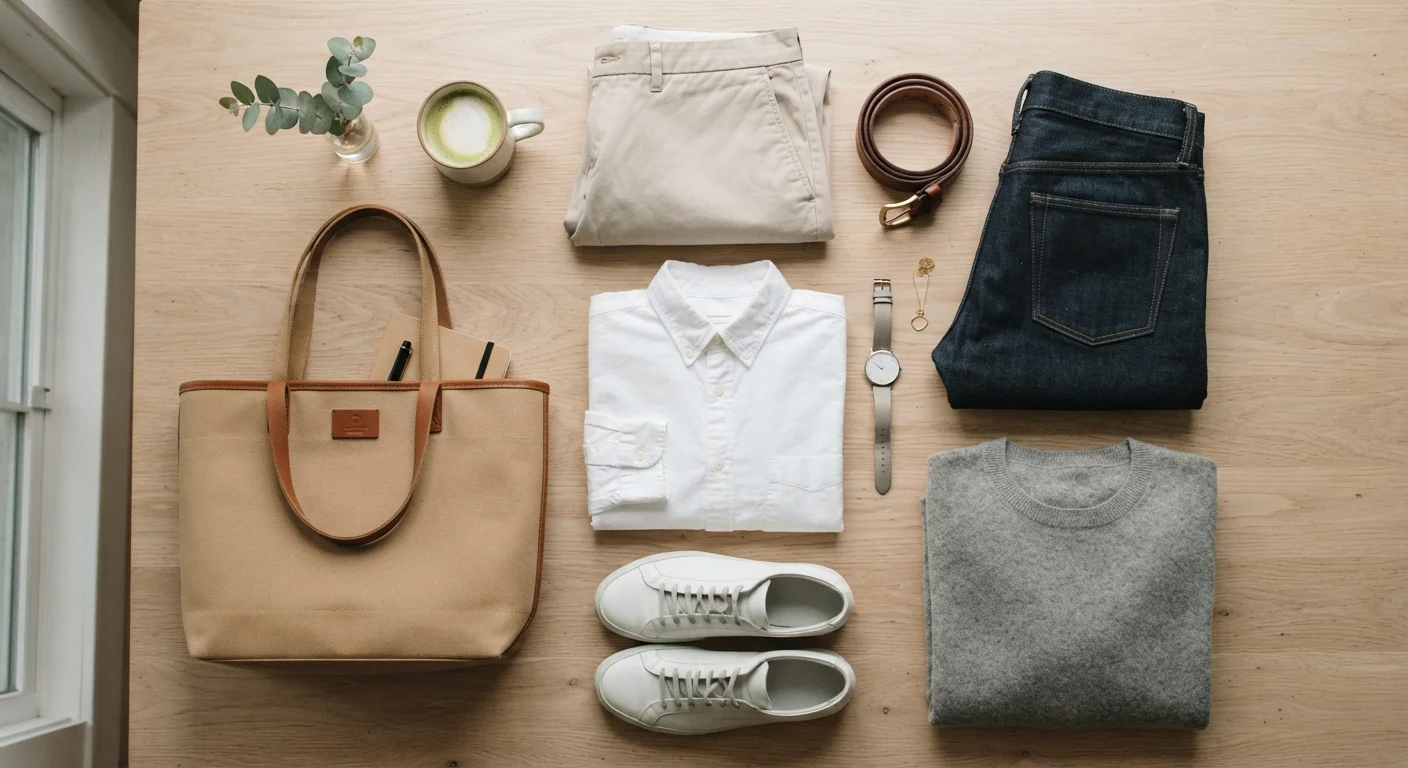
Pull out the five to eight items you actually reach for most often. These are your true workhorses. Common candidates: dark rinse jeans, a well-fitted chino, a plain crewneck sweater, a white or light-blue button-down, clean white sneakers or leather loafers. Notice what they have in common - neutral color, good fit, no loud branding. Those qualities are exactly why they keep showing up.
Find the One-Item Swaps That Change the Register
This is the core skill of a crossover wardrobe. Take the same outfit - say, dark jeans and a button-down - and notice how one swap shifts its tone entirely:
- Swap a structured blazer for a casual denim jacket → moves from polished-casual to relaxed weekend
- Swap leather oxfords for clean white sneakers → takes the formality down a full notch
- Swap a leather belt for a woven or fabric one → subtly loosens the whole look
Practice identifying these levers in your own wardrobe. You likely already have most of them.
Use Accessories to Do the Heavy Lifting
Accessories are the fastest, lowest-cost way to shift an outfit's context. A structured tote reads differently from a canvas backpack. A simple watch or minimal jewelry adds a pulled-together quality without dressing up the base outfit. Scarves can turn a plain sweater into something intentional. Think of accessories as the volume dial on your outfit's formality.
This principle also applies to smart casual dress codes, where small details carry a lot of weight in the overall impression.
Audit for Gaps - and Fill Them Strategically
With your high-traffic pieces and swap levers identified, look at your weekly dress map again. Are there specific contexts where nothing you own transitions smoothly? Common gaps include: a versatile layer for air-conditioned offices, a comfortable but neat trouser that isn't jeans, or a shoe that works for both a casual meeting and a relaxed dinner. Fill these gaps deliberately rather than browsing broadly.
If you're also thinking about how this wardrobe holds up across seasons, our guide on seasonal wardrobe transitions walks through a compatible approach.
The "Three Outfit Test" for New Pieces
Before adding anything new to your wardrobe, mentally style it three different ways using items you already own. If you can't get to three without effort, the piece probably isn't as versatile as it looks on a hanger. This one habit keeps wardrobes lean and functional over time. It's also a handy reference point from our piece on styling habits that make getting dressed easier.
If you're building this kind of wardrobe from scratch or doing a bigger audit, it helps to think about whether a capsule-style approach suits your lifestyle. Our breakdown of capsule vs. full wardrobes can help you decide what structure works best for you.
Common Pitfalls and How to Avoid Them
Even with the best intentions, a few missteps can keep a wardrobe stuck in one lane. The most common: buying pieces that only work in one context (an extremely formal blazer, a graphic tee with a bold statement) without thinking about whether they can flex. The second is neglecting fit - a well-fitting item in a neutral color is almost always more versatile than a trendy piece that only works with one specific outfit.
Watch Out for "Occasion Creep"
It's easy to slowly fill your closet with pieces that only work for one very specific context - a single work event, a holiday party, a trend that passed. These items feel useful when you buy them but quietly clog the closet. Do a quick review twice a year and ask honestly whether each item is earning its space. A streamlined closet makes the double-duty pieces easier to find and use.
It's also worth remembering that you don't need to retire the idea of repeating outfits. In fact, the social pressure around never repeating a look is largely a myth - something we dig into in our piece on wearing the same outfit twice. When pieces are versatile, repetition becomes a strategy, not a limitation.
For a fuller picture of the core items that anchor this kind of wardrobe, see our reference on wardrobe essentials every adult actually needs.