Where the 'Don't Repeat' Idea Actually Comes From
The notion that wearing the same outfit twice is somehow embarrassing has very little grounding in fashion history or design theory. It's largely a product of social comparison - amplified in recent decades by social media, where every outfit exists as a permanent, searchable image. Before the smartphone era, most people had no reliable record of what someone wore last Tuesday.
What we're really talking about is the spotlight effect - a well-documented psychological phenomenon where people overestimate how closely others are observing them. Research in social psychology consistently shows that we are far more aware of our own repeated choices than anyone around us is. Your coworkers are not cataloguing your wardrobe. They're thinking about their own lunch orders.
So the "rule" against outfit repeating was never really a rule. It was anxiety dressed up as etiquette. If you've ever felt self-conscious re-wearing something, you're in very good company - but the perceived judgment likely isn't coming from the room. It's coming from inside your own head. For more on how these invisible pressures affect your daily dressing, see style myths that keep people playing it too safe.
The Myth vs. Fact Breakdown
Let's cut through some of the most persistent beliefs about outfit repeating - and replace them with what's actually true.
Myth
People will notice - and judge - if you wear the same outfit twice.
Fact
Most people are paying far less attention to your clothing than you think.
The spotlight effect, studied extensively in social psychology, shows that individuals consistently overestimate how much others observe and remember their choices. In a busy office, a social gathering, or a school pickup line, other people are focused on their own experiences. Unless you're dressing for a red carpet or a competitive fashion environment, repeat outfits pass without comment virtually every time.
Myth
Wearing the same outfit again means you have nothing else to wear.
Fact
Repeating outfits is a deliberate strategy used by efficient, confident dressers.
Some of the most stylistically respected people - across creative industries, business, and public life - are known for wearing consistent, repeated looks. This is often a conscious choice that reflects a clear personal aesthetic rather than a limited budget. Choosing a reliable rotation signals self-assurance, not scarcity. The emphasis shifts from novelty to intention, which is generally a more sophisticated way to dress.
Myth
You need a new outfit for every event or occasion.
Fact
Context and styling matter far more than whether a garment is new.
A dress worn to a dinner last month doesn't become unsuitable for a different dinner this month. What actually changes how an outfit reads is how it's styled, what occasion it's worn to, and how confidently you carry it. Accessories, layering, footwear, and fit adjustments can shift the tone of a garment significantly. The goal is appropriateness and personal expression - not novelty for its own sake.
Myth
Outfit repeating is only acceptable in casual settings.
Fact
Repeating outfits is perfectly appropriate in professional and formal contexts too.
In workplaces, professional settings, and even formal events, wearing a well-maintained, well-fitting outfit more than once is completely standard practice. Many dress codes - formal or otherwise - are built around a limited set of staple pieces worn regularly. A sharp blazer, a tailored pair of trousers, or a classic dress doesn't become inappropriate at a business meeting just because you've worn it before. What matters is that it fits well, is clean, and is appropriate for the context.
Myth
Social media has made outfit repeating impossible to get away with.
Fact
Social media has actually helped normalize outfit repeating as a conscious, positive choice.
While it's true that photos create a record, the cultural conversation around fashion has shifted considerably. Repeating outfits is now frequently discussed as a form of mindful consumption and personal style confidence - not a source of embarrassment. Many people publicly document outfit repeats as a point of pride. The idea that social media enforces a one-wear rule is increasingly out of step with how real people approach dressing. For more on what actually shapes personal style decisions, explore personal style tips.
What Smart Dressers Actually Do
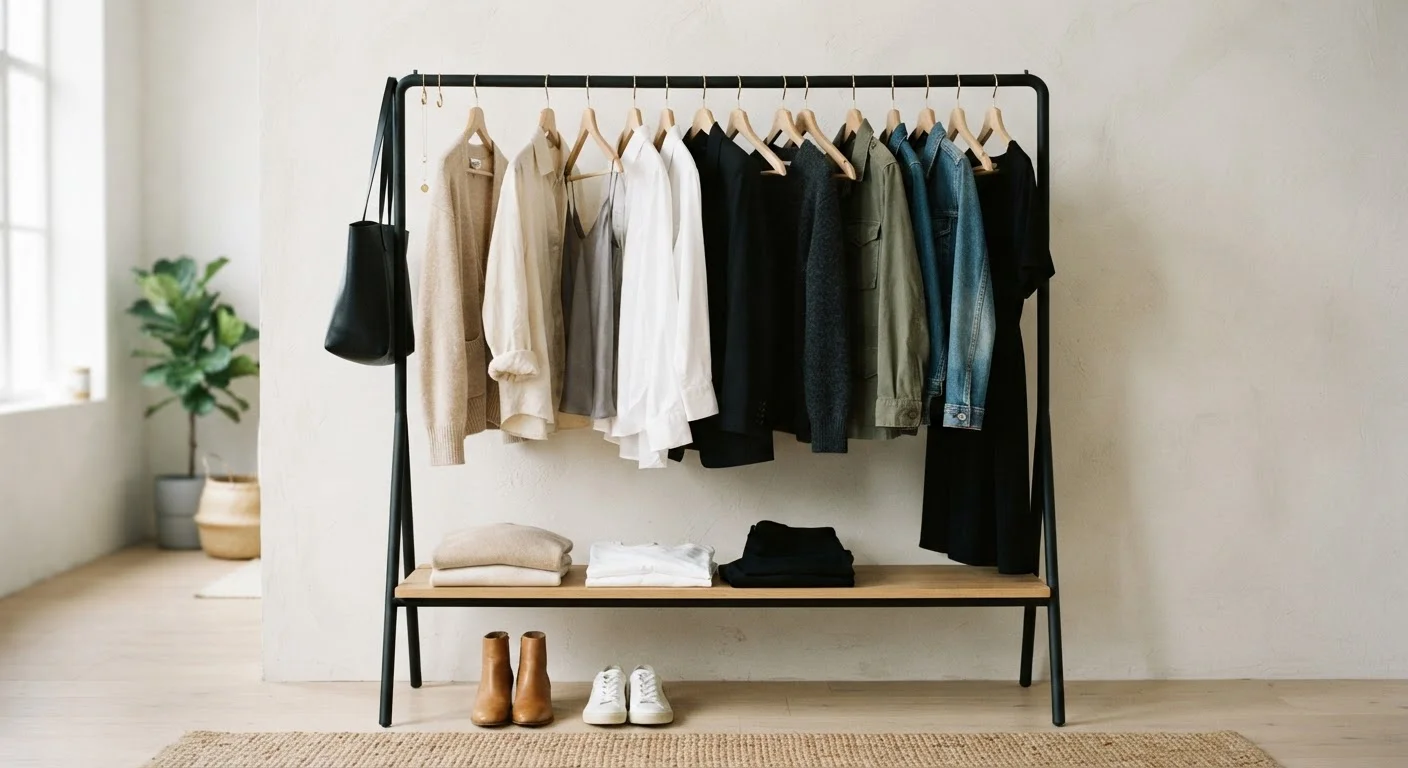
Stylists and wardrobe consultants have long advocated for what's sometimes called a capsule wardrobe approach - a curated set of versatile pieces worn in rotation. The logic is straightforward: fewer, better-fitting items that you genuinely like will always serve you better than a jam-packed closet full of one-time wears.
~$1,700
Average annual American clothing spend
According to U.S. Bureau of Labor Statistics consumer expenditure data, the average American household spends roughly this amount on apparel and services each year.
30%
Clothes never or rarely worn after purchase
Industry estimates and wardrobe audit surveys frequently find that a significant portion of purchased clothing is worn very few times before being discarded or donated.
The practical upside goes beyond confidence. Re-wearing outfits reduces the financial pressure to constantly shop, stretches the lifespan of quality garments, and simplifies your morning routine considerably. Research in behavioral economics suggests that decision fatigue - the mental drain of making too many choices - is a real phenomenon, and a consistent outfit rotation genuinely reduces it.
If you're worried your repeats will feel stale, small styling shifts can make the same pieces read completely differently. A tucked vs. untucked shirt, switching a belt, layering over a dress - these are the kinds of low-effort adjustments that refresh a look without requiring anything new. Outfit formulas that actually work are built on exactly this principle: reliable combinations you can trust and rotate confidently.
If your existing pieces still feel off no matter how you combine them, that's a different problem worth exploring - why your outfits never feel quite right digs into the underlying reasons. And if you want to extend your rotation across both work and weekend contexts, making one wardrobe do double duty is worth a read.