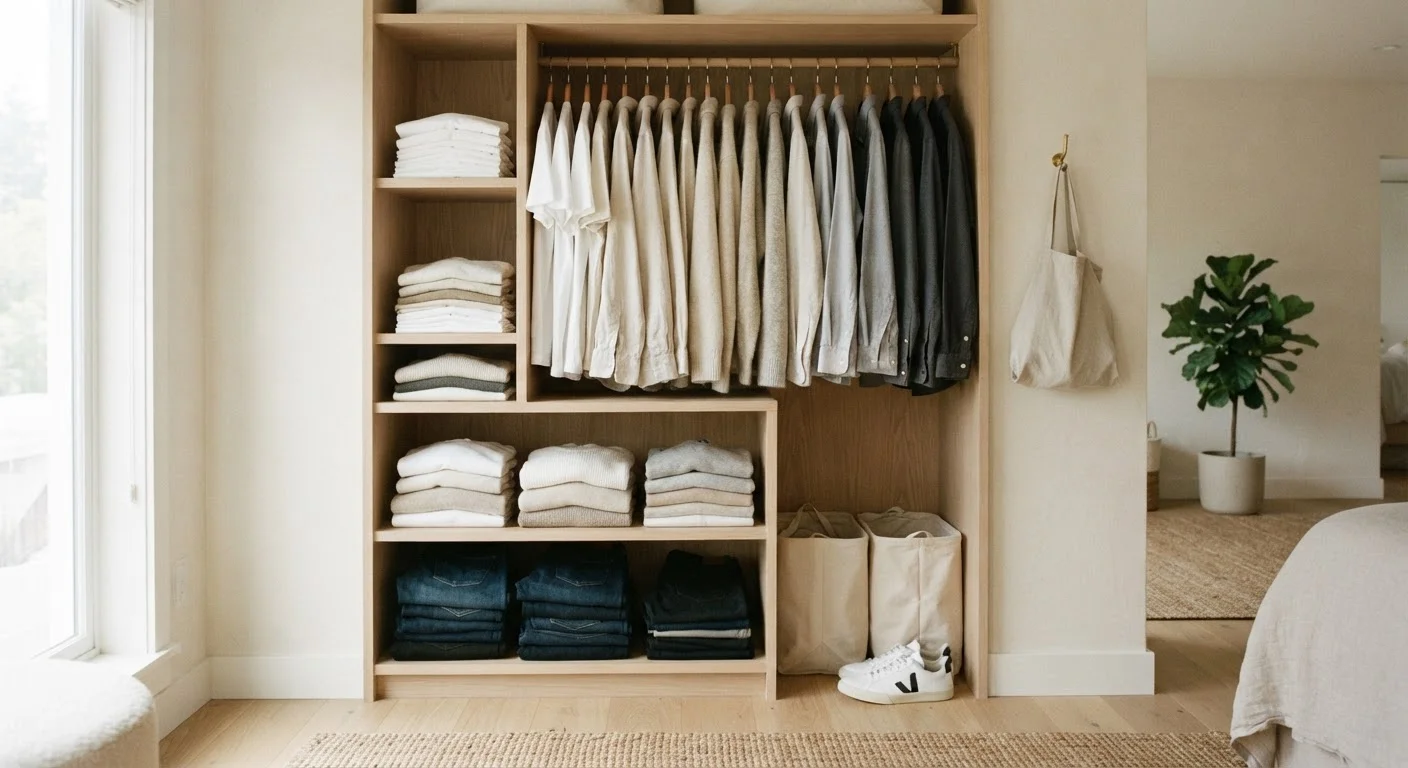
Why a Core Wardrobe Actually Works
Most Americans don't have a clothing shortage - they have a clarity shortage. Closets overflow with items that don't coordinate, don't fit well, or only work for one specific occasion. The result: decision fatigue every morning and the nagging sense that you have nothing to wear.
A core wardrobe flips that script. It's a focused set of versatile pieces that cover the widest range of everyday situations - from a casual Saturday errand run to an unexpected Monday meeting. The goal isn't minimalism for its own sake. It's intentionality: owning clothes that consistently earn their spot in your rotation.
If you're working with a tight budget while building out your closet, it's worth thinking alongside your broader spending plan. Resources on budgeting basics can help you prioritize purchases over time rather than trying to do everything at once.
| Minimum functional tops | 5-8 pieces covering casual, smart-casual, and layering needs |
| Recommended bottom styles | 3 pairs: dark denim, neutral trousers, casual pants |
| Footwear baseline | 3 pairs: clean sneakers, dress shoe, casual everyday shoe |
| Most versatile color palette | Navy, white, grey, black, and one accent tone (Widely supported by professional stylists and wardrobe consultants) |
| Key outerwear minimum | 1 weather coat + 1 blazer or structured jacket |
The Essential Pieces, Broken Down
Think of wardrobe essentials in four functional categories: tops, bottoms, layers, and footwear. When each category is covered, most daily outfit needs take care of themselves.
Tops
- Plain crew-neck or V-neck tees (3-4) - Neutral colors like white, grey, navy, and black layer under everything and stand alone on casual days.
- Button-down shirt (1-2) - A clean, well-fitting button-down bridges casual and professional settings. A solid color or subtle pattern is more versatile than a loud print.
- Casual knit or pullover sweater (1-2) - Provides easy polish without formality. Excellent for smart-casual dress codes.
Bottoms
- Dark-wash straight or slim jeans (1-2 pairs) - Dark denim reads more formally than light-wash and pairs with almost any top.
- Chinos or trousers (1 pair) - A neutral khaki, navy, or grey option fills the gap between casual denim and formal dress pants.
- Comfortable casual pants or joggers (1 pair) - For weekends, WFH days, or errands - look for a clean, non-sloppy silhouette.
Layers and Outerwear
- Versatile jacket or blazer (1) - Even an unstructured blazer instantly elevates most outfits. Works over a tee or a button-down.
- Weather-appropriate coat (1) - A solid, well-constructed coat in a neutral color lasts for years and frames every winter outfit.
Footwear
- Clean white or neutral sneakers (1 pair) - The most broadly wearable shoe in most American wardrobes today.
- Simple leather or leather-look dress shoe or loafer (1 pair) - For professional or semi-formal occasions. Stick to black or brown.
- Casual everyday shoe (1 pair) - Think slip-ons, clean canvas shoes, or comfortable flats depending on your lifestyle.
Smart-casual
A dress code that sits between formal business attire and fully casual wear. Think neat, coordinated clothing without requiring a suit or tie - a blazer over jeans, for example.
Capsule wardrobe
A curated collection of essential, versatile clothing pieces that work together in multiple combinations. The focus is on fewer, more functional items rather than a large, disconnected collection.
Neutral color palette
A set of base colors - such as white, black, grey, beige, and navy - that coordinate easily with each other and with most accent colors, making outfit-building simpler.
Silhouette
The overall shape or outline of a garment or outfit as it appears on the body. A flattering silhouette is generally balanced and consistent in proportion - not overly boxy or clingy.
Not sure what's missing from what you already own? Our companion piece on wardrobe gaps walks through exactly that.
Making Your Essentials Work Harder
Owning the right pieces is step one. Knowing how to rotate them confidently is where things get genuinely easier. A few principles make a big difference:
- Stick to a limited color palette. When your tops and bottoms share two or three base colors and a few accents, almost everything coordinates by default.
- Prioritize fit above all else. A well-fitting basic almost always outperforms an ill-fitting statement piece. If something doesn't fit right off the rack, basic alterations are often worth the investment.
- Think in outfits, not items. When you add something new, confirm it works with at least three things already in your closet.
If your workplace has shifted to a more casual code, it's easier than ever to overlap professional and weekend looks. Our guide on making one wardrobe do double duty covers exactly how to stretch your essentials across both contexts.
And once the foundation is in place, building smart styling habits keeps the whole system running smoothly over time.
Starting from Scratch? There's a Plan for That
If you're building a wardrobe from the ground up - after a major life change, move, or simply starting over - the process doesn't have to be overwhelming. Our step-by-step guide on building a wardrobe from scratch lays out a practical sequence for assembling pieces that work together without overspending all at once.