The Brick-and-Mortar Structure Doing Heavy Lifting
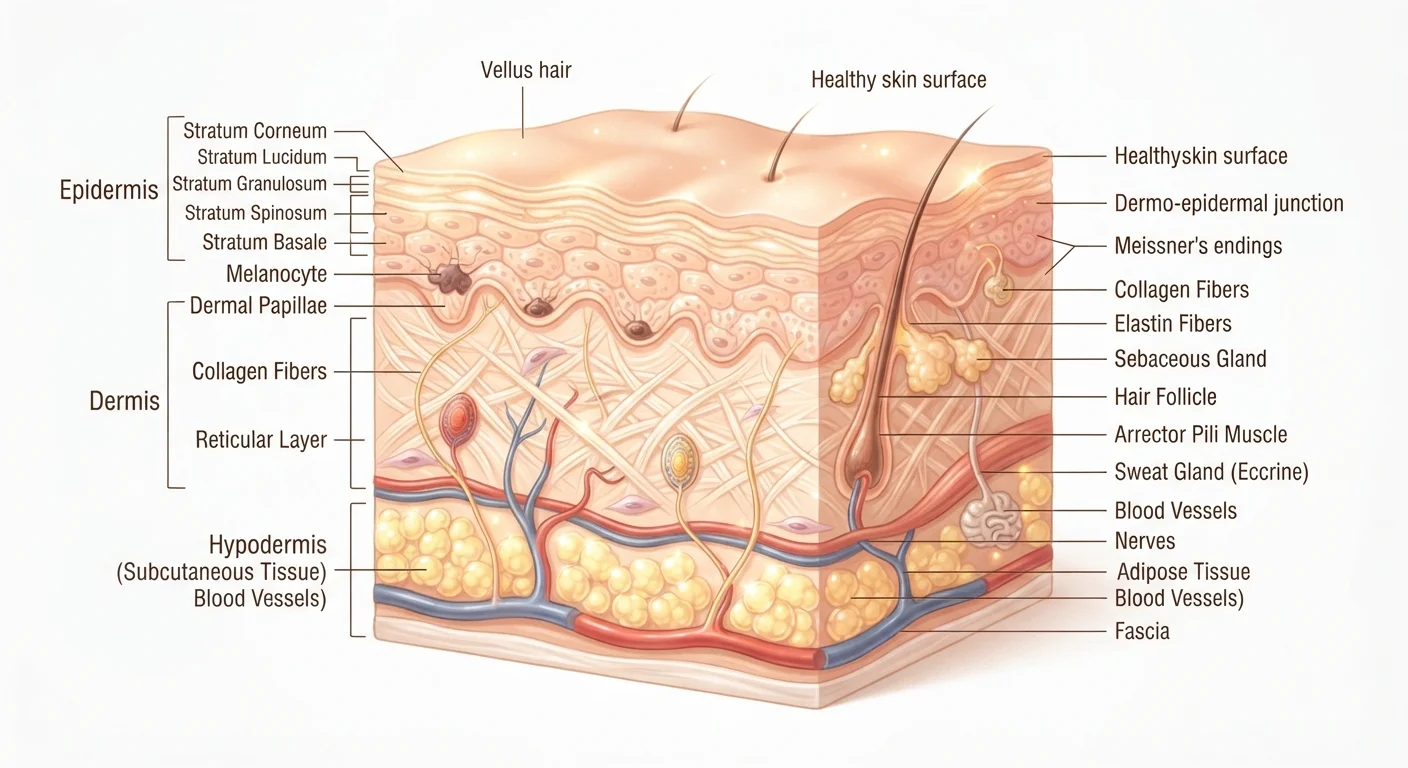
Dermatologists often describe the skin barrier using a "brick and mortar" analogy - and it's genuinely the clearest way to picture it. Your skin cells are the bricks, and the lipids surrounding them (ceramides, cholesterol, fatty acids) are the mortar. Together, they form a semi-permeable wall that your body depends on for basic survival.
When that mortar is intact, water stays inside your skin where it belongs and external aggressors - bacteria, pollution, allergens - have a much harder time getting through. When the mortar degrades, moisture escapes and irritants slip in. That's what "compromised barrier" actually means: the structure has gaps.
Barrier Health Changes With Age
As we get older, the skin produces fewer natural lipids and the cell turnover cycle slows down. This means the barrier becomes naturally more vulnerable over time. Older adults may find they need richer, more occlusive formulations to maintain the same level of protection that lighter products once provided.
This system is self-renewing - your skin naturally sheds and regenerates cells in a roughly 28-to-40-day cycle. Supporting that process, rather than disrupting it, is what good skincare is fundamentally about.
What Actually Damages Your Barrier (It's Probably Your Routine)
Here's the part most people don't expect: the skincare routine itself is one of the most common sources of barrier damage. Enthusiasm for results can push people toward over-exfoliation, harsh cleansers that strip the skin's natural oils, and layering too many active ingredients at once.
~50%
Of barrier lipids are ceramides
Research published in dermatology literature consistently shows ceramides make up approximately half of the lipid composition in the stratum corneum, underlining why ceramide-containing products are central to barrier repair.
28-40 days
Skin cell turnover cycle
The skin naturally renews itself roughly every four to six weeks; this cycle slows with age, which is why supporting barrier function becomes increasingly important over time.
Top cause
Over-exfoliation as barrier disruptor
Dermatologists frequently cite over-exfoliation as one of the leading self-inflicted causes of compromised skin barrier function in everyday skincare routines.
Surfactants in cleansers - especially those that produce a squeaky-clean feeling - can disrupt the lipid layer with repeated use. Exfoliating acids (AHAs and BHAs) are enormously useful, but using them too frequently or at too high a concentration before your skin has adjusted is a fast route to inflammation. If you're building an active-heavy routine, pacing is everything. See how introducing actives too fast affects the barrier for a deeper look at common mistakes.
Environmental factors also play a role: cold, dry air accelerates transepidermal water loss (TEWL), while UV exposure degrades the lipids that hold the barrier together. These are stressors you can't always control - which is why what you do in your routine matters so much.
How to Recognize a Compromised Barrier
Your skin will usually tell you something is wrong before you can see visible damage. Stinging or burning when applying a serum you've used for months, sudden sensitivity to products your skin previously tolerated, persistent redness, or that uncomfortable tight feeling after washing - these are signals worth listening to.
Visible signs include flaking, rough texture, dullness, and unexpected breakouts. In more reactive individuals, eczema flares and contact dermatitis can result from or be worsened by barrier disruption. If your symptoms are persistent or severe, a board-certified dermatologist can help identify whether an underlying condition is involved.
Press Pause on Actives When Skin Revolts
If your skin is showing signs of barrier damage, temporarily shelving exfoliants and potent actives is often the fastest path to recovery. Stick to a gentle cleanser, a barrier-supportive moisturizer, and broad-spectrum SPF until your skin calms down - usually one to two weeks. Then reintroduce actives one at a time, slowly.
Rebuilding and Supporting Barrier Health
Good news: the barrier is remarkably resilient when you give it the right conditions. The foundational strategy is simplification - reduce friction, reduce actives temporarily, and focus on ingredients that directly support lipid replenishment and hydration retention.
Ceramides are the most directly relevant ingredient for barrier repair, as they mirror the lipids naturally found in the stratum corneum. Humectants like hyaluronic acid and glycerin draw water into the skin, while occlusives (think squalane or petrolatum) seal it in. A well-formulated moisturizer combining all three categories is often the single most impactful product you can use during recovery.
Product layering order matters, too - applying a water-based serum before a heavier moisturizer, for example, changes how effectively each works. The layering order that makes or breaks a skincare routine breaks this down clearly. And if budget is a consideration, a minimal routine built around core needs can be just as effective - sometimes more so - than a complex one. Healthy skin prep also pays dividends in other ways: a restored barrier means makeup wears more evenly and lasts longer, too.
This article is for general informational purposes only and is not a substitute for professional dermatological or medical advice. If you have persistent skin concerns, consult a qualified healthcare provider.