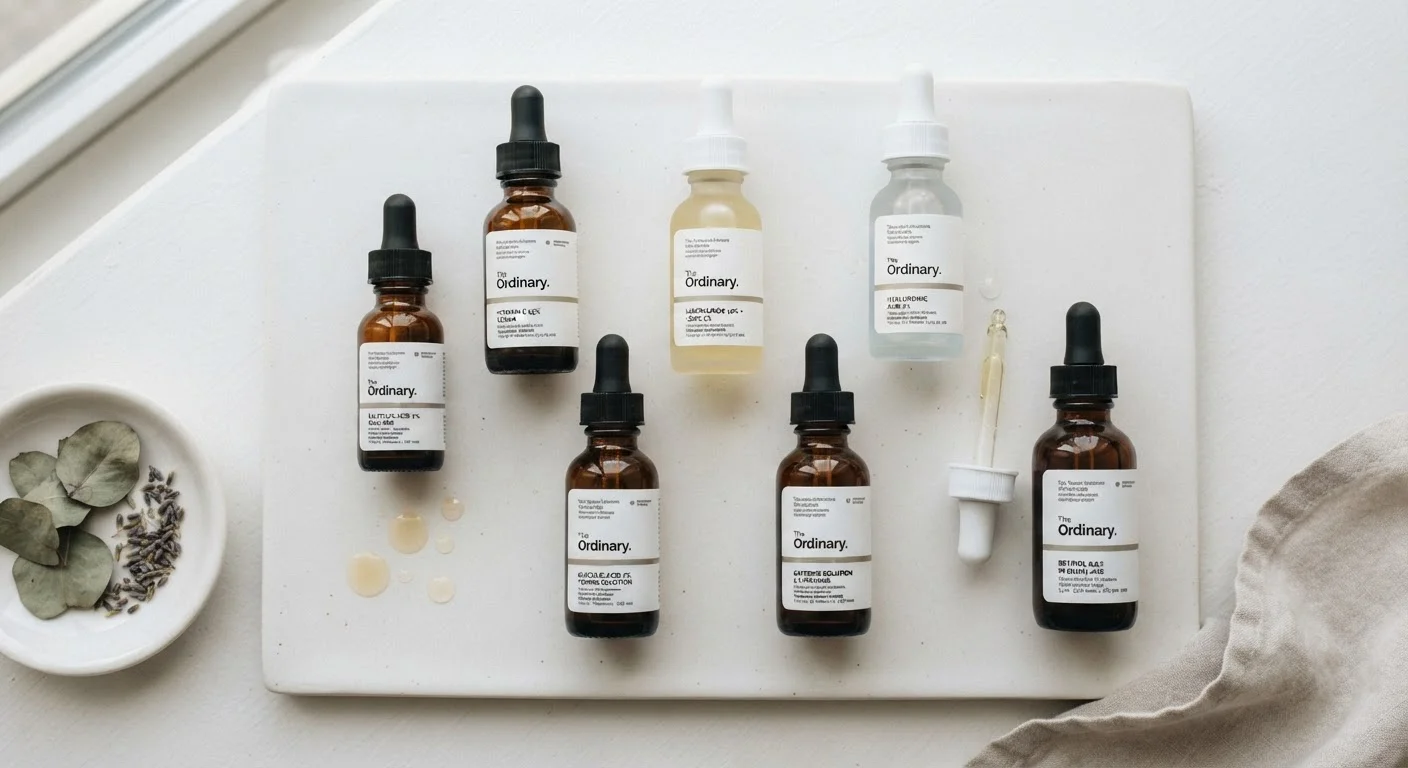
Why Actives Are Worth Getting Right
Chemical exfoliants, vitamin C, retinoids, niacinamide - the world of skincare actives is genuinely exciting. These ingredients have solid, peer-reviewed science behind them and can make a real difference in skin texture, tone, and clarity over time. But the gap between effective and overwhelming is narrower than most people realize.
The problem isn't the ingredients themselves - it's the pace. Enthusiasm leads people to stack multiple actives in week one, and skin that was perfectly fine suddenly becomes red, flaky, or persistently reactive. That barrier damage can take weeks to repair, which is far longer than it would have taken to introduce one product properly. Before stacking your routine, it helps to understand the real trade-offs of a multi-step routine - more steps carry more risk when they're not introduced carefully.
Launching three or more actives simultaneously in the first week.
Why it happens: Skincare content often showcases complete routines all at once, making it feel normal to start everything together. The excitement of a new haul is also hard to slow down.
Using a high-concentration formula right from the start.
Why it happens: Higher percentages are marketed as more effective, so buyers often gravitate toward stronger formulas assuming faster results.
Applying actives every night when the label says "daily use."
Why it happens: "Daily use" on packaging is interpreted as a requirement rather than a maximum. People assume more frequent use speeds up results.
Skipping moisturizer after applying an acid or retinoid.
Why it happens: There's a persistent belief that moisturizer will "dilute" an active or clog pores, so people skip it to let the product "work."
Combining actives known to cause conflict, such as vitamin C with AHAs or retinol with benzoyl peroxide.
Why it happens: Ingredient interaction information is rarely printed on packaging, and social media routines frequently show multiple high-impact products used back-to-back without context.
How to Pace Your Routine for Real Results
The foundational rule is deceptively simple: introduce one new active at a time, wait at least two weeks, then assess. If your skin is calm and comfortable, you can consider adding the next ingredient. This isn't slow - it's strategic.
2 weeks
Minimum time before adding a second active
Dermatologists generally recommend a two-week observation window per new active to accurately gauge skin tolerance and pinpoint any reactions.
2-3×/week
Recommended starting frequency for most actives
Starting with a low frequency allows the skin barrier to adjust before increasing use, a practice widely supported by board-certified dermatologists.
Start every new active at the lowest available concentration and the lowest useful frequency, typically two to three times per week. Many people find that's all their skin ever needs. If you're working with exfoliating acids, our guide to balancing exfoliation frequency and sensitivity covers this in detail.
Always patch test a new product before applying it across your full face. Apply a small amount to the inner arm or behind the ear for 24 hours and check for redness, itching, or swelling. It takes minutes and can prevent days of recovery. Once you've confirmed compatibility, the order in which you layer products matters just as much - see the layering order that makes or breaks a routine for the full breakdown.
Don't Add New Actives to Irritated Skin
If your skin is already showing signs of compromise - tightness, stinging, persistent redness, or flaking - it is not the right time to introduce a new active ingredient. Adding more to a damaged barrier almost always prolongs recovery. Strip your routine back to the basics and give your skin at least one to two weeks to stabilize before reintroducing anything new.
If your skin is currently irritated or compromised, pause all actives entirely. Rebuild with a stripped-back routine of cleanser, moisturizer, and SPF for one to two weeks before reintroducing anything. A focused minimal routine is often the most effective reset strategy available.
This article provides general skincare education and is not a substitute for personalized advice from a licensed dermatologist. If you experience persistent irritation, breakouts, or skin reactions, consult a qualified healthcare professional.