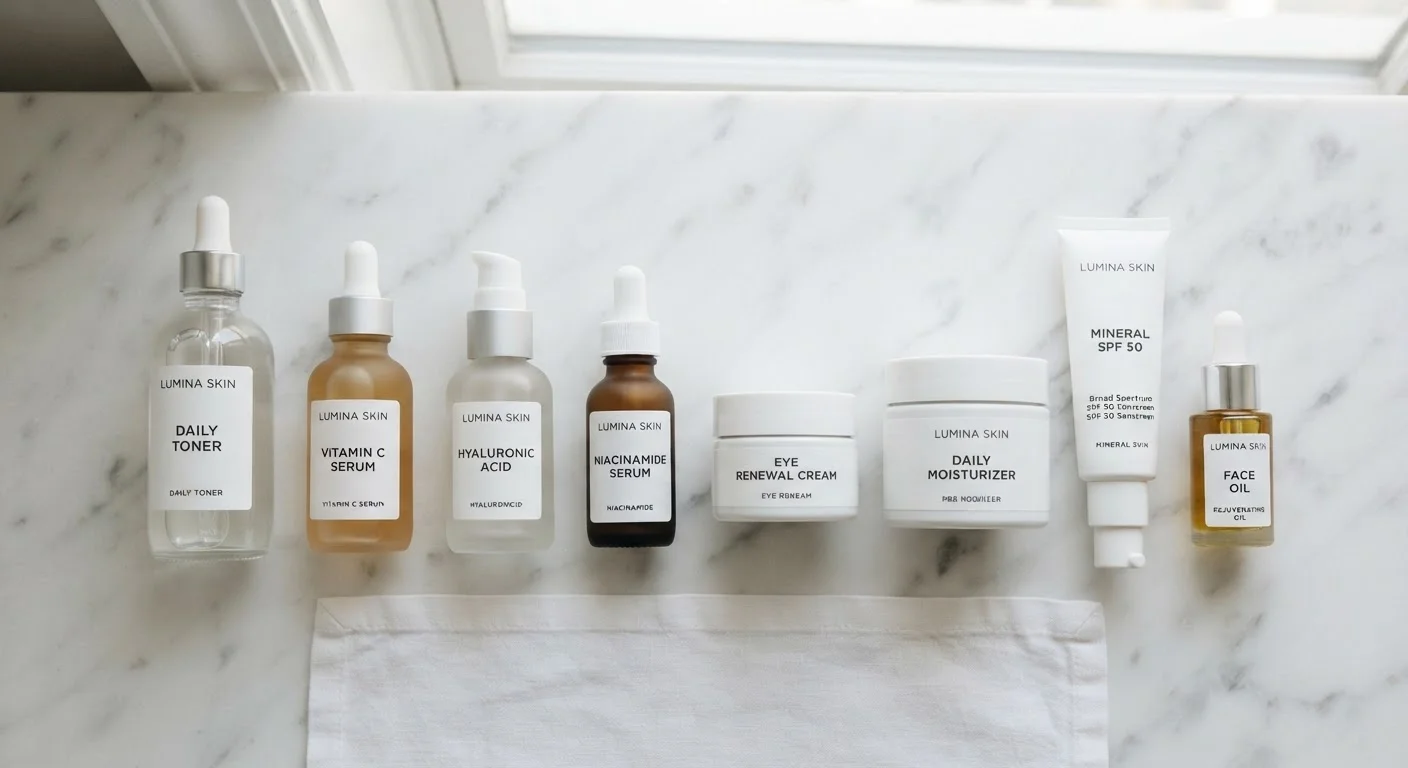
Why Layering Order Actually Matters
Skincare products are formulated with specific molecular weights and pH levels. A lightweight vitamin C serum applied after a thick moisturizer simply can't penetrate - the heavier product forms a barrier that blocks it from reaching the skin cells it's meant to treat. The general rule is straightforward: thinnest to thickest, water-based before oil-based, and actives before occlusives.
pH also plays a role. Vitamin C (L-ascorbic acid) works best at a low pH, around 3.5. If you apply a higher-pH product first and then try to layer vitamin C on top, you've already shifted the skin's surface environment away from the range that vitamin C needs to be effective. Getting the sequence right isn't about following a ritual - it's about letting each product do what it was designed to do.
For a deeper dive into how AM and PM routines differ in purpose and product selection, see our guide to morning versus nighttime routines.
What you will need
What You'll Need
You don't need a ten-step routine for this to work. The layering principle applies whether you're using three products or seven. Below are the core tools involved - pick and choose based on your current routine.
Cleanser
Removes dirt, oil, and residue to give subsequent products a clean surface to absorb into.
Toner or Essence
Preps skin with a burst of hydration or active ingredients before serums are applied.
Treatment Serum
Delivers concentrated active ingredients (e.g., vitamin C, hyaluronic acid, niacinamide) to target specific skin concerns.
Eye Cream
Addresses the delicate under-eye area, typically applied before heavier creams.
Moisturizer
Locks in hydration and supports the skin barrier after lighter product layers.
Facial Oil
Seals in moisture as one of the last steps before SPF; not suitable for every skin type.
Broad-Spectrum SPF (Morning Only)
Protects against UVA and UVB damage; always the final step in a daytime routine.
If you're just building out your routine and want to keep things focused, our guide to building a routine around core needs is a great starting point.
How to Layer: Step by Step
Follow this sequence each morning and adapt the nighttime version by dropping SPF and optionally adding a richer overnight moisturizer or a retinol serum in the treatment step.
Cleanse to start with a clean slate
Every effective routine begins with a clean face. Apply your cleanser to damp skin, massage gently for 30-60 seconds, and rinse thoroughly with lukewarm water. Pat dry with a clean towel - don't rub. This step ensures that none of your follow-up products are fighting through a layer of sunscreen residue, sebum, or environmental buildup.
Apply toner or essence (if using)
Toners and essences are the lightest hydrating layers in your routine. Apply to slightly damp skin by pressing - not dragging - a small amount in with your palms or a cotton pad. These products often contain humectants like glycerin or fermented ingredients that prepare skin to absorb what comes next.
Layer serums from thinnest to thickest
Serums are your highest-concentration treatment products, so getting their order right matters. Apply the most watery, lightweight serum first - often a vitamin C serum or a hydrating hyaluronic acid formula - and follow with any thicker treatment serums. Press each gently into skin rather than rubbing, and allow a brief absorption window between layers.
Apply eye cream
Eye creams are typically lighter than face moisturizers and are best applied before heavier creams to allow full penetration around the delicate orbital area. Use your ring finger to gently tap - never tug - a small amount along the orbital bone. Avoid dragging product directly onto the lash line.
Seal with moisturizer
Moisturizer creates a protective film that locks in the hydration and actives from the layers beneath. Apply a pea-to-dime-sized amount across your face and neck using upward strokes. In the evening, this is typically your final step. In the morning, it's the second-to-last before SPF.
Finish with SPF (morning only)
Broad-spectrum sunscreen is the non-negotiable closer for any morning routine. Apply a generous amount - most guidelines suggest about a quarter teaspoon for the face - and spread evenly across the face, neck, and any exposed areas. Do not layer anything on top of it before going outside.
The 30-Second Rule for Better Absorption
You don't need to wait minutes between every product - but giving each layer a brief 30 to 60 seconds before the next one helps prevent pilling and ensures actives aren't immediately diluted. A quick pat-in with clean fingertips speeds absorption and reduces product waste.
SPF Must Always Go Last - No Exceptions
Applying moisturizer, facial oil, or any other product over sunscreen dilutes and disrupts its protective film, compromising the SPF level on the label. In your morning routine, sunscreen is the absolute final step before makeup. If you want to add a facial oil to your daytime routine, apply it before your moisturizer and sunscreen, not after.
Common Layering Mistakes to Avoid
Even with the right products, a few recurring habits can undermine your routine. Applying too much product at once is one of the most common - excess product doesn't absorb better, it just sits on the surface and causes pilling or congestion. Less is usually more when layering multiple steps.
Another frequent mistake is skipping the absorption window entirely and rushing through all steps back-to-back. This causes products to mix on the skin surface before they've settled, reducing effectiveness and sometimes causing balling-up of product texture.
Don't Layer Conflicting Actives
Combining certain active ingredients in the same layer - such as vitamin C with niacinamide at high concentrations, or AHAs with retinol - can cause irritation or reduce effectiveness. If your routine includes multiple actives, consider alternating them by AM and PM slots rather than stacking them simultaneously. See our guide to avoiding skin barrier mistakes for a closer look at pacing.
Once you have your layering order dialed in, it's worth auditing whether every product in your lineup is actually earning its place. Our full skincare routine audit walks you through exactly that process. And if you're thinking about expanding into actives, our look at multi-step routine tradeoffs can help you weigh complexity against results.
This article is for general informational and educational purposes only. It is not a substitute for professional skincare or medical advice. If you have a skin condition, persistent irritation, or concerns about specific ingredients, consult a licensed dermatologist.