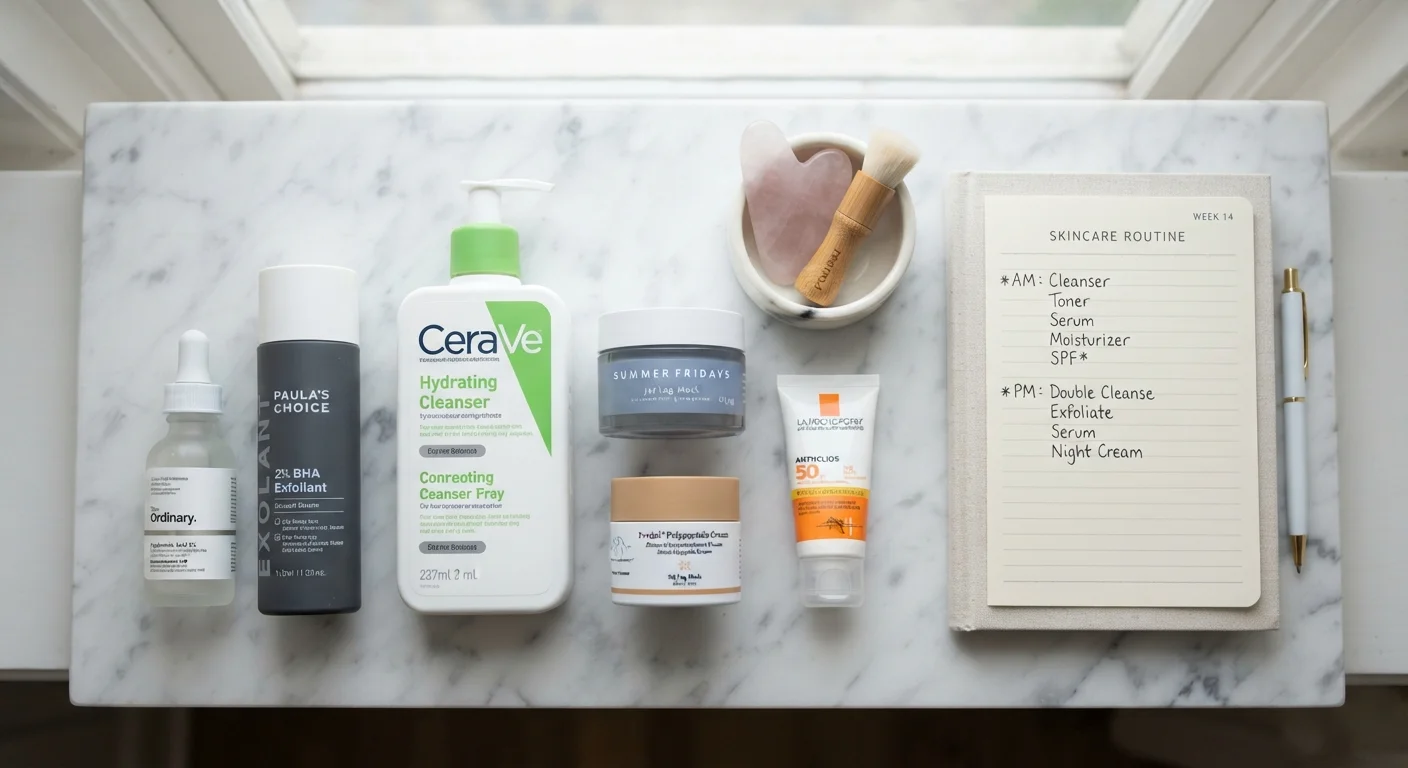
Why Your Routine Deserves a Second Look
Most of us build skincare routines the way we accumulate stuff in a junk drawer - one well-intentioned addition at a time, until the whole thing becomes hard to manage. A routine audit is simply the practice of stepping back and asking: does every product in this lineup actually do something useful for my skin, right now?
It is not about stripping everything back to basics for its own sake. It is about making sure your routine is working with you, not just adding steps for the sake of it. If you have ever wondered whether your skin would actually improve with fewer products, or whether two of your serums are quietly cancelling each other out, this checklist will help you find out.
For a grounding overview of what a well-structured daily routine looks like from start to finish, this complete guide to daily beauty routine basics is a helpful reference point. And if budget is part of your thinking as you streamline, building a routine around core needs walks through how to prioritise without overspending.
Notepad or notes app
Record each product, its purpose, and your observations during the audit.
Ingredient-checking resource
Cross-reference your products for known ingredient conflicts using a reputable cosmetic ingredient database.
Magnifying glass
Read small-print ingredient lists and PAO (period after opening) symbols on packaging.
How to Work Through This Audit
Set aside 30 to 60 minutes when you are not rushed. Pull every product onto a single surface - yes, including the ones hiding at the back of your bathroom cabinet. The goal is a clear-eyed view of the full picture.
Work through the checklist groups in order: start with a simple inventory, then examine what each product is actually supposed to do, then look at how they interact. The ingredient conflict section often surprises people - it is easy to add products one by one without realising that two of them are working against each other.
Sunscreen Is Never Optional
No matter how streamlined or complex your routine becomes, broad-spectrum SPF in your morning routine is the one step dermatologists consistently point to as foundational for long-term skin health. If your current routine skips it, that is the first gap to address - before any serum or treatment.
After reviewing conflicts and layering, shift your attention to how your skin has actually been responding. Skincare is not a static equation. Your skin changes with the seasons, with hormonal shifts, with stress, and simply with age - so a routine that served you well last year may not be the right fit today.
When you are ready to introduce anything new to fill a gap you have identified, plan to patch-test it first. This guide to patch testing covers the right method and timing so you can avoid unnecessary irritation.
Inventory & Organisation
Purpose & Redundancy Check
Ingredient Conflict Review
Layering Order & Application
Skin Response Assessment
Gaps & Missing Essentials
Don't Overhaul Everything at Once
Changing your entire routine in one go makes it nearly impossible to identify what is helping or causing a reaction. Make one change at a time and give your skin at least two to four weeks to adjust before drawing conclusions. Rapid overhauls are a common reason people feel like "nothing ever works" for their skin.
Persistent Irritation Needs Professional Attention
If your skin consistently reacts with redness, burning, or breakouts regardless of what you try, that may signal an underlying condition beyond routine management. This checklist is general educational guidance - it is not a substitute for advice from a qualified dermatologist who can evaluate your individual skin.
This article is for general informational and educational purposes only and is not a substitute for professional dermatological or medical advice. If you have persistent skin concerns, consult a qualified healthcare or skincare professional.