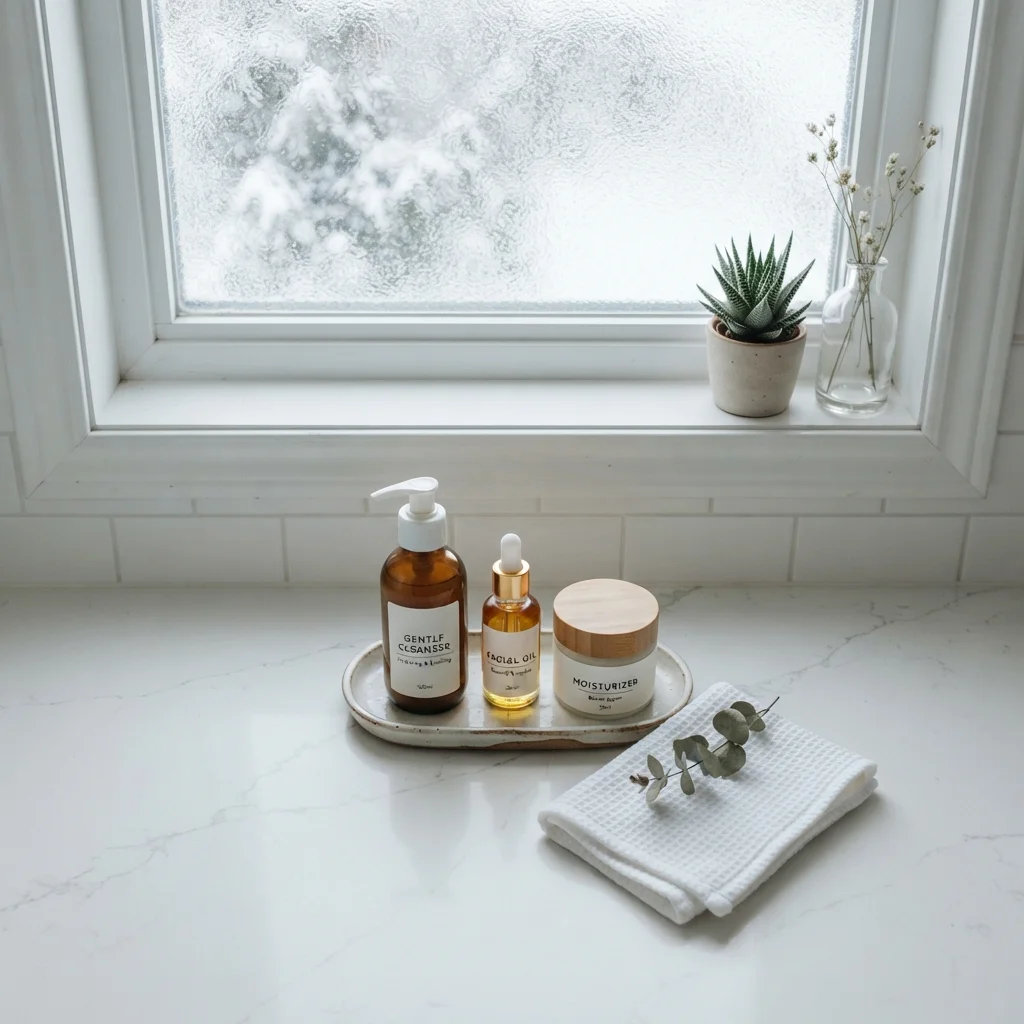
Why Winter Breaks Your Routine
Your summer skincare routine felt dialed in - then November arrived and suddenly your skin is tight, flaky, and reactive. You haven't changed anything, so what went wrong?
The short answer: the environment changed everything. Cold outdoor air holds significantly less water vapor than warm air, which means your skin is constantly losing moisture to the surrounding atmosphere through a process called transepidermal water loss (TEWL). Step inside, and the central heating kicks in - hot, dry air that compounds the problem. The result is a skin barrier under continuous stress, struggling to hold onto hydration it no longer has.
As the your skin type shifts with climate and season article explores, your baseline skin behavior is not fixed - and winter is one of the most dramatic seasonal triggers for change. An oily T-zone in summer can become combination or even dry by February. Trusting your current skin over your remembered skin type is the first step toward a routine that actually works.
When Your Skin Feels Different Overnight
It's common for skin to shift abruptly at the start of a cold spell - sometimes within a single week. This is mostly driven by sudden drops in outdoor humidity and the first use of indoor heating systems, rather than a gradual change. If your skin suddenly feels dry, reactive, or rough without any other explanation, seasonal adjustment is likely the cause. Pay attention to environmental cues, not just the calendar.
Best Practices for Adjusting Your Winter Routine
The goal isn't to buy a new shelf of products - it's to make smart, targeted swaps based on what the season demands. Here are the practices that actually move the needle.
Switch to a cream or balm cleanser in colder months
Foaming and gel cleansers that work beautifully in summer can strip essential oils from the skin barrier when used in dry winter conditions. A cream or balm cleanser cleans effectively while leaving the skin's lipid layer intact, reducing that tight, squeaky-clean feeling that's actually a sign of over-cleansing.
Layer a hydrating serum under your moisturizer
Moisturizers seal in hydration, but if there isn't enough water in the skin to begin with, there's little for them to lock in. A humectant-based serum - one containing ingredients like hyaluronic acid or glycerin - draws water into the skin before your moisturizer creates the occlusive seal.
Upgrade your moisturizer's richness, not just its quantity
Applying more of a lightweight lotion rarely compensates for what a richer cream delivers. Thicker formulas tend to include emollient and occlusive ingredients - such as shea butter or ceramides - that physically reinforce the skin barrier, which is critical during months of persistent environmental stress.
Dial back exfoliation frequency during peak dryness
Exfoliating acids and physical scrubs are powerful tools, but an already-compromised winter skin barrier is less equipped to recover from them. Over-exfoliating in winter can lead to redness, sensitivity, and accelerated moisture loss - the opposite of the glow you're aiming for.
Add a facial oil as a final step in your evening routine
Facial oils function as occlusives - they sit on top of the skin and reduce water escaping overnight, complementing (not replacing) your moisturizer. They're particularly useful in very dry climates or for anyone whose skin still feels tight after standard moisturizing.
Don't Drop SPF Just Because It's Gray Outside
One of the most common winter skincare mistakes is scaling back sun protection. Overcast skies filter visible light but do very little to block UVA rays - the type most associated with collagen breakdown and long-term skin damage. Snow and ice reflect UV radiation significantly, which can actually intensify exposure compared to a clear summer day at low altitude.
Our guide to year-round sun protection breaks down the science clearly: SPF belongs in your routine every single day, regardless of season. In winter, a moisturizing sunscreen that doubles as hydration support is a practical way to streamline without sacrificing protection.
Year-Round SPF Is Non-Negotiable
Consider keeping SPF application as a non-negotiable morning step regardless of season - treat it the same way you'd treat brushing your teeth. In winter, look for moisturizer-sunscreen hybrid formulas that streamline your routine while keeping protection in place. This is especially important if you spend time near snow, at higher altitudes, or even near reflective windows during the day.
Quick Wins You Can Apply Today
You don't need to wait for a full routine overhaul to start protecting your skin this season. A few targeted changes can make a real difference within days.
If you're ready to go deeper and evaluate whether every product in your current lineup is still earning its place, our full skincare routine audit is a great next step. And if budget is on your mind, building a minimal routine around core needs shows how to get results without adding unnecessary complexity.
This article is for general informational and educational purposes only. It is not a substitute for professional dermatological advice. If you have a skin condition or persistent concerns, consult a qualified healthcare provider or dermatologist.