What You're Actually Comparing
The choice between an established neighborhood and a new development is rarely just about the house itself - it's about the community wrapper around it. Both offer genuine advantages, and both carry real trade-offs that only become clear when you look beyond the listing photos.
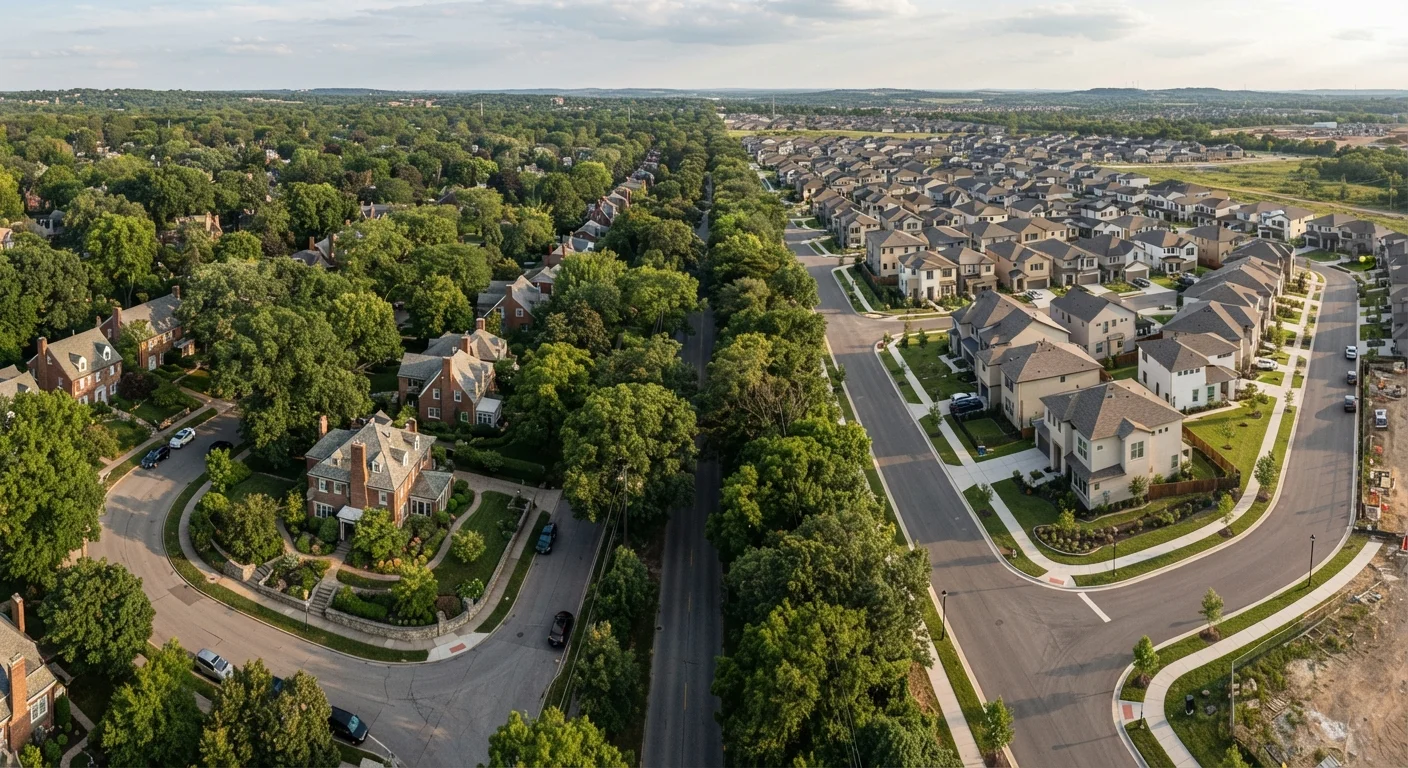
An established neighborhood is one that has existed for at least two to three decades, with homes built across multiple eras and a community identity shaped by time. Streets are lined with mature trees, local institutions have track records, and the texture of daily life is visible and measurable. A new development, by contrast, is a planned community - often built on previously undeveloped land - where the homes, roads, utilities, and amenities are all new and the community itself is still forming.
Understanding what each type delivers - and where each falls short - requires looking at infrastructure, schools, social environment, and cost holistically. For a broader framework on what community factors genuinely predict satisfaction, see what makes a neighborhood truly work.
| Criterion | Established Neighborhood | New Development |
|---|---|---|
| Infrastructure age | Proven but aging; may need updates | New; meets current codes and standards |
| Walkability | Often higher; sidewalks and local businesses in place | Variable; often car-dependent initially |
| School data availability | Multi-year performance history available | Limited or no track record; district may be new |
| Community identity | Observable and established | Still forming; social culture unknown |
| Home energy efficiency | Varies widely by era of construction | Generally high; modern insulation and systems |
| HOA fees | Less common; varies by community | Common; may be significant monthly cost |
| Amenity availability | Mature parks, retail, services already open | Promised amenities may open years later |
| Resale value predictability | More historical data to evaluate trends | Less data; early pricing can be influenced by builder inventory |
Infrastructure, Amenities, and Daily Convenience
One of the most practical differences between the two community types is infrastructure age and completeness. In established neighborhoods, roads, sidewalks, and utilities have been in place for years - which means they're proven, but also aging. Older water and sewer lines, aging electrical grids, and deferred municipal maintenance can mean higher repair costs, both for the city and eventually for homeowners. On the upside, street networks are complete, local businesses are operating, and transit routes - where they exist - are established.
New developments face a different set of issues. Roads are freshly paved, fiber internet is often pre-wired, and energy codes ensure newer homes meet higher insulation and efficiency standards. However, promised amenities - parks, retail centers, schools - sometimes take years to open after residents move in. A community that looked complete on a site plan may feel sparse and car-dependent for the first several years. Mixed-use neighborhoods represent one planning model that attempts to solve this problem, but they're more common in urban infill than in greenfield developments.
~38%
New-home buyers citing energy efficiency as a top purchase driver
According to the National Association of Home Builders' 2023 What Home Buyers Really Want study, energy efficiency ranks among the most commonly cited priorities for new-construction buyers.
15-25 min
Typical daily time saved living in a walkable neighborhood
Research published in the journal Environment and Behavior has linked higher Walk Score neighborhoods to meaningfully reduced time spent on car-dependent errands.
HOA fees in new developments are an important cost factor. These can cover landscaping, security, and amenity maintenance, but they add meaningfully to monthly housing costs and include rules that restrict what you can do with your property. Always review the HOA documents - including reserve fund health - before making an offer.
Schools, Safety, and Community Character
For families, school quality often drives the neighborhood decision more than any other single factor - and established neighborhoods have a significant informational advantage here. Their schools have years of publicly available performance data, parent community history, and known enrollment trends. New developments, particularly those on the suburban fringe, may sit within newer school attendance zones where performance data is limited or schools themselves are still being built.
That said, school ratings are not the whole story for families. Sidewalks, libraries, community programs, and traffic patterns matter just as much for daily quality of life - and established neighborhoods often score better on those physical and civic features simply because they've had more time to develop them.
Community character is harder to quantify but worth evaluating carefully. Established neighborhoods have an observable identity: you can walk the streets, visit the coffee shop, and talk to longtime residents. New developments are still writing their social contract. Early movers often form tight communities, but the culture is genuinely unknown at purchase. Assessing neighborhood character before committing - whether the neighborhood is new or old - requires more than a single visit.
Don't Rely Solely on School Ratings
School rating aggregators use point-in-time snapshots that can mask trend data - a school that rated highly three years ago may be on a different trajectory today. Request multi-year state assessment data directly from the district, and consider visiting the school in person. Rating sites are a useful starting point, not a final answer.
Making the Decision: What to Verify Before You Commit
Whichever type of neighborhood you're considering, due diligence follows similar principles: visit at multiple times of day, talk to current residents, and research data rather than relying on impressions. For a structured approach, a neighborhood evaluation checklist covering safety, transit, noise, and services can help ensure you don't overlook critical factors.
For established neighborhoods, investigate: the age and condition of public infrastructure, school performance trajectories (not just current ratings), proximity to planned commercial or transit changes, and any zoning shifts that could affect neighborhood density. For new developments, investigate: the developer's track record in other communities, the timeline for promised amenities, HOA fee projections and reserve fund adequacy, and how the school district handles rapid enrollment growth.
If the decision also involves choosing between a new-construction home versus an existing one - separate from the neighborhood question - a clear-eyed comparison of new builds and older homes covers the property-level trade-offs in detail. Neighborhood and home type decisions intersect but are worth evaluating separately.
This article is for general informational and educational purposes only and does not constitute financial, legal, or real estate advice. Consult a licensed real estate professional for guidance specific to your situation and local market conditions.