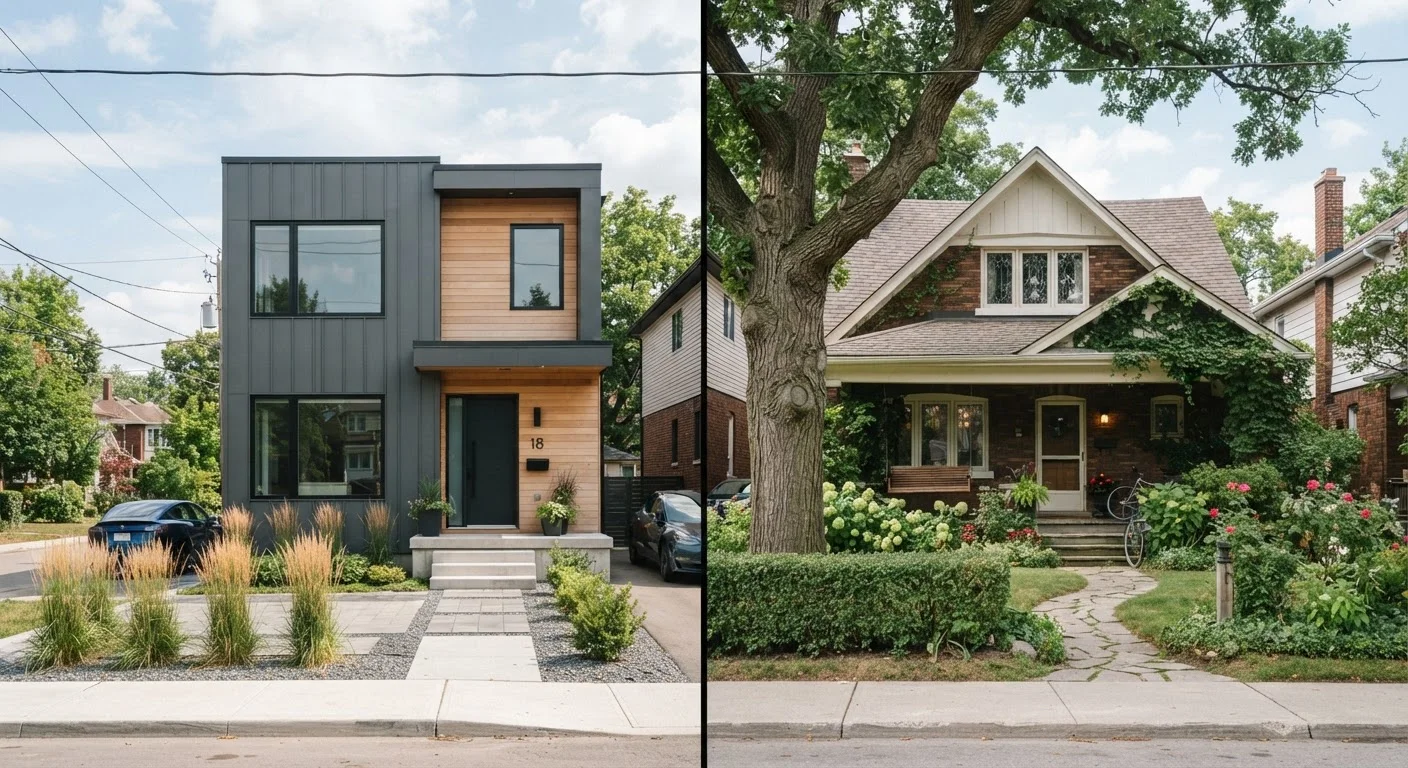
The Core Trade-Off in Plain Terms
When buyers choose between a newly built home and an existing one, they're essentially choosing between predictability and character - with meaningful financial implications on both sides. New construction offers the appeal of untouched systems, modern floor plans, and structural warranties. Existing homes deliver established roots: mature trees, walkable streets, and neighborhoods with a proven track record.
The decision isn't simply about age. It's about which set of trade-offs aligns with your timeline, risk tolerance, and budget. Think of it similarly to the vehicle market, where buyers weigh comparable factors - as explored in our new vs. certified pre-owned car guide.
| New Construction | Existing Homes | |
|---|---|---|
| Price | Often higher per square foot | Broader range; more negotiating room |
| Move-in Timeline | 6-18 months for new builds | Typically 30-60 days to close |
| Warranty Coverage | Builder warranties on structure and systems | No warranty unless seller provides one |
| Energy Efficiency | Modern codes; higher efficiency | Varies widely by age and updates |
| Neighborhood Maturity | Developing; amenities still forming | Established schools, transit, character |
| Customization | Limited builder options available | Renovate freely after purchase |
| Inspection Risk | Lower near-term repair risk | Hidden defects possible; inspection critical |
| Negotiation Flexibility | Builders rarely discount significantly | Motivated sellers often flexible |
What New Construction Actually Delivers
A newly built home typically comes with a structural warranty - often 10 years on major components - along with warranties on roofing, HVAC, and appliances. Everything from the wiring to the insulation meets current building codes, which can translate into lower utility bills and fewer surprise repairs in the early years.
Modern floor plans often prioritize open living areas, dedicated home-office space, and larger primary suites - layouts that reflect how people actually live today. Energy-efficient windows, smart home pre-wiring, and high-efficiency HVAC systems are increasingly standard features in new developments.
Get the Punch List in Writing
Before closing on a new construction home, conduct a formal walk-through and document every unfinished item in a written punch list. Builders are contractually obligated to complete these items, but verbal agreements are difficult to enforce. Request a final walk-through after corrections are made and verify completion before signing closing documents.
The trade-offs are real, however. New developments are frequently located farther from urban cores, where land is available and affordable for builders. Amenities like grocery stores, schools with established reputations, and transit options may still be developing. Builder contracts also tend to favor the developer - customization options can be more limited than buyers expect, and delays are common. For a deeper look at what life in a new development means beyond the home itself, see our guide to established neighborhood vs. new development trade-offs.
What Existing Homes Bring to the Table
Existing homes dominate the market by sheer volume, which means more selection, more locations, and typically more room to negotiate on price. A seller motivated by timing, life changes, or a competing offer is often more flexible than a national homebuilder with standardized pricing.
Established neighborhoods carry advantages that no new development can replicate quickly: mature landscaping, known school performance data, walkability built over decades, and a community identity that's already formed. These factors often have measurable effects on quality of life and long-term resale value.
Never Skip the Home Inspection
Even on an attractively priced existing home, waiving the inspection to strengthen an offer is a significant financial risk. Older homes can conceal issues with electrical panels, plumbing, roofing, or foundation that only a qualified inspector can identify. The cost of an inspection is modest compared to the potential repair bills it may reveal.
The financial risks are different, not necessarily greater. An older home with deferred maintenance or outdated systems - plumbing, electrical panels, roofing - can generate significant costs shortly after purchase. A thorough pre-purchase inspection by a licensed home inspector is essential, not optional. Buyers should also evaluate the neighborhood and community context carefully, since location quality compounds over time.
Making the Decision: Questions Worth Asking
Rather than defaulting to one category, buyers benefit from a structured evaluation. Consider these questions before committing to either path:
- How soon do you need to move in? New construction timelines can stretch six to eighteen months. Existing homes can close in 30 to 60 days.
- What's your appetite for renovation? An older home needing updates may offer equity upside - but only if you have the budget and patience. Our room addition vs. finishing existing space analysis can help frame renovation decisions.
- How important is location? If you need proximity to specific schools, employers, or amenities, existing inventory in those areas may be the only viable option.
- What does your maintenance budget look like? New builds offer predictability for the first several years; older homes may require budgeting for repairs from day one.
There's no universal right answer. The new vs. used buying framework applies here as well: weigh condition, risk, and total cost holistically rather than fixating on sticker price alone.
This article is for general informational purposes only and does not constitute financial, legal, or real estate advice. Consult a licensed real estate professional for guidance specific to your situation and local market.