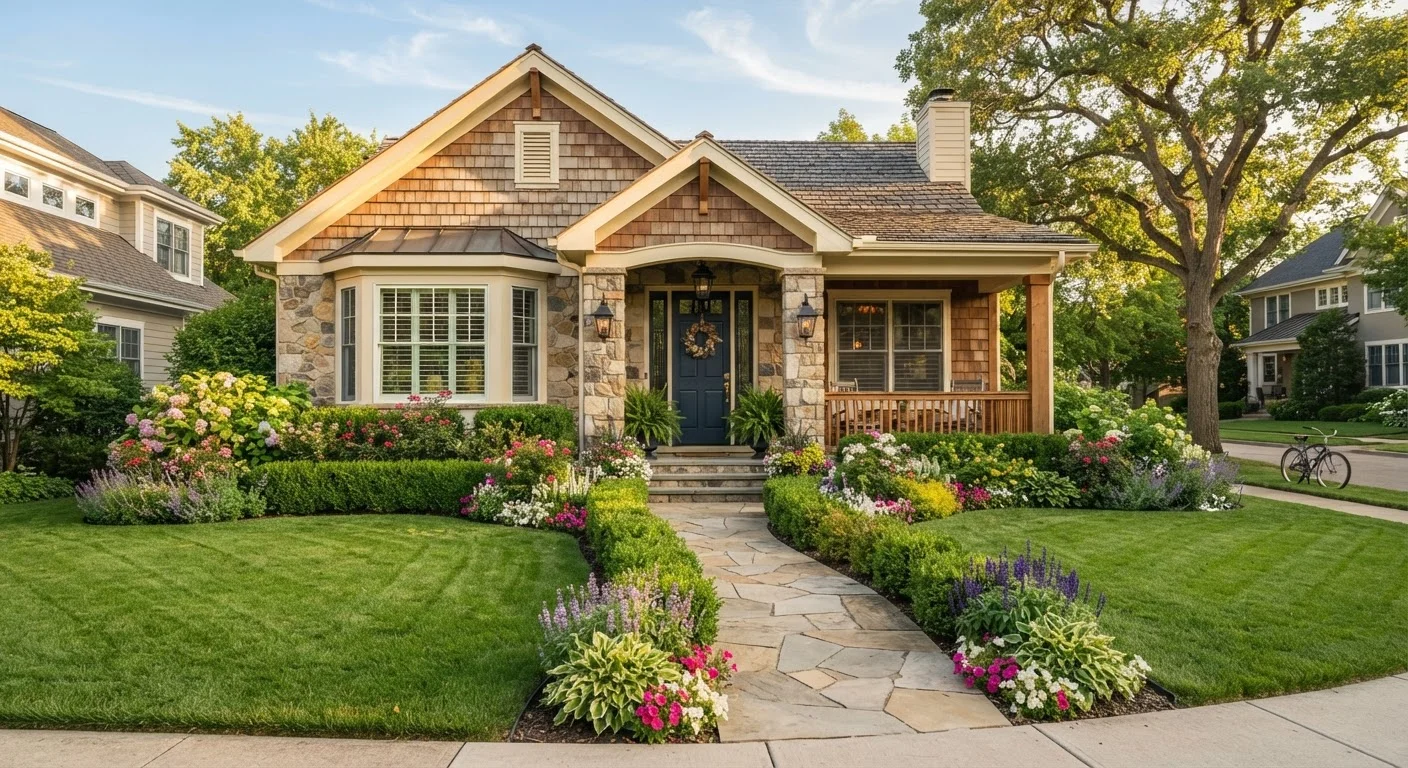
Why First Impressions Are More Than Cosmetic
A home's exterior is its opening statement. Buyers, appraisers, and even neighbors register condition, care, and character within moments of arrival. What they perceive isn't purely emotional - it informs assumptions about how the rest of the property has been maintained.
This is why curb appeal matters beyond aesthetics. A visually strong exterior signals that a homeowner takes pride in upkeep, which translates - fairly or not - into assumptions about the roof, HVAC, and other systems that can't be seen from the street. Conversely, a neglected front yard can anchor a buyer's expectations downward before they've stepped inside.
For sellers, this dynamic is especially consequential. As covered in our guide on staging to sell, buyer perception shapes offer behavior - and that perception starts at the curb.
7%
Potential home value boost from strong curb appeal
According to research from the National Association of Realtors, well-maintained landscaping and exterior condition can add an estimated 5-7% to perceived home value.
7 seconds
Time to form a first impression
Research in environmental psychology suggests people form initial judgments about a property within seconds of arrival - before any interior evaluation occurs.
94%
Buyers who begin their search online
NAR data consistently shows that the vast majority of buyers view listing photos online first, making exterior photography - shaped directly by curb appeal - a critical first filter.
The Landscaping Elements That Actually Register
Not every landscaping decision carries equal visual weight. Some elements consistently attract or detract attention, regardless of a property's style or price range.
Proportion and Scale
Plantings that once fit a young home can overwhelm it decades later. Overgrown foundation shrubs block windows, obscure architectural details, and signal neglect. Scale-appropriate plantings - shrubs and trees that complement rather than crowd the structure - read as intentional and well-maintained.
Lawn Condition
A healthy, evenly cut lawn remains the most universally noticed exterior feature. This doesn't require perfection - it requires consistency. Clean edges along beds and walkways do more than nearly any other lawn task to make a yard look cared for.
Mulch and Bed Definition
Fresh mulch in defined planting beds signals recent attention without major expense. It suppresses weeds, retains moisture, and provides a visual contrast that makes plantings stand out. Beds with clean, defined borders look deliberate; undefined beds look unfinished.
Seasonal Color
Strategic use of flowering annuals or perennials in entry areas and visible beds adds warmth and draws the eye toward the home's entrance. Even a modest investment in container plantings near a front door creates a welcoming focal point.
Entryway Design: The Focal Point of Every Facade
The front door and its immediate surroundings function as the visual anchor of any home exterior. Everything else - the lawn, the plantings, the driveway - frames it. Because of this, entryway improvements tend to deliver disproportionate visual impact relative to their cost.
A freshly painted door in a color that complements rather than clashes with the exterior creates a clear focal point. Updated door hardware - handles, knockers, house numbers - communicates attention to detail. A clean, well-defined pathway to the door guides the eye and reinforces the impression of intentional design.
The porch or landing area, if present, should feel uncluttered. Worn mats, broken light fixtures, or scuffed thresholds undercut even an otherwise strong exterior. These are among the easiest items to address - and among the first things visitors notice at close range.
Start With What's Most Visible
When prioritizing exterior improvements, focus first on what's visible within 20 feet of the street: the lawn edge, front walkway, door condition, and entry lighting. These elements form the immediate impression and tend to deliver the strongest visual return per dollar spent. Save larger investments - new plantings, driveway resurfacing - for after the basics are addressed.
Lighting, Hardscaping, and the Elements Often Overlooked
Two categories of curb appeal improvements are frequently underestimated: exterior lighting and hardscape condition.
Exterior Lighting
Buyers viewing listings online encounter exterior photos taken in full daylight, but in-person visits often happen at dusk or in the evening. Pathway lighting, porch fixtures, and uplighting on trees or the facade extend a home's visual appeal into evening hours and add a sense of security and warmth. Fixture style should coordinate with the home's architectural character - mismatched lighting draws attention for the wrong reasons.
Driveway and Walkway Condition
Cracked concrete, heaving pavers, or stained asphalt register as maintenance concerns - not just cosmetic issues. Visitors and appraisers alike note surface condition. Pressure washing, crack sealing, or targeted repair can meaningfully change how a driveway reads without full replacement.
The broader relationship between surface condition and perceived investment applies at the property level too: well-maintained hardscapes suggest a well-maintained home.
Matching the Neighborhood Matters
Appraisers and buyers evaluate a home's exterior relative to comparable properties in the same neighborhood. An exterior that dramatically exceeds local norms can appear out of place and may not recoup its investment in a sale. Aim to meet or modestly exceed the neighborhood standard rather than outlast it. Walking the block before investing in major landscaping changes provides useful calibration.
What Appraisers and Buyers Actually Notice
Appraisers assess exterior condition as part of a property's overall evaluation, comparing it to comparable sales in the neighborhood. Properties that fall below the neighborhood norm in exterior upkeep may be adjusted downward; those that meet or modestly exceed it tend to transact more cleanly.
Buyers operate emotionally, but their emotional responses track the same physical signals. Condition, care, and coherence - does the house look like someone has been paying attention? - drive first impressions more than any single design choice.
It's also worth noting that curb appeal is partially contextual. A home's exterior is always read against its surroundings. What reads well in one neighborhood may look out of place in another. This is one reason why improvements aimed at meeting neighborhood norms generally outperform those that dramatically exceed them - the latter can appear incongruous rather than impressive. Our broader look at what makes a neighborhood valuable explores how context shapes property perception.
For homeowners preparing to sell, pairing exterior improvements with interior presentation makes both more effective. See our companion piece on curb appeal changes that matter when selling for a prioritized list of exterior updates with the clearest impact.
This article is for general informational purposes only and does not constitute financial, appraisal, or real estate advice. Consult a licensed real estate professional or appraiser for guidance specific to your property and market.