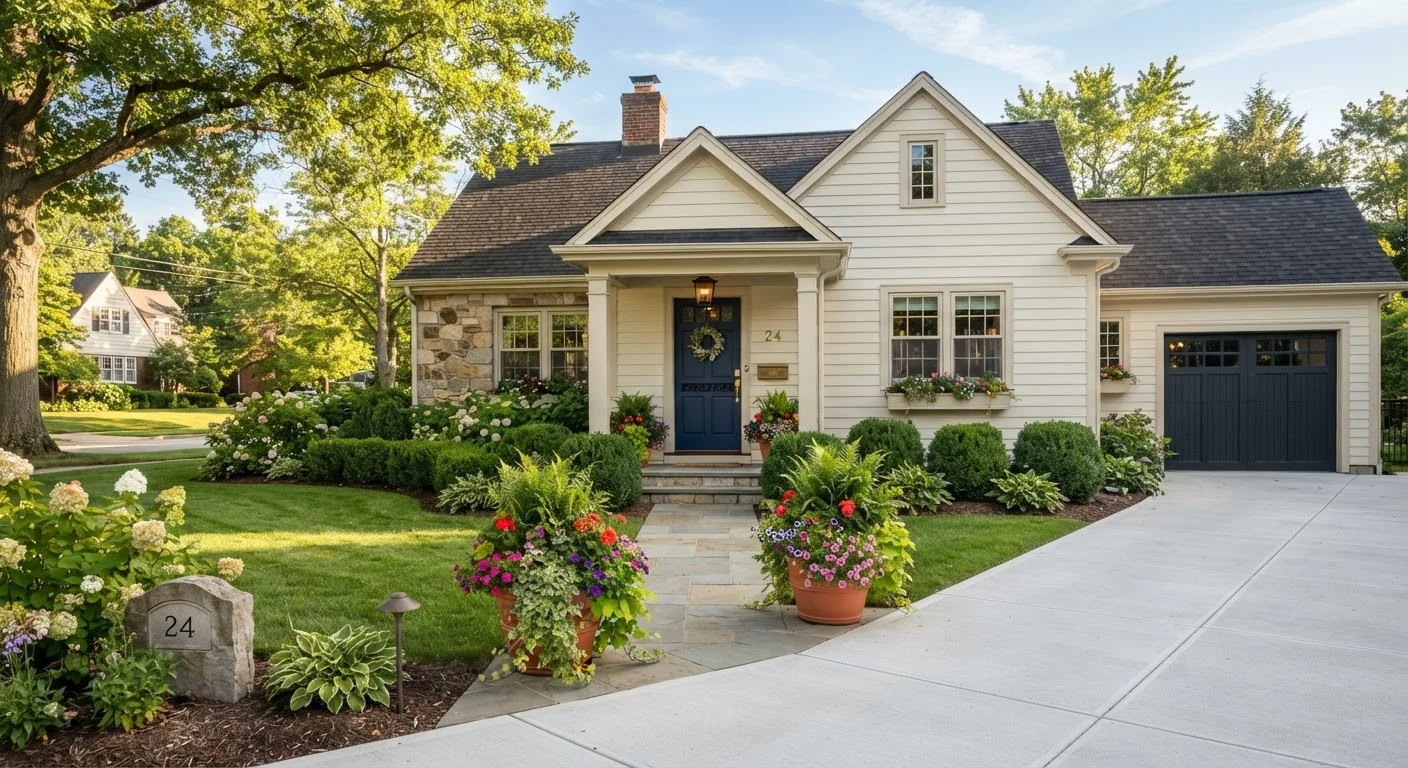
Why the Exterior Matters More Than Sellers Often Expect
Before a buyer reads the listing description, tours the kitchen, or sees the updated bathrooms, they see your home from the street. That first glimpse - from a car, a listing photo, or a drive-by - shapes the emotional frame buyers bring into every subsequent moment of a showing.
Research in behavioral economics consistently shows that people make rapid judgments and then look for evidence to confirm them. If a home's exterior feels tired or neglected, buyers unconsciously carry that doubt inside. Conversely, a crisp, well-kept exterior creates confidence that the rest of the home has been maintained with similar care.
Curb appeal isn't just aesthetics - it's positioning. For sellers preparing to list, it belongs alongside interior staging as a core part of the pre-listing strategy. The pre-listing checklist approach applies just as much outside as it does to each interior room.
Permits and Professional Work
Some exterior improvements - including certain electrical work, structural repairs, and significant hardscape changes - may require permits or licensed contractors depending on your municipality. Before undertaking any work that involves wiring, load-bearing elements, or major grading changes, check with your local building department. Unpermitted work can surface during a buyer's inspection and complicate or delay closing.
Practical Exterior Changes That Move the Needle
Clean and Repair Before You Add Anything New
Power-washing driveways, walkways, siding, and the front porch is often the highest-return hour of work a seller can do. Grime, mildew staining, and weathered surfaces age a home dramatically in photos and in person. A clean exterior signals care and invites buyers to look closer rather than move on.
Check gutters for visible debris, repair cracked walkway sections, and replace any rotted wood trim. These repairs rarely add obvious visual drama, but their absence - peeling paint around a fascia board, a sagging gutter - creates doubt that spreads beyond the specific defect.
Power-washing alone can make a decade-old exterior look freshly maintained for minimal cost.
Refresh the Front Door with Paint or Hardware
The front door is the focal point of virtually every listing photo and the last thing a buyer looks at before entering. A fresh coat of exterior paint in a color that complements the home - classic navy, deep red, warm black, or a crisp white - signals intentional upkeep without requiring a major investment.
Pair fresh paint with updated hardware: a new door handle, lockset, knocker, and house numbers in matching finishes (brushed nickel, matte black, oil-rubbed bronze) create visual cohesion. Mismatched or tarnished hardware is a detail buyers notice, even if they can't always articulate why the entry felt outdated.
A freshly painted door with coordinated hardware is one of the most photographed exterior details buyers remember.
Address the Lawn and Plant Beds Methodically
An overgrown or patchy lawn reads as deferred maintenance regardless of what's happening inside. Mow, edge along walkways and the street, and address any bare or brown patches before photography. If dry season or lawn stress is visible, consider whether overseeding or spot treatment is feasible given your timeline.
In plant beds, remove dead material, cut back overgrown shrubs so windows are visible, and apply fresh mulch. Dark-toned mulch grounds the planting beds visually and makes healthy plants appear more lush. A few seasonal annuals or potted plants near the entry add color without requiring a full landscape redesign.
Fresh mulch and edged beds cost little but make landscaping look intentional and well-maintained.
Evaluate Exterior Lighting Carefully
Many homes are shown - or at least viewed online - during evening hours, and listing photos are sometimes taken at dusk. Exterior lighting shapes how inviting a home appears in those conditions. Check that porch fixtures are functional, clean, and proportionate to the entry. A fixture that's too small for a large door surround, or one with a dated brass finish, can make the entry feel off even in daylight photos.
Path lighting along the front walkway adds safety and visual warmth. Solar-powered options are straightforward to install without electrical work, though for any permanent fixture replacement or new wiring, a licensed electrician should handle the work - particularly if your local jurisdiction requires permits for exterior electrical changes.
Exterior lighting shapes how buyers experience an entry at dusk - a detail many sellers overlook entirely.
Update the Mailbox, House Numbers, and Small Details
A rusted, leaning, or sun-faded mailbox is a subtle drag on an otherwise clean exterior. Replacing it costs little and takes minutes. The same applies to house numbers - they should be clearly readable from the street, properly mounted, and visually consistent with the front door hardware finish if possible.
Small details compound. A weathered welcome mat, a cracked light fixture globe, or peeling address plaques don't individually break a sale, but together they communicate a home where maintenance has slipped. Before listing, walk the exterior slowly and look at every element a buyer's eye will travel to - and ask whether each one projects care.
Small details like house numbers and the mailbox collectively signal whether a home has been actively maintained.
Consider the Driveway and Approach
Cracks in a concrete or asphalt driveway are worth addressing, particularly if they're wide enough to suggest structural movement or water intrusion concerns. Crack filler and driveway sealant are accessible DIY repairs for surface-level damage. More significant driveway work - resurfacing, full replacement, or repairs involving drainage - typically warrants a licensed contractor and may require permits depending on local codes.
If a driveway is in reasonable condition, simply edging the grass away from its borders and keeping the surface swept makes a meaningful visual difference. Buyers notice the approach to the home as part of the first impression sequence, and a well-defined, clean driveway reinforces the sense of a property that's been cared for. Sellers wondering why some listings struggle to move often find that exterior condition is a contributing factor buyers cite.
A clean, edged driveway reinforces the sense that a property has been actively and consistently cared for.
Walk the Property Like a Buyer
Before finalizing any curb appeal work, stand at the curb and view your home as a buyer arriving for the first time. Then walk slowly toward the front door, noting every surface, fixture, and planting along the path. This buyer's-eye-view often reveals details - a cracked step, a missing light bulb, an overgrown shrub blocking a window - that homeowners stop noticing over time. Repeating this exercise after improvements helps confirm that the changes read as intended from the street.
Putting It All Together Before You List
Curb appeal isn't about creating a false impression - it's about presenting a well-maintained home in its best honest light. Buyers are savvy, and any exterior improvement that masks a real problem will surface during inspection. The goal is accuracy and presentation, not deception.
Prioritize changes that are visible in listing photography, since most buyers preview homes online before scheduling a showing. A thoughtful staging strategy applied to the exterior can make listing photos significantly more compelling.
For sellers wondering which exterior projects are worth spending money on, pre-sale improvement research consistently points to high-visibility, low-cost changes as the strongest performers relative to investment. And for a broader perspective on what landscape and entryway elements appraisers and observers actually notice, see what actually affects a home's first impression.
This article is for general informational and educational purposes only. It does not constitute financial, legal, or real estate advice. Consult a licensed real estate professional for guidance specific to your property and local market conditions.