Why Body Language Matters in Every Training Session
Dogs cannot tell you when they're confused, overwhelmed, or just hitting their stride - but their bodies do. Learning to read canine body language accurately is one of the most practical skills a trainer or owner can build. It lets you adjust the session in real time: shorten it, simplify a cue, or take a break before your dog reaches a point of frustration or shutdown.
The signals described here are rooted in ethological research on canine communication. They are not absolute - context always matters, and no single signal means exactly one thing. Use combinations of signals and the training situation together to interpret what your dog is telling you. For a deeper look at how learning itself works in dogs, see how dogs actually learn.
| Most common early stress signal | Lip licking or tongue flicking (unrelated to food) (Canine behavior ethology consensus) |
| Ideal session length for most dogs | 5 minutes or less per session (Applied animal behavior guidance) |
| Tail reading tip | Learn your dog's neutral baseline - breed conformation changes what's "normal" |
| Engagement indicator | Loose, wiggly body with forward ears and soft eyes |
| Displacement behavior example | Sudden scratching or sniffing during an active training cue |
Common Signals and What They Indicate
The following signals appear regularly during training. Some indicate comfort and engagement; others are what behaviorists call stress signals or calming signals - behaviors dogs use to manage their own arousal or to communicate discomfort.
Calming signal
A behavior a dog uses to reduce its own stress or signal non-threat to another individual. Common examples include yawning, lip licking, turning away, and sniffing the ground. The concept was developed by Norwegian dog trainer Turid Rugaas.
Displacement behavior
An out-of-context behavior performed when a dog is experiencing internal conflict - such as suddenly scratching during a training session. It's a sign the dog is managing competing motivations or stress.
Whale eye
A posture in which the whites (sclera) of a dog's eyes become visible because the dog is turning its head while keeping its gaze fixed. It reliably indicates tension or discomfort and warrants an immediate reduction in pressure.
Stress signal
Any observable behavior that indicates a dog is experiencing emotional or physical stress. These signals exist on a spectrum from subtle (lip lick, yawn) to overt (cowering, freezing, growling) and should be taken seriously during training.
Over-arousal
A state of excessive excitement or stimulation in which a dog struggles to think clearly or respond to cues reliably. Over-aroused dogs may appear happy but are not in an optimal learning state.
Engagement and Readiness
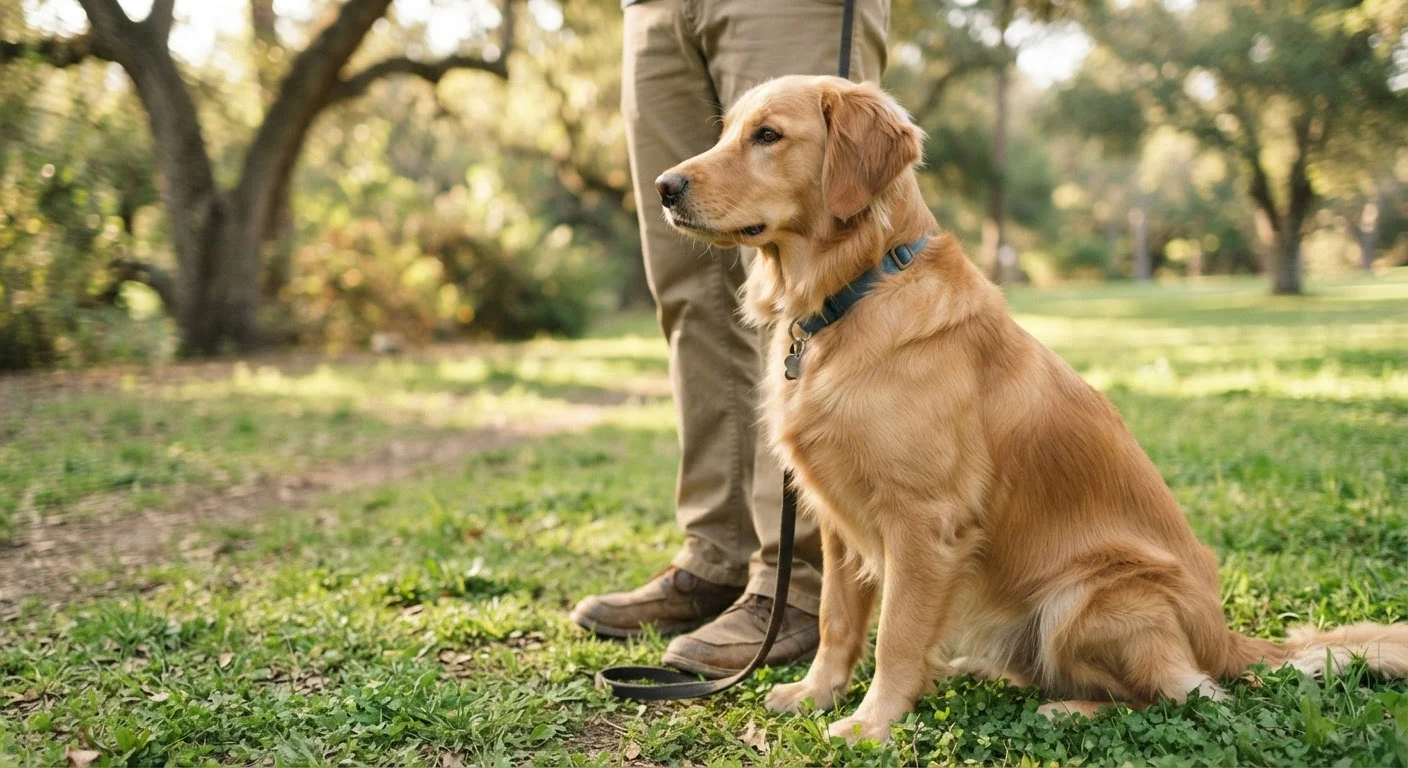
- Ears forward, soft eyes, relaxed mouth: Your dog is focused and comfortable. This is the ideal state for introducing new behaviors.
- Loose, wiggly body: Signals enthusiasm without over-arousal. Training can continue at the current pace.
- Offered eye contact: When a dog actively looks at your face during a session, it generally means they're checking in and ready for the next cue.
Stress and Disengagement
- Lip licking or tongue flicking: A quick flick of the tongue toward the nose - not related to food - is one of the most reliable early stress indicators. It often precedes more obvious signs.
- Yawning out of context: A yawn when your dog is not tired and hasn't just woken up is a recognized calming signal. It may mean the task is too hard, the session is too long, or the environment is too stimulating.
- Whale eye: The whites of the eyes become visible as the dog turns its head slightly but keeps its gaze fixed. This signals tension or discomfort - ease the pressure immediately.
- Turning away or sniffing the ground suddenly: These are classic calming or avoidance behaviors. The dog is trying to disengage or reduce perceived pressure.
- Scratching when not itchy: A displacement behavior - the dog performs a mundane action to relieve internal conflict.
Tail Position
Tail position is breed-dependent, so learn your own dog's baseline first. Generally: a tail carried loosely at mid-height and wagging in a broad arc suggests relaxed engagement. A tail tucked under the belly indicates fear or significant stress. A stiff, high tail held rigidly - even while wagging quickly - can signal over-arousal rather than happiness. Understanding how your training tools affect body mechanics and behavior can also influence tail carriage and overall posture.
How to Respond to What You See
When you notice stress signals, the default response is to reduce pressure - not push through. This might mean:
- Switching to a behavior the dog already knows well to rebuild confidence.
- Shortening your session. Most dogs learn best in sessions of five minutes or less.
- Reducing distractions or moving to a quieter environment.
- Reviewing whether your rate of reinforcement is high enough. Dogs that aren't earning rewards frequently tend to disengage.
When you see engagement signals - forward ears, loose body, offered eye contact - that's your window to work on something new or slightly more challenging. Timing your cues and markers to align with this state is the foundation of efficient training. If you use a marker signal, understanding what that click actually communicates helps you pair it precisely with your dog's best moments. Likewise, choosing between a marker word and a clicker is worth considering based on your dog's sensitivity and the environment you train in.
Over time, reading your dog's body language becomes second nature. You'll notice the lip lick before the yawn, adjust the session before disengagement sets in, and build a training dynamic that feels collaborative rather than corrective - which is where real, durable learning happens.