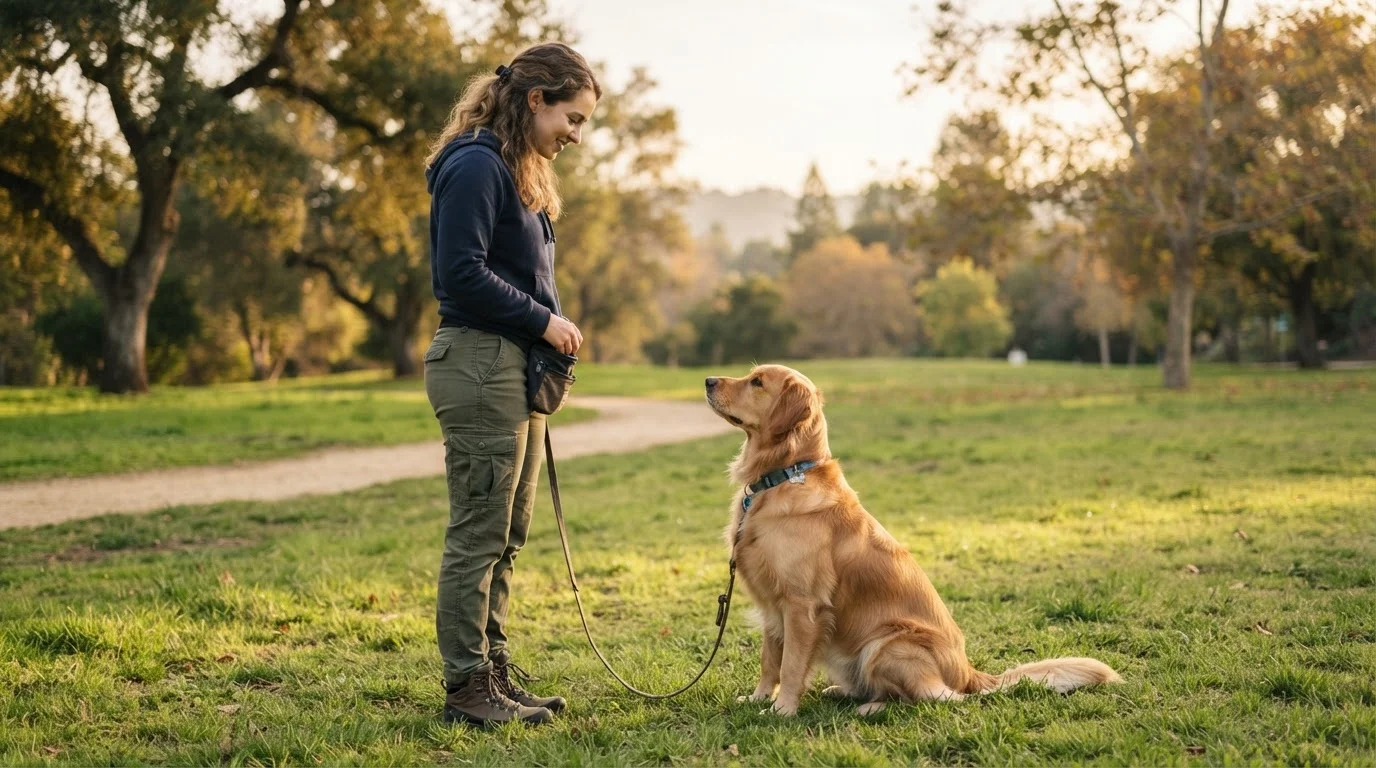
How Dogs Actually Process Learning
Dogs don't learn the way humans do. They don't reflect on past mistakes, weigh ethical choices, or plan ahead. What they do - with remarkable efficiency - is detect patterns in their environment: this signal predicts that outcome, or this behavior leads to something good. Two core mechanisms drive virtually all dog learning: classical conditioning and operant conditioning.
Recognizing which process is at work in a given moment is the first step toward training that's both effective and humane. For a deeper look at the vocabulary behind these ideas, our training glossary covers key behavioral science terms every owner should know.
Classical Conditioning: Learning Through Association
Classical conditioning - famously demonstrated by Ivan Pavlov - describes how a neutral stimulus takes on meaning by being repeatedly paired with something that already produces a response. The original stimulus (food) triggers an automatic reaction (salivation). Pair a bell with food often enough, and the bell alone triggers the same response.
For dogs, this process is constantly running in the background. The jingle of a leash predicts a walk. The crinkle of a treat bag predicts food. The sound of the veterinary office door predicts an examination. Dogs don't decide to feel excited or anxious - those responses are automatic, built through experience.
This matters enormously for training because a dog's emotional response to cues, environments, and even their owner is shaped by classical conditioning. A dog who has repeatedly experienced pain during training will associate training sessions with anxiety - regardless of whether the owner intends this. Conversely, pairing training with pleasant experiences builds positive anticipation that makes a dog more willing to engage and try new behaviors.
Emotional State Affects Learning Capacity
A dog that is fearful, overstimulated, or in pain cannot learn effectively. The brain prioritizes survival responses over new information when stress hormones are elevated. This is why humane trainers focus on keeping dogs calm and below their stress threshold during training sessions - it's not just kindness, it's neurologically necessary for learning to occur.
Operant Conditioning: Learning Through Consequences
While classical conditioning governs automatic responses, operant conditioning shapes voluntary behavior. Here, the dog is the active participant: it tries behaviors and the environment responds. Four outcomes are possible, based on whether something is added or removed, and whether the behavior increases or decreases:
- Positive reinforcement: Something desirable is added after a behavior, making it more likely to recur (e.g., a treat follows a 'sit').
- Negative reinforcement: Something unpleasant is removed after a behavior, making it more likely to recur (e.g., leash pressure releases when the dog stops pulling).
- Positive punishment: Something unpleasant is added, making the behavior less likely (e.g., a verbal correction follows jumping up).
- Negative punishment: Something desirable is removed, making the behavior less likely (e.g., attention is withdrawn when the dog jumps).
Positive reinforcement is the method most supported by behavioral research for building reliable, stress-free learning. It works with the dog's natural motivation rather than against it. Clicker training is one of the most precise applications of positive reinforcement available to everyday owners.
Use High-Value Rewards for New or Difficult Behaviors
When introducing a new behavior or working in a distracting environment, use your dog's highest-value reward - often small pieces of real meat or cheese rather than standard kibble. Save lower-value treats for behaviors your dog already knows well. Matching reward value to difficulty keeps your dog motivated through the learning curve.
Timing, Consistency, and Generalization
Even with the right method, two factors determine whether training actually works: timing and consistency. Dogs make associations between a behavior and its consequence within a very narrow window - roughly one to two seconds. Miss that window and the reward or correction attaches to whatever the dog happened to be doing at that exact moment, not the intended behavior.
Consistency matters equally. If 'sit' earns a reward only sometimes, or is sometimes followed by nothing, the behavior becomes unpredictable to the dog. Variable reinforcement can actually make some behaviors more persistent - useful if you're fading treats, but counterproductive when trying to extinguish an unwanted behavior.
Finally, dogs don't automatically generalize. A dog who sits reliably in the kitchen may not recognize the same cue in the park. Owners need to practice behaviors across multiple locations and with varying distractions. Paying attention to how your dog communicates during sessions - through posture, ear position, and other signals - helps you judge when they're ready to progress. Our guide to reading your dog's body language during training explains what to watch for.
~1-2 sec
Window for effective reward or correction timing
Behavioral science research on operant conditioning indicates consequences must follow behavior within roughly one to two seconds to be clearly associated by the learner.
70%+
Dog owners who report unresolved behavioral problems
Multiple veterinary behavior surveys have found that a majority of dog owners report at least one significant behavioral concern, many of which are addressable through consistent, science-based training.
5-10 min
Recommended training session length for dogs
Certified animal trainers and veterinary behaviorists broadly recommend keeping individual training sessions short to maintain focus and prevent frustration or mental fatigue.
Putting the Science Into Practice
Understanding learning science doesn't require a psychology degree - it requires applying a few key principles consistently. Keep sessions short (five to ten minutes), end on a success, and use rewards your individual dog genuinely values. What motivates one dog (food) may not motivate another (play).
Avoid training when your dog is over-aroused, fearful, or physically unwell - emotional and physical states directly affect the brain's ability to encode new learning. And when a behavior isn't progressing, the productive question is never why is the dog being stubborn, but what does the dog need to succeed here?
Training built on an understanding of how dogs actually learn is more efficient, more durable, and - crucially - better for your dog's wellbeing. It's also a foundation worth building on as your dog's needs change throughout their life. For broader guidance on keeping your dog thriving, explore our pet health resources.
This article is for general educational purposes only and is not a substitute for guidance from a certified professional dog trainer or veterinary behaviorist. If your dog displays severe anxiety, aggression, or other concerning behaviors, consult a qualified professional.