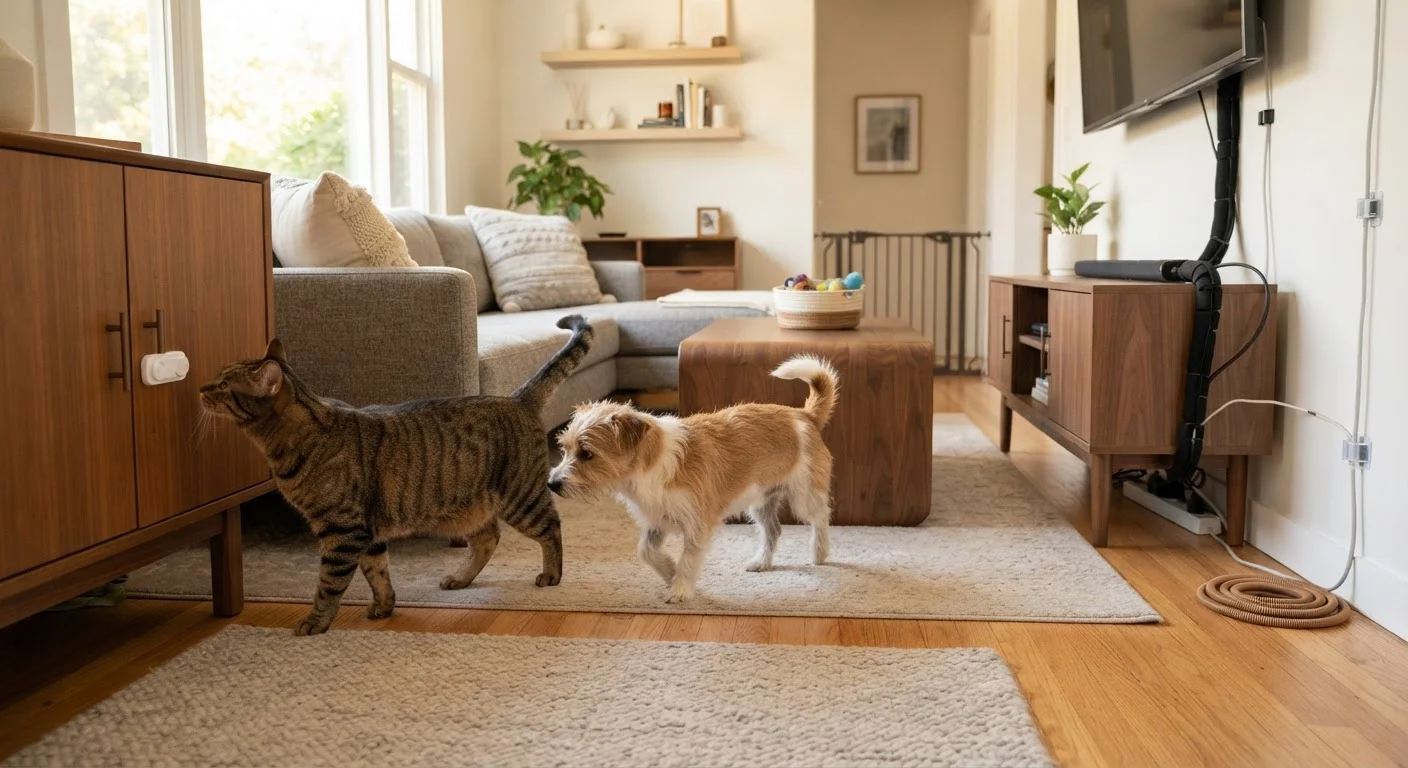
Why a Room-by-Room Review Matters
Pets explore the world through their mouths, paws, and noses - often at floor level, inside cabinets, and behind appliances where humans rarely look. The ASPCA Animal Poison Control Center fields hundreds of thousands of calls annually, with the majority involving exposures that occurred inside the home. That means the single most effective safety intervention available to most pet owners is a thorough, systematic walk-through of their own living space.
This checklist is designed for dogs, cats, and common small animals such as rabbits and guinea pigs. It addresses physical hazards (gaps, cords, sharp edges), toxic substances (cleaning products, certain foods, plants), and environmental risks (temperature, air quality). For a deeper look at specific toxic substances, see our companion guide on common household items that are toxic to pets.
Work through each room methodically. Crouch or get to your pet's eye level - what looks clear from standing height is often a very different picture from 12 inches off the floor.
Cabinet safety latches
Prevent pets from nosing or pawing open cabinets containing hazardous substances.
Cord covers or cable management sleeves
Encase electrical cords to stop chewing and reduce entanglement risk.
Appliance door locks
Secure washer, dryer, and refrigerator doors that pets may open or climb into.
Locking trash can
Eliminate access to food scraps, packaging, and discarded chemicals.
Toilet lid lock
Keep lid closed to protect small pets from drowning and chemical exposure.
Furniture anchoring straps
Secure tall furniture to the wall to prevent tip-overs if a pet climbs.
Kitchen and Dining Area
The kitchen concentrates more hazards per square foot than any other room. Food, chemicals, heat sources, and sharp objects all share a small space that most pets are highly motivated to investigate.
Kitchen and Dining
Living Room and Bedrooms
Bathroom and Laundry Room
Garage and Outdoor Access Points
Small Animal and Cage Safety
Some Foods Are Acutely Dangerous, Not Just Unhealthy
Grapes and raisins can cause kidney failure in dogs, and xylitol (found in sugar-free gum, some peanut butters, and baked goods) can be fatal even in tiny amounts. Chocolate toxicity is dose-dependent but dark chocolate poses serious risk at low quantities. If you suspect your pet has ingested any of these, contact your veterinarian or an animal poison control hotline immediately - do not wait for symptoms to appear.
If you share your home with a small mammal, note that many common kitchen scents - including certain essential oils and non-stick cookware fumes - can be harmful at concentrations that seem low to humans. See our guide on health basics for rabbits, guinea pigs, and hamsters for species-specific sensitivities.
Living Areas, Bedrooms, and Home Office
These rooms may feel lower-risk, but they contain a dense mix of electrical cords, small ingestible objects, houseplants, and furniture gaps that injure pets regularly. Cord management is especially important for rabbits and puppies, who chew instinctively.
Cords Are a Chewing Emergency Risk
Electrocution from chewed cords can cause burns to the mouth, pulmonary edema (fluid in the lungs), and cardiac arrest. This risk is especially high in puppies, kittens, and rabbits. Cord covers alone are not sufficient if a determined chewer is involved - routing cords behind furniture or through walls is the most reliable solution. If you notice a pet has chewed a cord, disconnect power at the outlet before touching anything and seek veterinary evaluation promptly.
Houseplants deserve particular attention. Many popular species - including pothos, philodendron, lilies, and sago palm - are toxic to dogs or cats. Review our full reference on household plants that are dangerous to pets before placing or keeping any plant within a pet's reach.
Once your living space is secured, a pet first-aid kit ensures you're prepared for minor incidents that do occur. Our guide to building a pet first-aid kit covers exactly what to keep on hand.
Bathroom, Laundry, and Garage
These utility spaces store the most chemically hazardous substances in a typical home. Toilet bowl cleaners, laundry pods, antifreeze, pesticides, and rodenticides are all highly toxic to pets - and often stored at ground level or in unlocked cabinets. Washing machines and dryers present an underappreciated physical risk: cats in particular may climb inside for warmth.
After completing your review, confirm your household is also protected against external health threats. Our parasite prevention primer covers fleas, ticks, and heartworm - risks that often enter the home on pets returning from outdoors.
This article is for general informational and educational purposes only and does not constitute veterinary or medical advice. Always consult a licensed veterinarian for guidance specific to your pet's health, breed, and environment. In a suspected poisoning emergency, contact your veterinarian or the ASPCA Animal Poison Control Center immediately.